I love the concept of socially responsible products. Not from any liberal bias or complete hatred of the capitalist system, but because it represents a maturation of capitalism.
This concept has grown in both academic and social interest over the past two decades and currently I have an article in peer review for a journal completely dedicated to the subject.
Before capitalism, everything had a social worth and price under the valuation system known as just price by common estimation.
Justinian law wasn't known for providing much upward mobility, and when mercantilism and capitalism were introduced, it fell dead with a resounding thud -- but so did the concept that things and people have inherent social value tied into the production.
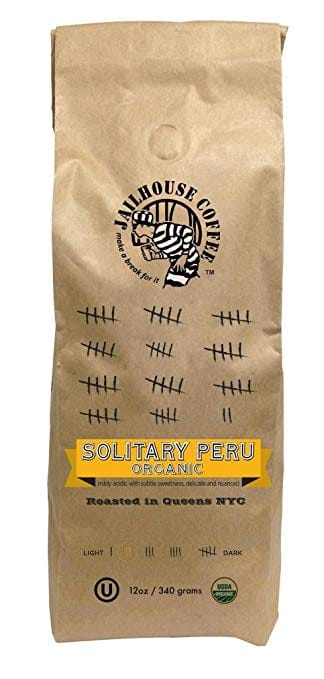
I'm not a coffee drinker, but recently I saw the "Jailhouse Coffee" label of fair-trade coffee, with several brands taking swipes at the concept of solitary confinement.
For people into socially responsible products, this company is a real find as it employs fair-trade practices (each step of production must make a livable wage), sustainable agriculture, is USDA-certified organic, and even Orthodox Union kosher certified.
But does this really mean anything other than a company finding a niche market where people will pay for their "overpriced" coffee?
In 2014, the median premium that socially responsible products commanded was 16 percent, with upwards of 60 percent of consumers willing to purchase specific goods based on causes important to their individual beliefs.
Even stranger, over 12 percent of all professionally managed stock funds are socially responsible, and this is the fastest growing market segment in the investment industry.
Is Capitalism Fundamentally Changing?
Presidential-hopeful Bernie Sanders definitely believes so, but a few of the one-percent do as well.
Self-professed zillionaire Nick Hanauer has written several major op-eds and has given a few TED Talks on this subject -- that if something doesn't change quickly, the pitchforks are coming out for the rich.
In many ways, social media and the Internet haven't changed capitalism as much as they have put into play a feature that was always supposed to be there -- symmetric knowledge.
In economic theory, all parties are supposedly privy to identical knowledge and act on this knowledge in the most rational way possible.
Of course, we know in reality that this is completely false. Buyers usually have no knowledge of the seller's good, let alone their reputation, but the Internet continues to change this.
In 1996, when Kathy Lee Gifford was crucified in the court of public opinion for producing sweatshop clothing, this was an unusual and unique happening.
Today, not as much. Injustices of all types can be found on YouTube--from companies handling food in unsanitary manners to working conditions in factories--all just one click away.
The Internet has made it far harder to hide the injustices of the third-world committed in the name of cheap products, something that has been happening since the dawn of capitalism.
Movements like fair-trade coffee and cocoa combat slave labor being used in the production of popular consumer goods by producing a product that ensures that all participants are paid an equitable wage.
These movements would have never launched without the connectivity of the Internet, and the availability for small producers to sell nationwide/worldwide on sites like Amazon and eBay.
Democratic Capitalism in Action
Don't like the cause? Don't buy the product. It's that simple.
It's not like some of the previous social movements that demanded an end to any number of practices; this is merely capitalism in action -- dollar votes determine who does or does not stay in the marketplace.
Even companies like Walmart have moved back into this method of sales, re-promoting the long-gone strategy of "Made in America" again like it's a new ad campaign.
Bottom line, Americans are seeing more in their products than just their morning coffee, and if the reality jolt of being reminded that we have a prison system that systemically employs methods such as solitary confinement helps these consumers as much as their morning dose of caffeine, maybe there is room for a lot of social progress in America today.