
 Chad Peace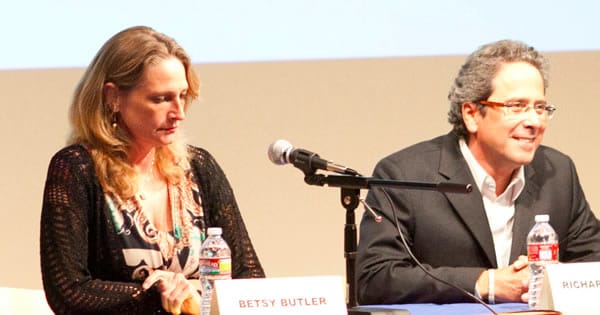
The race for California's 50th Assembly District is still too close to call, but the underdog candidate is holding on to an 800 vote lead. A study conducted by Andrew Sinclair, a CalTech political science graduate student, concluded that California's new non-partisan open primary is to blame, or credit. In the general election, Santa Monica Mayor Richard Bloom, the underdog, faced incumbent Assemblywoman Betsy Butler, a liberal Democrat backed by the Democratic party.
The main thing that Sinclair learned is that the top-two primary system in California worked very well for underdog Richard Bloom.
Under the new system, all candidates, regardless of party affiliation, run on a single primary ballot. The top-two vote getters in the primary go on to the general election. This means that in certain cases, like California's heavily Democratic AD 50, two Democrats (or Republicans) could face off in the general election.
Under the old system, the party-backed incumbent Betsy Butler would have handily defeated Mayor Bloom in the partisan primary. She would have then faced a non-competitive general election against the Republican primary victor because of the heavily liberal make-up of the district.
Sinclair conducted a phone survey of 1,134 voters prior to the election. He concluded that Bloom may have benefitted from not being the Democrat's party-backed candidate:
"[V]oters saw him as the candidate who was closest to the political middle. While Butler got major support from Democrats in Sinclair's survey, Bloom got strong backing from Independents, Republicans, and other voters, while also winning over a respectable chunk of Democrats...This is a good example of where the top two makes a difference by giving Bloom an opportunity to make a competitive election..."
Opponents of the top-two open primary argue that the system reduces voter choice be restricting the general election ballot to two candidates. Proponents of the measure have argued that open primary finally gives voters who are not part of a given district's majority party the first opportunity to have a meaningful vote. In the race for California's 50th Assembly District, the proponents' argument, like the underdog, appears to be the winner.