
 Shawn Griffiths
Maryland Democrats suffered another setback in their effort to redraw their state's congressional districts Wednesday.
Anne Arundel County Circuit Judge Robert Thompson ruled that state lawmakers did not follow their own rules when they passed HB 2100 with a supermajority. The amendment does not propose a new map, but it makes it harder to challenge redistricting in the future.
Since it is a state constitutional amendment, it would not become law unless approved by voters on November 3. However, Thompson said some of the ballot language was “intentionally misleading, and this should disqualify the ballot question as currently written.”
His decision is the latest development in an ongoing fight in which Republicans and Democrats have looked for any excuse to redraw congressional maps without waiting for the next census.
 Shawn Griffiths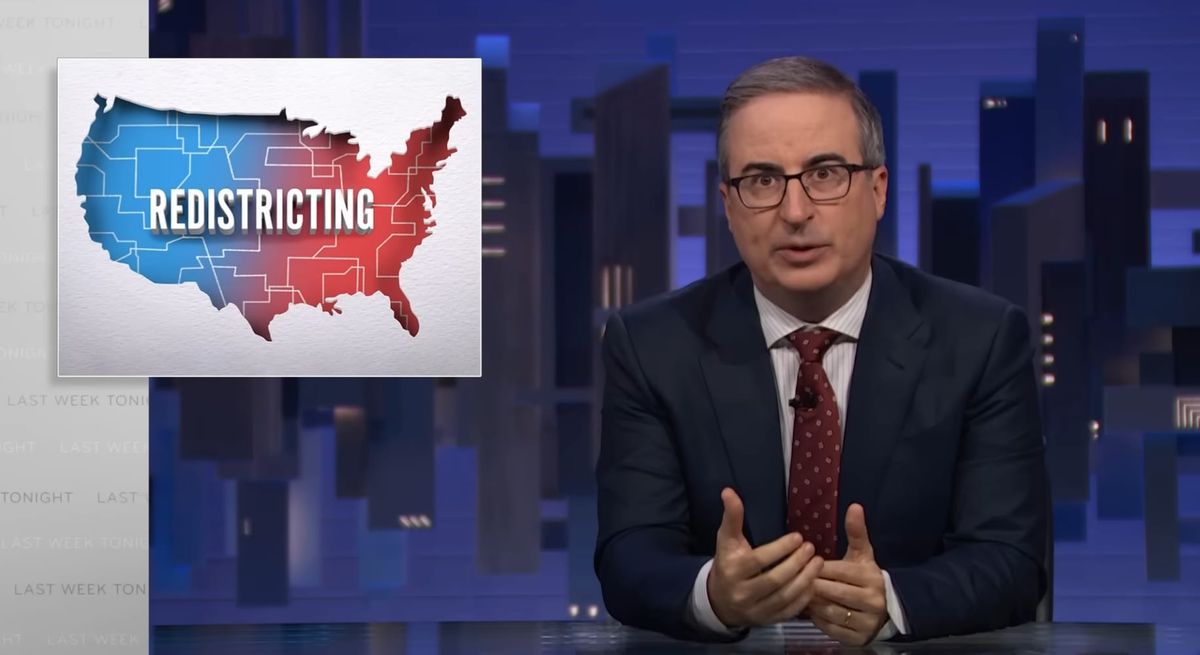
What Would HB 2100 (Question 3 on the Ballot) Actually Do?
The easiest way to understand this amendment is to know that it is step one of a broader effort to get a new congressional map drawn. Simply put, it removes state constitutional restrictions that can be used to challenge a congressional map.
The Maryland Constitution says legislative districts should be contiguous and compact and should give due regard to natural boundaries and political subdivisions.
 Shawn Griffiths
In 2022, Anne Arundel County Senior Judge Lynne Battaglia applied those requirements to congressional districts and struck down a Democratic-drawn map as unconstitutional.
The General Assembly subsequently approved a replacement map, and appeals of Battaglia’s ruling were dropped.
HB 2100, which would appear on the ballot as Question 3, seeks to prevent a repeat of that decision by:
- Stipulating that any geographic requirements only apply to legislative districts, and
- Declaring that the Maryland Constitution does not actually set criteria for congressional district boundaries
Congressional maps would remain subject to the US Constitution, federal law, the Voting Rights Act, and any Maryland statutes specifically governing congressional districts.
Supporters say Maryland needs to be able to respond to the wave of mid-cycle redistricting that started with Trump in Summer 2025. Notably, Gov. Moore has pushed for redistricting since California voters approved Proposition 50 last November.
He said Maryland cannot “sit on the sidelines” while other states redraw maps for partisan advantage.
Supporters also argue that HB 2100 simply clarifies the rules that govern congressional maps. Further, they say it is in line with the constitutional compactness language used by Battaglia in 2022, which they assert traditionally had been understood to apply specifically to state legislative districts.
Opponents argue that calling HB 2100 a “clarification” understates what the amendment does and assert that it would remove constitutional guardrails that stopped a gerrymander 4 years ago.
There are obvious political stakes involved. Democrats already hold 7 of Maryland’s 8 US House seats.
Rep. Andy Harris is the only Republican in the state’s delegation. A map freed from the state constitutional restrictions cited by the courts could mean Democrats will attempt to take all 8 districts before the next census.
Judge: Lawmakers Didn’t Follow Their Own Rules
Opponents also criticized how quickly lawmakers moved the amendment through a special session and the wording voters were supposed to see on the ballot. This is where Wednesday’s court decision comes in.
Judge Thompson found that lawmakers failed to comply with a state law setting July 1 as the deadline to certify statewide ballot-question summaries. HB 2100 was signed by Gov. Moore on August 5.
He also declared that the ballot language itself was problematic.
HB 2100 told voters the amendment would “clarify” Maryland’s redistricting standards. Thompson called that description “intentionally misleading,” finding that legal interpretations accepted by previous courts include congressional districts in constitutional requirements.
In other words, the judge determined that the language of the ballot measure makes it sound like Question 3 is not actually making any changes to the language of the Maryland Constitution, when it is.
Thompson separately concluded that HB 2100 violated Maryland’s constitutional single-subject requirement because the amendment also addressed whether the Maryland Supreme Court could have original jurisdiction over congressional redistricting cases.
However, this fight is not over.
Thompson stayed his order so the state could appeal, and Maryland officials immediately took the case to the state Supreme Court. So, the fate of Question 3 and what it means for redistricting in the state remains to be seen.