Skip to content
Subscribe

Fracking Remains a Controversial Way to Retrieve Fossil Fuels

Published:

Energy experts now say that the “Rebirth of the Rust Belt” may emancipate the United States from much of its oil dependency by the year 2020, with states such as Ohio, Pennsylvania and Michigan on the front line.

The International Energy Agency released a study that suggests the US will surpass Saudi Arabia’s title as the world’s largest oil producer in less than a decade, with a process known as hydraulic fracturing, or “fracking,” which has put oil and natural gas output on a striking rise.

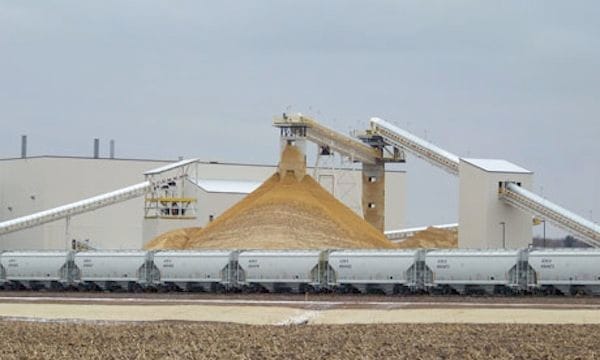
Fracking is a process in which millions of gallons of water, sand, and chemicals are pumped thousands of feet below the surface of the earth, freeing the fossil fuels trapped there. Fracking remains a controversial way to retrieve fossil fuels, however, with some communities near fracking production reporting bizarre health conditions.

US oil production has increased 7 percent since last year, and the IEA said the US would import roughly 2 million barrels a day in 2035 -- making it the fourth largest oil importer by 2030. Currently, it is the second largest oil importer.

Guy Caruso, former head of the US Energy Information Administration, said the boost in production could very well alter the American political climate assuming the IEA is right.

“For the most part, we have five to six energy-producing states. But in the coming years, you might have 20 to 25 states that become large energy producers. That could change the political landscape.”

The study does not, however, suggest that this peak implies extended energy independence for the US any time soon. The US will still need to rely on foreign sources to meet demands.

Whether or not fracking is a safe and environmentally responsible means of production has also been the subject of heated debate.

Duke University conducted an analysis of 426 shallow groundwater samples in Pennsylvania and found brine in rock more than a mile deep. These paths could let gas or water flow up after drilling, leading to runoff. However, the flows are not yet linked directly to fracking. Avner Vengosh, a professor at the Nicholas School of the Environment at the university, said the study suggests there is only “evidence of hydrologic connectivity.”

Other concerns, noted primarily by environmentalists, include whether or not the amount of water (5 to 7 gallons for each round) used to release the fossil fuels is worth the production boost. Additionally, there have been many concerns regarding fracking's affect on air quality.

Environmental groups, such as the Sierra Club, are worried about what production enthusiasm could do to the discussion about climate change. Michael Marx, director of the Sierra Club’s Beyond Oil campaign, said the changing climate will sooner or later force the US to accept responsibility.

“If we position ourselves as the second-largest exporter of oil in the world, as extreme climate events accelerate and the impacts become more extreme, there’s going to be more world attention and pressure for the U.S. to accept responsibility. It could alienate us in the international community.”

With a continued reliance on fossil fuels, the debate on alternative energy sources or means of production to obtain additional fossil fuels, will become an increasingly urgent issue to address.

Adhere to the IVN etiquette

By posting a comment, you agree to adhere to our etiquette rules: No partisan attacks, no personal attacks, substantiate your sources, no self-promotion.

Contact IVN

Questions about this article or our coverage? Send us a message. A free IVN member account is required.

Message sent

Thanks, we’ll review it and get back to you if needed.

Message not sent

Sorry, something went wrong. Please try again.

Sign in to send a message

Messages are tied to your IVN member account. Signing in is free and takes a few seconds.

Republish this article

Republishing guidelines

Republish IVN articles for free. Independent Voter News articles may be republished online or in print under a Creative Commons BY-NC-ND 4.0 license, on these terms:

  1. Credit the author and IVN. Keep the byline ("By Author Name, Independent Voter News") and the attribution note at the end, which links to the original.
  2. Keep the meaning. You may update time and place references and apply your house style. You may trim for length, as long as the cuts don't change the meaning or misrepresent the author. Keep the headline. Mark any additions as your own (for example "Additional reporting by ...").
  3. Translations are welcome. Translate faithfully, add "Translated from English by [your outlet]", and tell us at editor@ivn.us.
  4. Keep the links, including the link to the original article.
  5. Keep the tracking image. The HTML includes a 1-pixel image that counts readers on your page. It collects no personal information.
  6. Photos and illustrations. Images credited to IVN may be used with this article only. Images credited to others (AP, Getty, Unsplash, Wikimedia and so on) stay under their owners' terms. Secure the rights or switch "Include images" off.
  7. Don't sell it. You can't sell our articles or sell ads specifically against them. Your normal site advertising is fine.
  8. No implied endorsement. Don't suggest that IVN or the author endorses you, your candidates or your causes, or that donations to you support IVN.
  9. Keep labels. Opinion or analysis pieces keep that label.
  10. Point search engines to the original. Where your CMS allows, set the canonical URL to the original IVN article.
  11. No bulk or automated republishing, and don't submit our articles to aggregators (Apple News, Google News, MSN) as your own.
  12. Corrections and removals. Update your copy when we correct it, and remove it promptly if we ask. We'll contact you at the email you give us.
  13. Questions or print republication: editor@ivn.us.

IVN staff: fill in who you're inviting above, then create the invite.

Preparing the article

Fracking Remains a Controversial Way to Retrieve Fossil Fuels

Choose a format
  • HTML
  • Email HTML
  • Markdown
  • Formatted (.docx)
  • Plain text
  • WordPress blocks
  • PDF
Choose a platform

Photos credited to others need their owners' permission.

To for

Republishing somewhere else? Questions? editor@ivn.us