

In 2010, California voters took the first step in empowering every California voter by abolishing party-controlled closed partisan primaries in favor of open nonpartisan primaries that advance the top two vote-getters to the November election.
 Chad Peace
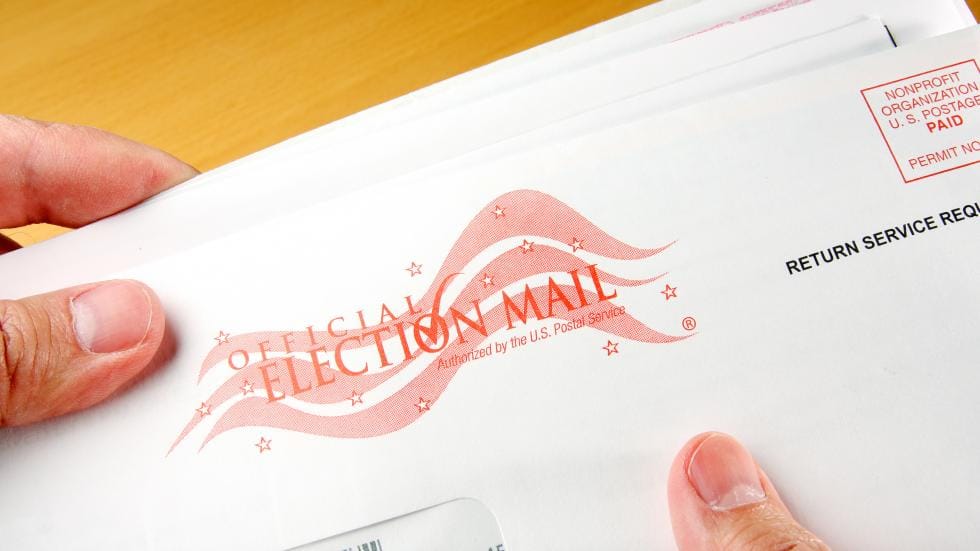
The old closed partisan system produced “inevitable winners’ in extremely low turnout primary elections in the 85 percent of legislative and congressional districts that are populated by voters who are either overwhelmingly Democrats or overwhelmingly Republicans. These elections routinely produced party nominees for the general election with votes from only 5% to 20% of the electorate.
And, because over 85% of these districts were either “safe Republican” or “safe Democrat” the millions of voters left out of the primary process really had no meaningful role in selecting their representatives.
Elections should be decided when the most people vote. That’s exactly what California’s nonpartisan top-two primaries did for Californians. By including nonpartisan voters in the primary and advancing the top two vote-getters – rather than one candidate chosen by each party’s voters – the reform began the process of taking control of our democracy from cynical political operatives and the politicians either too disinterested in, or oblivious to, the damage done by the inherently divisive and hostile partisan disinformation that dominates the messaging from both major political parties.
California’s nonpartisan top-two system increased the number of competitive November elections by more than 300% over the past decade.
Independent Voter Project
But the cynicism runs deep. And, California’s demographic changes combined with messaging from the national Republican Party have, at least for the moment, made California’s statewide electorate overwhelmingly hostile to Republican candidates. As a result of these two trends, California statewide elections over the past 10 years are only likely to be competitive when two Democrats emerge from the top-two primary.
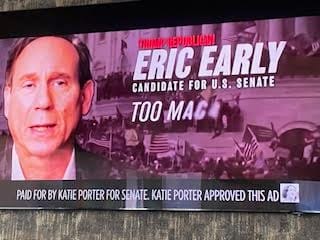
This simple mathematical fact has driven Adam Schiff'’s U.S. Senate campaign to launch a deceptive, cynical, and fundamentally anti-democratic campaign to promote Republican candidate Steve Garvey, in an effort to help Schiff avoid a general election fight with fellow Democratic US Rep. Katie Porter or US Rep. Barbara Lee.
Author's Note (update made on 02/22/24): After personally receiving a fundraising solicitation from the Porter campaign expressly criticizing Schiff’s sleazy tactics, I see this ad (paid for by the Porter Campaign) employing the exact same tactic. Time for the “More Choice” reform. Nonpartisan Ranked Choice Top 5. Simple, Fair and Easy.
At the same time, in an overwhelmingly Republican Assembly District in San Diego, Republican candidate Carl DeMaio has deployed the exact same cynical strategy to elevate the vote totals of the candidate endorsed by the Democratic Party.
The district’s voters have been swamped by television commercials, text messages, and old fashion mailers all supporting Democrat Kevin Juza. But a closer look reveals that this messaging is paid for by organizations controlled by DeMaio seeking to drive the Democrat’s primary vote totals above the Republican Party endorsed candidate, Andrew Hayes.
Like Schiff, DeMaio is spending money in the primary to avoid a competitive race in the general election when the most people vote. Both DeMaio and Schiff are experienced guys who know exactly what they are doing.
There will always be campaign operatives willing to play “clever” games and unfortunately candidates willing to be the beneficiaries.
The good news is that Alaska’s approval of the nonpartisan top-four primary system has led the way to the next great reform. Top Four (or Top Five) builds on the nonpartisan top-two reform by advancing four (or five) candidates to the November election, instead of just two. Voters are then allowed to “rank” their choices in the general election.
Votes are tallied among the four (or five) candidates. If no candidate wins an outright majority of first choices, the last place finisher is removed and his or her voters’ next choices are allocated to the remaining candidates. This tallying and removal process continues until one candidate’s totals exceed 50% of the vote.
Simple. Fair. And, easy.
The Schiff campaign and the DeMaio campaign prove the bipartisan flavor of cynicism that imperils our democracy and serves to disenfranchise voters. It’s time for voters to have “More Choice,” and California can lead the way by embracing a top-four (or five) model.
Doing so means more candidates get more time to share their message in a general election when the most people vote. More Choice systems encourage grassroots, neighborhood-based campaigning, reduces negative campaigning, and stimulates more voter participation.
In addition to all of the above, Nonpartisan More Choice elections will shut down the cynical and undemocratic practice of well-funded candidates using their funding advantage to prop up weak opponents in the primary hoping to eliminate competition before the General Election when the most people vote.
Nonpartisan top-four (or five) initiatives are springing up all over the country. It's time for More Choice in California. Nonpartisan top-four (or five) primaries that allow voters to rank more candidates in the general election is the next great nonpartisan reform as we fight to empower every voter, regardless of their party affiliation.