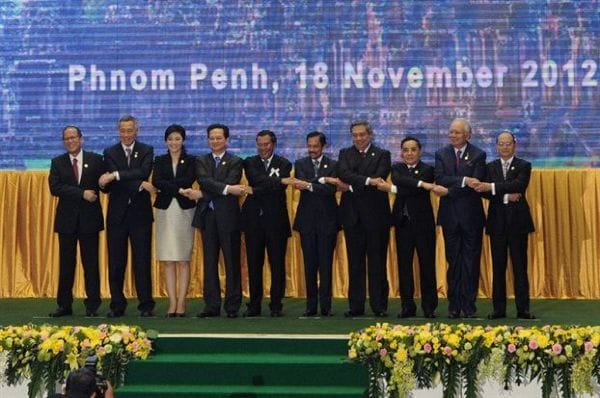
Leaders of the Association of Southeast Asian Nations formally adopted the ASEAN Human Rights Declaration during the group's annual summit in Cambodia a few weeks ago. The ASEAN Declaration for Human Rights (ADHR) can be considered a milestone in the history of the group.
However, it is still not as comprehensive as the United Nations Declaration for Human Rights (UNDHR). Nonetheless, the Philippines and Indonesia have been able to integrate some parts of the UNDHR in the ADHR. It outlines many of the civil and political rights in the Universal Declaration of Human Rights, including prohibition of torture, arbitrary arrest, and child labor.
Yet, the UN High Commissioner for Human Rights, Navi Pillay, expressed concerns that the nonbinding declaration was drafted without adequate public consultations.
The final draft of the declaration states that "human rights and fundamental freedoms" could be limited "to meet the just requirements of national security, public order, public health, public safety, public morality." It adds that the "realization of human rights must be considered in the regional and national context bearing in mind different political, economic, legal, social, cultural, historical and religious backgrounds."
The ASEAN now has two commissions related to human rights. One commission, called ASEAN Intergovernmental on Human Rights (AICHR), is related to the improvement of human rights conditions in all the member countries. The other commission is known as the ASEAN Commission on the Promotion and Protection of the Rights of Women and Children (ACWC).
In the Terms of Reference of the AICHR, this commission is responsible for the improvement and protection of human rights in the ASEAN group based on the principle of consensus, consultation, and non-intervention. The commission consists of ten members representing the ten ASEAN member countries. This commission will hold meeting twice a year and report to the Foreign Affair ministers meeting of the ASEAN.
The chairmanship of the AICHR is currently held by Indonesian representative Rafendi Djamin and seconded by the representative from Thailand, Dr. Sriprapha Petcharamesreewere. Djamin has earned his track record in the non-governmental organizations fighting for the improvement of human rights in Indonesia. He is the only one with such a background because the other members are career diplomats without experience in improving human rights.
Indonesia can be considered to be one of the most progressive members in terms of promoting human rights in the ASEAN organization. Djamin has mentioned several successes in terms of starting the processes of improving the human rights situation. As the chairman of the AICHR in 2011, one of the important accomplishments was the drafting of the “guideline of operation” of the concerned commission.
In that same year, the relationship between the two commissions was good and fruitful. In addition, AICHR has been able to establish a higher profile in the international arena. Various workshops related to human rights have also been organized successfully.
Djamin added that in the near future, new schemes of cooperation must be forged with various other organizations active in the field of human rights in order to continuously improve the human rights situation in the ASEAN group. One of the priorities will be the drafting of a human rights convention. This convention will reflect the input from various civilian and non-government organizations.
With respect to the problems in Myanmar (Burma), Djamin stated that, since 2011, the country has been able to change itself. This is in line with the ambition of the country to take over the chairmanship of the ASEAN in 2014. Djamin reminded that in any armed conflict in the ASEAN group, the president or head of state would not be able to directly end the conflict. Djamin emphasized that negotiations are important as well as gradual pressure from the other member nations.
The coordinator of the Indonesian NGO for missing persons and victims of violent actions (Kontras), Haris Azhar, has pointed out three major weaknesses of the ADHR: (1) Indonesia still needs to show strong leadership to promote human rights in the members countries; (2) Indonesia has not been able to stop the conflict in Myanmar (Burma); (3) Indonesia has not been able, as head of the AICHR, to involve civil society organizations to contribute in drafting the Declaration for Human Rights.
In general, it can be observed that the human rights situation in the ASEAN group is minimal in nature. This is caused by the response of the member countries who are mostly not interested in listening to ways to improve the human rights situation. Indonesia, which has been able to transform itself from a dictatorship to democracy, is one of the few members that can promote the improvement of the human rights situation.
However, according Azhar, Indonesia needs to encourage the transparency in the ASEAN human rights commissions. The civil organizations need to be involved in the (re)drafting of the human rights declaration. Otherwise, the communication will be merely one sided and very conservative. He claimed that Indonesia has failed to promote the human rights situation in the ASEAN group because it has not been able to help draft a declaration which is in par with the universal declaration of human rights by the United Nations. He even stated that the ASEAN declaration is inferior to the human rights clauses and laws in Indonesia