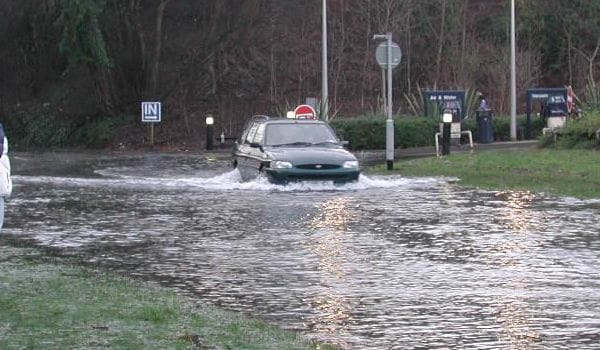
Hurricanes Sandy and Katrina make it hard to ignore the simple fact that floods and flood risk management are an increasingly serious problem. Emergency responses have improved, but an ounce of prevention is worth a pound of cure. We need to address the root causes of flood vulnerability. It’s better to have the government take precautions now rather than counting on FEMA to bail us out later.
There are several reasons for the increasing toll from floods. One is climate change, which is contributing to extreme weather (even if the link to any particular event is unclear). Climate change also causes the sea level to rise just as mercury rises when a thermometer gets warmer. Another environmental issue is the destruction of wetlands that buffer against storms. The clearest factor of all is the large number of people living near seacoasts or on inland floodplains. Many people are living in high-risk areas that are almost guaranteed to present flood dangers.
Managing these flood risks requires action from all levels of government. The federal government has jurisdiction over navigable waters and wetlands. For years, the official policy has been “no net loss of wetlands,” but implementation needs to be stronger. Wetlands serve many important purposes, especially in hindering storm surges. The federal government is also best able to do the technical work of mapping floodplains, forecasting risk levels, and identifying tools for risk management. It is not the first responder to disasters, but it is the responder of last resort. To protect itself, the federal government needs to insist that states and localities adopt sensible strategies to control flood risks. It also needs to finance levees and sea walls where they are needed, which save money in the long run.
Much of the work needs to be done at the state and local level. Land use planning is key to managing risks. Developing property in flood plains may be cheap, but the long-term costs to society are considerable. A 100-year flood may seem too rare to worry about – but it translates into a 1-in-3 chance during the life of a 30-year mortgage. Zoning can provide green buffer zones or at least limit development to industrial uses that do not leave large numbers of people at risk. Building code requirements are also important to protect residents if and when a flood does come. Another important consideration is permeability of parking lots, roads, and other hard surfaces, so that water can sink more slowly into the ground rather than rushing along, overwhelming storm sewers, etc.
Government also needs to work with the private sector. Too much of our critical infrastructure such as pipelines is located in flood-prone areas. Public utilities are an important point of vulnerability, as we’ve seen vividly in Hurricane Sandy. Public Utility Commissions need to prod utilities into hardening critical facilities and planning for disaster response – and ensure that they are able to raise the funds they need for these activities.
Some people will criticize these measures on familiar grounds – they cost too much; they involve too much government; or they impair private property rights. But we can no longer allow flood risk control to be politicized. We are still near the beginning of the 21st Century, and we have already seen far too much harm from massive flooding. The appropriate steps are well known to disaster experts, urban planners, and civil engineers. We need to start getting serious about them before the floods rise even higher.