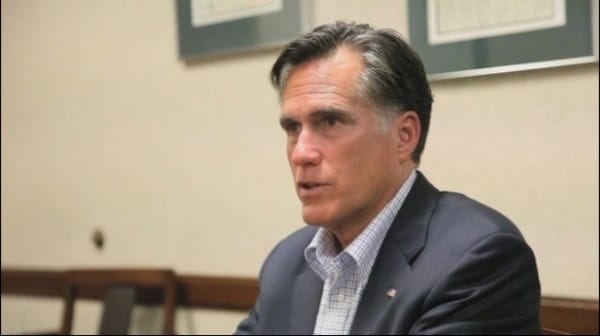
In early September, Governor Romney explained his current views about climate change in comments to scientific groups. He does believe in the reality of climate change. In terms of the science, he wrote, “I am not a scientist myself, but my best assessment of the data is that the world is getting warmer, that human activity contributes to that warming, and that policymakers should therefore consider the risk of negative consequences.”
What should be done about this “risk of negative consequences”? Romney told the scientists that he opposed unilateral U.S. restrictions on carbon emissions. Instead, he called for a “new regrets” policy, meaning a policy that would benefit the United States regardless of climate change. He strongly criticized proposed cap-and-trade legislation in Congress and the current EPA regulations on certain emissions sources. Instead, he advocated research on low-emissions technologies and streamlining the regulatory process for new energy technologies and nuclear power.
Romney’s view of climate change has evolved over time, sometimes quite abruptly. This evolution has concerned the policy response more than the science. Romney has usually stuck to the view that carbon emissions are probably one cause of a warming planet. He has not been completely consistent on that point, however. A year ago, when the Republican nomination remained in doubt, he said his view was that “we don’t know what’s causing climate change on this planet.” But otherwise, most of the differences in his views about the science have been matters of emphasis – such as adding qualifiers like “probably” or leaving them out. He has never joined those that say climate change a hoax created by scientists.
He has changed ground much more on the policy response, as shown by a timeline of his positions. For most of his time as governor, Romney advocated strong action to deal with climate change. For instance, in May 2004 he said that “Massachusetts is committed to active participation in the effort to develop a multi-state cap and trade program covering greenhouse gases (GHG) emissions.” As late as November 2005, he hailed a proposed regional cap-and-trade program, saying it was as “good business” that would spur investment in renewable energy.
A month later, in December 2006, he changed course sharply. He abruptly pulled out of the regional multistate cap-and-trade scheme, although he and his staff had been heavily involved in negotiating the plan. The timing was interesting. He also announced that month that he would not run for reelection in Massachusetts, and he began setting the stage for a run for the Republican presidential nomination.
The regional cap-and-trade system (called RGGI) went ahead without him and remains in effect today. The nine states, including Massachusetts, have capped their carbon emissions and plan to reduce them by 10% by 2018. Economic impacts seem to have been minimal. About two-thirds of the proceeds from the program are used to improve energy efficiency or encourage renewable energy. However, Romney has never discussed whether RGGI was a success.
There are important open questions about how Romney would implement his current position, assuming it didn’t shift again. He has not made it clear what kinds of “no regrets” policies he supports. Most economists believe that mandating energy efficient products saves consumers more money than it costs. Would Romney endorse such requirements, including the limitations on light bulbs that have caused such a strong reaction from the Tea Party? Romney also calls for streamlining approval for renewable energy projects. Would this include some kind of fast track procedure for the transmission lines needed to get the power to market?
A bigger open question about Romney and Climate change is raised by his consistent opposition to unilateral restrictions on carbon emissions. How much should we read into the word “unilateral”? Romney does not say whether he would support a multilateral international agreement to limit emissions. He emphasizes that the Chinese are now the world’s largest carbon emitter, but the Chinese have recently signaled a willingness to negotiate emissions limitations. Is it possible that he would be willing to negotiate on the issue?
Romney’s approach to climate policy still contains some significant gaps. An even larger question is whether he would shift his ground again, as he did in 2005. At present, however, the best guess is that he will continue to endorse the reality of climate change, but take little action publicly about the problem