Photo: Mark Stahl
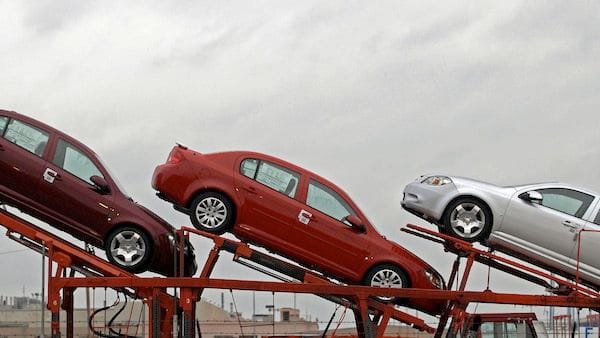
The auto industry's bailout is a hot topic of this election and, of course, a vital element of the United States' economy. According to an April report from the Center for Automotive Research, eight million private sector jobs are impacted by US auto manufacturers, suppliers, and dealers. The vital revenue received from automotive purchases trickles down to other industries: almost one-fifth of American steel production and nearly three-fifths of its rubber output go to the automotive industry.
The Auto Industry Bailout
After the financial crisis hit in 2008, Ford was only one of three major US car manufacturers (the others being Chrysler and General Motors, and collectively referred to as “the Detroit Three”), that did not receive a bailout. General Motors and Chrysler received bailouts and also went into bankruptcy to a tune of $79.69 billion. The money came from the Troubled Assets Relief Program (TARP) through its Automotive Industry Financing Program. On June 10, 2009, Chrysler Group LLC emerged from a Chapter 11 reorganization bankruptcy and as of 2012, $39.61 billion of the bailout funds have been repaid.
Governor Romney’s Position
Simply put, Governor Romney was not in favor of the government-backed bailouts of Chrysler and General Motors. He has said that “Detroit needs a turnaround, not a check,” meaning that he favors bankruptcy but not government bailouts. Specifically, Governor Romney has said he favors a “managed bankruptcy” instead and that the money needed to keep GM and Chrysler alive during bankruptcy should have come from the private sector, with the federal government providing only “guarantees for post-bankruptcy financing.”
In 2008 Governor Romney wrote an op-ed in the New York Times that commented a government bailout of the Detroit Three would “virtually” guarantee the “demise” of the industry. However, years after the bailout, this has not happened. Governor Romney has inferred that the bailout has been unsuccessful because the money repaid to the government is a "small share." However, as of October, more than half of the borrowed money has been accounted for.
Governor Romney also claims that the bailout is not creating new jobs as promised. To the contrary, 1,100 new Chrysler workers will boost production of the Jeep Grand Cherokee and Dodge Durango SUVs in Detroit in the next few weeks. Further, Chrysler is investing $500 million to upgrade its plant in Toledo and hiring 1,105 additional workers to complete the work. In his latest effort to sway auto workers, Governor Romney falsely stated that Jeep, now owned by Fiat after its structured bankruptcy in 2009, is going to send all its production overseas to China.
President Obama’s Position
The Obama administration has been credited with revitalizing the auto industry through the bailout, specifically General Motors and Chrysler. Of the Detroit Three, Ford did not take part in the bailout, but instead filed for Chapter 11 bankruptcy. On July 8, Congresswoman Wasserman Schultz stated that “all three automakers have actually had record increases in job creation,” although FactCheck.org refutes the word "record." While Schultz was hyperbolic in her claim, the auto industry seems to be strengthening. Figures show that “motor vehicles and parts” added 6,700 jobs and “motor vehicles and parts dealers” added 300 jobs in June, for a total of 7,000 newly created jobs.
President Obama has discredited Governor Romney’s remarks about the purported failure of the auto industry bailout.
To further support the auto industry in its recovery, President Obama has challenged Chinese tariffs on US auto exports to China, including Jeeps. Obama summed up his stance by saying, in the last presidential debate, "If we had taken your advice, Governor Romney, about our auto industry, we'd be buying cars from China instead of selling cars to China."