
At no time in history has the issue of “open v. closed primaries” been so prominent in the national discussion as it is today. This is, in large part, because Bernie Sanders made it a plank of his presidential campaign.
But it is also a consequence of an important reality: independent voters are the fastest growing segment of the electorate, by far. Yet, the first and highly important stage of our election process most often serves the exclusive benefit of the voters who choose to join one of the two major parties.
The general issue is simple: (1) Open Primaries allow everyone to vote in the taxpayer-funded first stage of the election process -- a voter controlled election; and (2) Closed Primaries require that a voter join a major political party before they are allowed to participate -- a party controlled process.
So, at a time when more voters than ever are turning away from both parties, voter participation is declining, and hyper-partisanship is making a mockery of our government, both political parties are working hard to make sure they control the election process -- not voters.
Here are 12 states where the major parties are trying to suppress the nonpartisan right to vote:
1. Hawaii
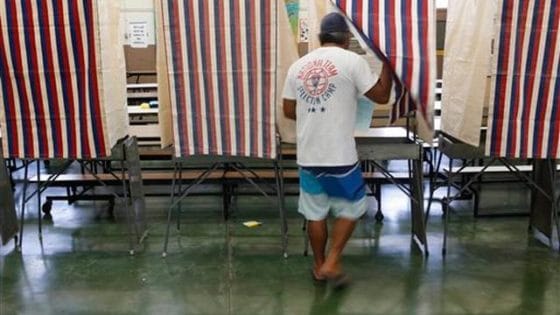
The Democratic Party controls the Hawaiian legislature. Back in 2014, the party made a failed attempt to close the taxpayer-funded primaries, which would have blocked unaffiliated voters from participating in the important primary election.
The court ruled that the Democratic Party of Hawaii failed to provide sufficient evidence that state election law severely violates its First Amendment right to non-association. But the case is not over yet.
The “Democratic” Party has brought the case all the way to the doorstep of the Supreme Court of the United States, asking them to rule that primary elections serve the party, not the voters who pay for them.
Related News Coverage:
Democratic Party Tries to Deny Independent Voters Right to Vote in Hawaii
Is The Tide Turning? Ninth Circuit Upholds Open Primaries in Hawaii
SCOTUS Hints Partisan Open Primaries May Be Ruled Unconstitutional
2. Montana
Just so we are aware, the Republicans are doing the EXACT SAME THING in Montana. The Republican Party already controls the Montana legislature. But in this open primary state, they don’t want voters who haven’t joined their party to have an influence over the selection of “their” representatives.
Related News Coverage:
SCOTUS Hints Partisan Open Primaries May Be Unconstitutional
Montana GOP: You Have to Join a Party to Vote
3. Maine
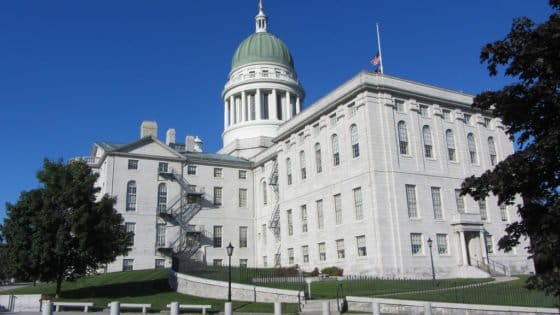
Ranked Choice Voting (RCV), like nonpartisan primaries, may be a threat to the partisan establishment because it democratizes the process by leveling the playing field for both voters AND candidates. That is why politicians have fought back against the RCV voter initiative that was passed last year, by challenging its constitutionality. To stop RCV, politicians have gone so far as to attack the entire initiative process in Maine!
But Mainers won’t be deterred. Election reformers are not only fighting the political attack on RCV, they are also pushing for an open primary in that state.
Related News Coverage:
Maine Legislators Revolt Against Will of the People
Democracy is Under Attack in Maine
4. New York
New York is the definition of an undemocratic state. Quite ironic, as it is controlled by “big D” Democrats. Not only do they have closed primaries, but a voter must register with one of the two major parties 6 MONTHS prior to the election. Otherwise, voters end up like Donald Trump’s kids or many Bernie Sanders supporters -- locked out on election day.
Combine these rules with the notoriously gerrymandered districts of New York, and guess why so many people register as Democrats in that state? Unless you do, your vote probably won’t matter.
That’s how Hillary Clinton really won a US Senate Seat from New York with just 5% of the vote. And to be clear that this is a bipartisan problem, Ted Cruz really won 5% of the vote to win a US Senate seat in the “red state” of Texas.
Related News Coverage:
Who Is Tinkering With Voters’ Party Affiliations in New York?
5. Virginia
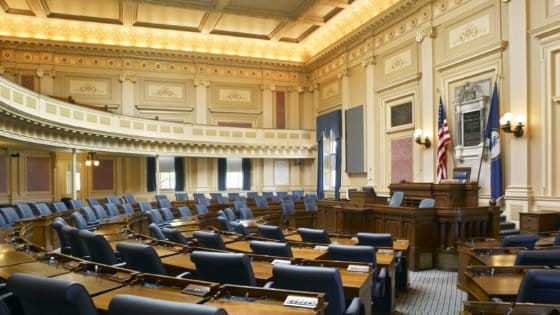
Virginia has a long history of open primaries and nonpartisan voter registration. During the election, anti-Trump Republicans tried to enact a party “loyalty oath” to participate in the Republican primary. These efforts failed due to its extreme unpopularity.
Loyalty oaths to a party in the United States? Pretty absurd when you say it out loud.
But now that the election is over, multiple efforts have been led, albeit unsuccessfully, to close their traditionally open system.
Can’t force a voter to take a loyalty oath? Just make them join your party!
Related News Coverage:
Virginia Politicians Trying to Close Primary Elections, Deny Independent Voting Rights
Reformers Defend Virginia’s Open Primary, Vow National Fight
6. South Dakota,
7. Oregon,
8. New Mexico,
9. Arizona
Given the substantial rise in independent voter registration in these states, concerted efforts have been led in all four states to enact nonpartisan primaries, whereby any voter can participate, regardless of party affiliation. In each case, however, the partisan opposition has successfully defeated the efforts.
Related News Coverage:
South Dakota’s Amendment V Falls Short of Victory
Oregon Top-Two Primary Fails in 2014
New Mexico Top-Two Bill Loses in House Committee
Arizona’s failed top-two primary measure had most support among independent voters
10. Wisconsin
But it’s not all gloomy for reformers.
In every single state (including those with “independent redistricting commissions”), the majority party does what it can to draw legislative districts that protect their districts from being competitive. The results are often absurd.
So why have both parties gotten away with gerrymandering for so long? Because the courts have said that drawing districts to protect party incumbents is just fine. Forget the right to vote!
Until now….
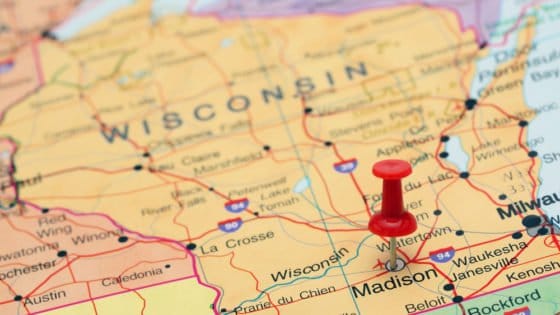
Wisconsin reformers are leading what may be, perhaps, the most promising non-partisan fight against voter suppression.
Related News Coverage:
Partisan Gerrymandering is One Step Closer to the Supreme Court
No Partisan Walls: Federal Court Strikes Down Wisconsin Gerrymandering
11. New Jersey
In the state of New Jersey, 47% of voters are registered independents. Yet, if you want to vote in the taxpayer funded primary election -- the Christie administration says you have to, “Join a party.”
In 2014, the Independent Voter Project (IVP), IndependentVoting.org, and 7 individual plaintiffs, challenged the constitutionality of closed primaries, arguing that the state cannot force a voter to join a private political party in order to vote at an important stage of the public election process.
The lower court ignored the argument. The Third Circuit court of appeal said that voters don’t get the fundamental right to vote in a primary until they join a major political party. And the Supreme Court of the United States chose not to consider the case.
So as it stands today, by law, you have to join a political party to have equal voting rights.
What about that first amendment right to not associate? You know, the same right being asserted by the Republican and Democratic Parties in Hawaii and Montana (see above).
12. California
This one’s easy. The state constitution calls for an “open presidential primary.” In 2016, the state conducted a semi-closed presidential primary.
The result? Lots of voter confusion, as each party has its own rules. Not to mention the half a million voters who mistakenly registered as “American Independent” instead of “No Party Preference” -- effectively eliminating their opportunity to cast a meaningful vote in the presidential primary. (The Democratic Party chooses to open their primary in California, the Republican Party does not. Hence, a “semi-closed” primary).
So why do they do it?
Open primaries serve voters. Closed primaries serve parties. Come to your own conclusion.
Related News Coverage:
California Revisits Presidential Primary Process After 2016 Voter Nightmare
Photo Credit: Peeradach Rattanakoses / shutterstock.com