Skip to content
Subscribe

What to Know About The Defense Budget Sequester

Published:
defense-budget

Today, the House took their first steps at resolving the looming defense budget cuts by drafting legislation requiring the Obama Administration to plan out how and where massive government cuts will take place in a report to Congress. The vote was 414-2.

Every year a business needs to plan a budget for the following fiscal year. Government is no different and the United States has begun its yearly debates regarding spending for the upcoming year. While no exact budget has been drafted yet, important steps have already been taken, and it is necessary to understand what is going on and what it means to the every day person.

What is the defense budget?

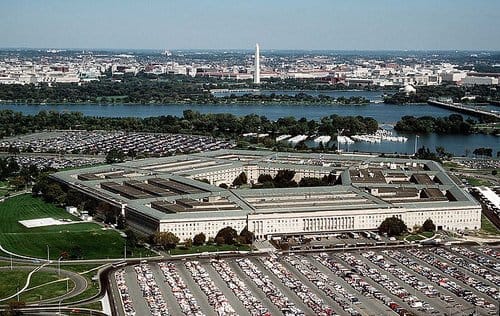
The defense budget is the amount of money that the US government allocates to any defense-related spending. This includes any military salaries, training, healthcare, weapons, equipment, facilities, and operations for all five branches of the military will be covered by the budget allocated this year.

What makes this year’s budget proceeding so special?

This year, Congress will have to address sequestration. A sequester is defined as “the action of taking legal possession of assets until a debt has been paid or other claims have been met,” and with regards to the budget, it means that Congress will now be forced to make cuts to make up for the $15.8 trillion debt that we have currently accumulated. This is a result of the Budget Control Act of 2011, which would allow for a sequestration if the debt was not controlled. Both Republicans and Democrats supported the bill, though neither party is especially happy with the overwhelming cuts they now need to face.

What is getting cut?

The Budget Control Act requires that $1.2 trillion be cut across all the government department budgets. The Department of Defense itself is required to cut $487 billion in the next ten years. Nothing specific has been set as of yet, as Congress makes moves to avoid across-the-board cuts as required by sequestration.

What repercussions will the cuts have on citizens and the economy?

Reports released this week have concluded that if the government goes through with the sequester cuts it could take away 2 million jobs from the American economy, which could then reduce GDP by $215 billion. If the Pentagon is to follow the required steps by the Budget Control Act, it is to cut spending by $56.7 billion in the first year, which would then directly cut 325,693 jobs and then indirectly cut 764,666 jobs.

Stephen Fuller, an economist at George Mason University and responsible for the stats says:

"The results are bleak but clear-cut. The unemployment rate will climb above 9 percent, pushing the economy toward recession and reducing projected growth in 2013 by two-thirds."

Adhere to the IVN etiquette

By posting a comment, you agree to adhere to our etiquette rules: No partisan attacks, no personal attacks, substantiate your sources, no self-promotion.

Contact IVN

Questions about this article or our coverage? Send us a message. A free IVN member account is required.

Message sent

Thanks, we’ll review it and get back to you if needed.

Message not sent

Sorry, something went wrong. Please try again.

Sign in to send a message

Messages are tied to your IVN member account. Signing in is free and takes a few seconds.

Republish this article

Republishing guidelines

Republish IVN articles for free. Independent Voter News articles may be republished online or in print under a Creative Commons BY-NC-ND 4.0 license, on these terms:

  1. Credit the author and IVN. Keep the byline ("By Author Name, Independent Voter News") and the attribution note at the end, which links to the original.
  2. Keep the meaning. You may update time and place references and apply your house style. You may trim for length, as long as the cuts don't change the meaning or misrepresent the author. Keep the headline. Mark any additions as your own (for example "Additional reporting by ...").
  3. Translations are welcome. Translate faithfully, add "Translated from English by [your outlet]", and tell us at editor@ivn.us.
  4. Keep the links, including the link to the original article.
  5. Keep the tracking image. The HTML includes a 1-pixel image that counts readers on your page. It collects no personal information.
  6. Photos and illustrations. Images credited to IVN may be used with this article only. Images credited to others (AP, Getty, Unsplash, Wikimedia and so on) stay under their owners' terms. Secure the rights or switch "Include images" off.
  7. Don't sell it. You can't sell our articles or sell ads specifically against them. Your normal site advertising is fine.
  8. No implied endorsement. Don't suggest that IVN or the author endorses you, your candidates or your causes, or that donations to you support IVN.
  9. Keep labels. Opinion or analysis pieces keep that label.
  10. Point search engines to the original. Where your CMS allows, set the canonical URL to the original IVN article.
  11. No bulk or automated republishing, and don't submit our articles to aggregators (Apple News, Google News, MSN) as your own.
  12. Corrections and removals. Update your copy when we correct it, and remove it promptly if we ask. We'll contact you at the email you give us.
  13. Questions or print republication: editor@ivn.us.

IVN staff: fill in who you're inviting above, then create the invite.

Preparing the article

What to Know About The Defense Budget Sequester

Choose a format
  • HTML
  • Email HTML
  • Markdown
  • Formatted (.docx)
  • Plain text
  • WordPress blocks
  • PDF
Choose a platform

Photos credited to others need their owners' permission.

To for

Republishing somewhere else? Questions? editor@ivn.us