Skip to content
Subscribe

What Does International Human Rights Day Really Mean?

Published:

Credit: devonnewscentre.info
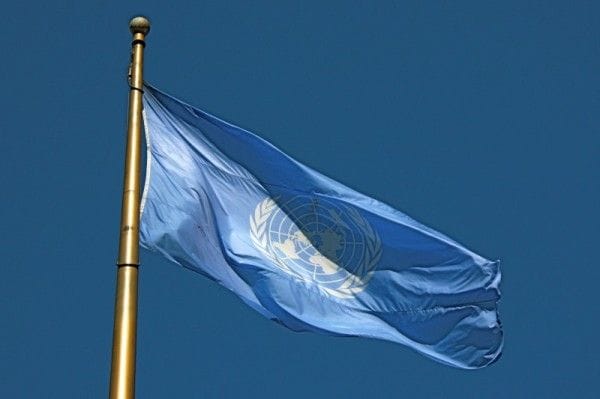
Last Monday was the 64th International Human Rights Day, celebrating the adoption of the Universal Declaration of Human Rights (UNDHR).

Each year, the United Nation High Commissioner for Human Rights picks a theme for the anniversary. This year, the spotlight centered on the rights of all peoples—women, youth, minorities, persons with disabilities, indigenous peoples, and the poor and marginalized—to make their voices heard in public life and in the decision making process.

While governments around the world recognized the importance of this celebration, including the US government, International Human Rights Day really tends to be a grassroots movement that different groups use to highlight their issues.

Human Rights Watch, a New York based NGO, for example, focused on highlighting the role of businesses in promoting human rights and opened the Amsterdam, Brussels, and Paris markets of NYSE Euronext.

Meanwhile, the free Tibet movement gathered thousands of Tibetans and its supporters to highlight China’s occupation of their homeland. November saw an increase in mass protests in the region, including the self-immolation of twenty-eight Tibetans to bring international awareness to their plight.

In Michigan, amid protests against the government’s new legislation restriction unions, workers organized around the anniversary to explain that:

The right of workers to form and join trade unions to protect their interests is a universal human right recognized in both human rights and labor law and is binding on all states. Right-to-work laws prevent unions from fulfilling their duty to protect the interests of the workers. Laws aimed at weakening trade unions so as to prevent them from protecting workers interests, in ICLR’s opinion, must be considered illegal. Therefore, final passage of this legislation and/or Governor Snyder signing it abrogates basic human rights and labor law.

Perhaps most interesting, however, are the protests in Haiti. Groups in the small island nation are protesting outside the United Nations logistics base in Port-au-Prince. These groups, such as Fan Rezo BAI (Women’s Network of BAI), MOLEGHAF (Movement for Liberty and Equality by Haitians for Fraternity) and KONAMAVID (National Coordination of Direct Victims)  are using the UN’s International Day of Human Rights to protest the cholera epidemic that UN troops brought to the country when they came to help after the earthquake. Unfortunately, the disease, which killed thousands, has not been adequately controlled or addressed by UN officials.

In the end, the diverse ways individuals articulate, advocate, and agitate for human rights highlight the myriad of ways that human rights groups use the UNDHR to promote for various causes, and the power this gives to the various movements to use international tools to lay claim to their own rights protection.

However, the proliferation of a human rights discourse also poses problems to these groups’ mobilization. If human rights are used to advocate for such a diverse use of rights discourse, does it lose some of its strength or organizing power to motivate real change?

This year’s all-encompassing theme is indicative of this conundrum since it addresses so many groups, but fails to highlight any one specific issue to bring the international community together.

Adhere to the IVN etiquette

By posting a comment, you agree to adhere to our etiquette rules: No partisan attacks, no personal attacks, substantiate your sources, no self-promotion.

Contact IVN

Questions about this article or our coverage? Send us a message. A free IVN member account is required.

Message sent

Thanks, we’ll review it and get back to you if needed.

Message not sent

Sorry, something went wrong. Please try again.

Sign in to send a message

Messages are tied to your IVN member account. Signing in is free and takes a few seconds.

Republish this article

Republishing guidelines

Republish IVN articles for free. Independent Voter News articles may be republished online or in print under a Creative Commons BY-NC-ND 4.0 license, on these terms:

  1. Credit the author and IVN. Keep the byline ("By Author Name, Independent Voter News") and the attribution note at the end, which links to the original.
  2. Keep the meaning. You may update time and place references and apply your house style. You may trim for length, as long as the cuts don't change the meaning or misrepresent the author. Keep the headline. Mark any additions as your own (for example "Additional reporting by ...").
  3. Translations are welcome. Translate faithfully, add "Translated from English by [your outlet]", and tell us at editor@ivn.us.
  4. Keep the links, including the link to the original article.
  5. Keep the tracking image. The HTML includes a 1-pixel image that counts readers on your page. It collects no personal information.
  6. Photos and illustrations. Images credited to IVN may be used with this article only. Images credited to others (AP, Getty, Unsplash, Wikimedia and so on) stay under their owners' terms. Secure the rights or switch "Include images" off.
  7. Don't sell it. You can't sell our articles or sell ads specifically against them. Your normal site advertising is fine.
  8. No implied endorsement. Don't suggest that IVN or the author endorses you, your candidates or your causes, or that donations to you support IVN.
  9. Keep labels. Opinion or analysis pieces keep that label.
  10. Point search engines to the original. Where your CMS allows, set the canonical URL to the original IVN article.
  11. No bulk or automated republishing, and don't submit our articles to aggregators (Apple News, Google News, MSN) as your own.
  12. Corrections and removals. Update your copy when we correct it, and remove it promptly if we ask. We'll contact you at the email you give us.
  13. Questions or print republication: editor@ivn.us.

IVN staff: fill in who you're inviting above, then create the invite.

Preparing the article

What Does International Human Rights Day Really Mean?

Choose a format
  • HTML
  • Email HTML
  • Markdown
  • Formatted (.docx)
  • Plain text
  • WordPress blocks
  • PDF
Choose a platform

Photos credited to others need their owners' permission.

To for

Republishing somewhere else? Questions? editor@ivn.us