

Editor's Note: The following is an exclusive series on IVN from the better elections group Open Primaries. The content originated from the group's weekly newsletter, "Primary Buzz." Open Primaries announced this week that they are merging "Primary Buzz" with the Let Us Vote campaign newsletter into a single, unified platform.
Something big is happening in the debate over open primaries - and the political narrative this primary election season is changing fast.
What was once dismissed as a niche reform issue is suddenly becoming part of a much larger national argument about political power, voter exclusion, and whether the parties have gained too much control over American democracy itself.
This week alone, major outlets moved the conversation dramatically. The Washington Post editorial board delivered a blistering rebuke to the leadership of both parties on their attempts to shut out voters, while The Atlantic tied partisan gerrymandering and safe districts directly to the growing power of closed primaries.
Across the country, the same pattern keeps emerging: independent voters shut out of taxpayer-funded elections, low-turnout primaries dominated by ideological activists, and growing frustration with a system many voters increasingly see as rigged by (and for) the parties themselves.
In Nevada, the exclusion of nonpartisan voters is becoming a bigger political flashpoint. In Texas, collapsing runoff turnout reinforced concerns that tiny electorates are effectively choosing leaders for millions of people. And in California, the 2026 governor’s race is once again turning the state’s Top Two system into a national test case for how elections can be made more competitive and representative.
 Steve Peace
The biggest shift is this:
Open primaries are no longer being framed simply as an election reform. Increasingly, they are being framed as a direct challenge to partisan control over American politics.
Check out Open Primaries President John Opdycke as he breaks it all down in a breaking piece for the Fulcrum.
What We're Talking About
CNN’s Smerconish Says the Quiet Part Out Loud
This past Saturday, Michael Smerconish used his CNN opening monologue to take direct aim at closed partisan primaries and the exclusion of independent voters. Pointing to the defeats and political vulnerability of figures like Bill Cassidy, Thomas Massie, and even the future risks facing John Fetterman, Smerconish argued that America’s primary system is rewarding ideological loyalty over broad public support. But he went even further, questioning why taxpayers are funding a system of elections that excludes millions. It was a powerful moment for the open primaries movement.
Following the segment, Smerconish sat down with me for a wide-ranging conversation on voter exclusion, political polarization, and why the fight to open America’s elections is rapidly becoming one of the defining democracy issues in the country.
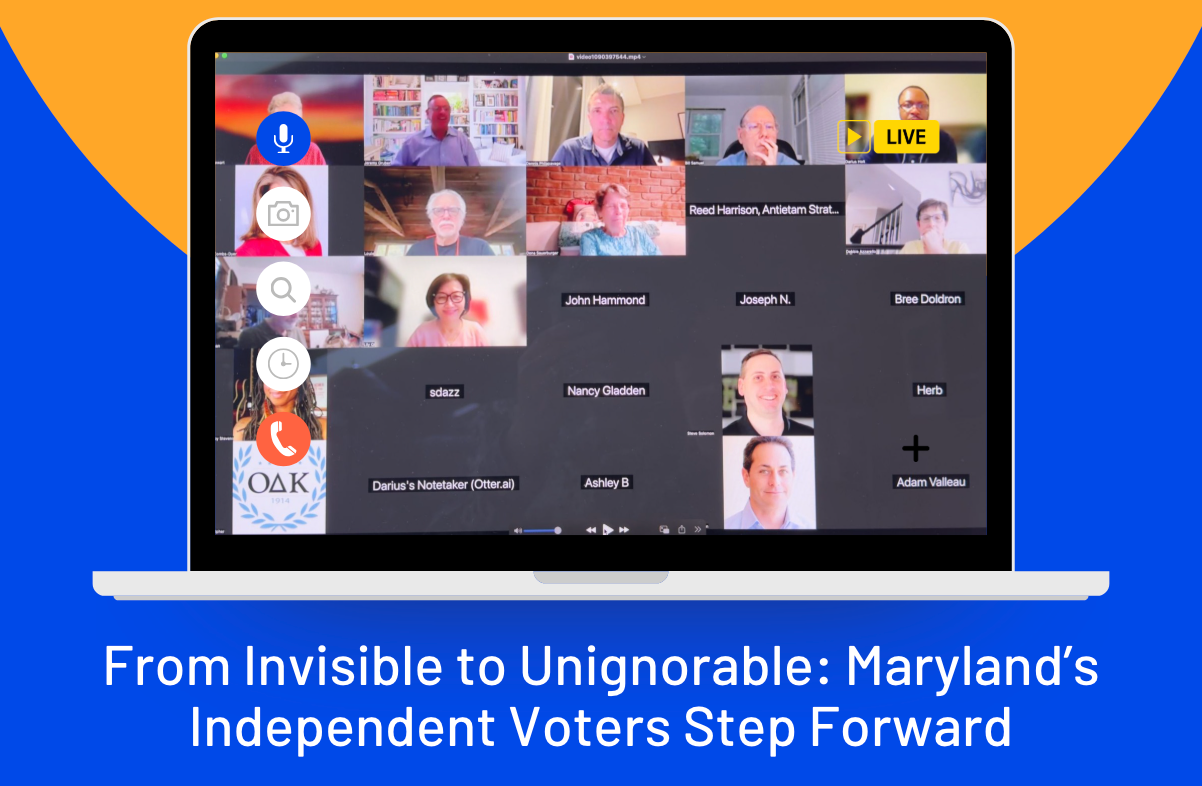
This week two dozen independent Marylanders joined Delegate Lily Qi and Jeremy Gruber, Senior Vice President at Open Primaries to take stock on the fight in the Maryland legislature to open the primaries to over one million independent voters.
They discussed the ongoing litigation challenging the state’s closed primary system. Jeremy asked Delegate Qi how she saw the impact:
“The lawsuit at least put some faces to this case. It’s no longer an abstract issue. There are real people willing to step forward to say this affects me as a tax payer…It sharpens the focus.”
Dona Sauerburger, a lead plaintiff in the lawsuit, thanked Del. Qi for her advocacy on the issue and discussed the common issue raised by opponents that opening the primaries will cost more money because candidates would have to appeal to more constituents! Del Qi commented – “that’s the whole point!” She went on to report that in the course of several conversations with her colleagues: “We’re already changing some minds.”
There was also a discussion about Gov. Moore’s comments on the Bill Maher show in support of open primaries, which his staff quickly walked back. Dennis Philapavage gave the gathering an update on a recent interaction he had with Gov. Moore at an event in Havre De Grace. Dennis, a veteran and activist with Let Us Vote and Veterans for All Voters, talked to the Governor, veteran to veteran, pressing him on the need to give independents full voting rights. The Governor agreed that “the issue cannot be ignored.”
Here is the take away – when independents become visible, step out like the plaintiffs did in the MD lawsuit, or show up to testify – new things can happen, including developing a new partnership with an elected leader who is passionately advocating for independent voting rights!
If you’re a Marylander, Independent Voters of Maryland invites you to join Operation Independent on Primary Day on June 23rd. They are holding an informational picket in Laurel – independents will be gathering with signs — “I CAN’T VOTE TODAY! ASK ME WHY”. Or as Elaina Goldstein suggested on the call, “I’M ONE IN A MILLION – WHO CAN’T VOTE TODAY!”
If you want to join, please reach out to Melanie Combs-Dyer at melanie@independentvotersmd.org.
Open Primaries Campaign to Rally New Mexico Independents Ahead of State’s First Open Primary Ramps Up
As we recently reported, Let Us Vote NM, a project of Open Primaries, launched a statewide education / Get Out The Vote campaign to mobilize independent voters to participate in the primary. With early voting well underway and primary day next week, that campaign is ramping up.
Oregon’s 1.3 Million Voters Shut Out Again

Once again, Oregon’s largest group of voters (1.3M+ citizens) were shut out of the May 19 taxpayer-funded primary election that chose candidates for Governor, U.S. Congress, Legislators,and a number of important representatives.
Voter Fairness is organizing to change that and refocusing their efforts on the 2027 Legislative Session and 2028 election. To the many volunteers and supporters who are already calling attention to the need to open the primaries to let all Oregon voters vote-thank you! To join them and build a fairer, more representative Oregon, please sign up at voterfairness.com.
In Case You Missed It
The Walls Around Pennsylvania’s Primaries Are Starting to Crack
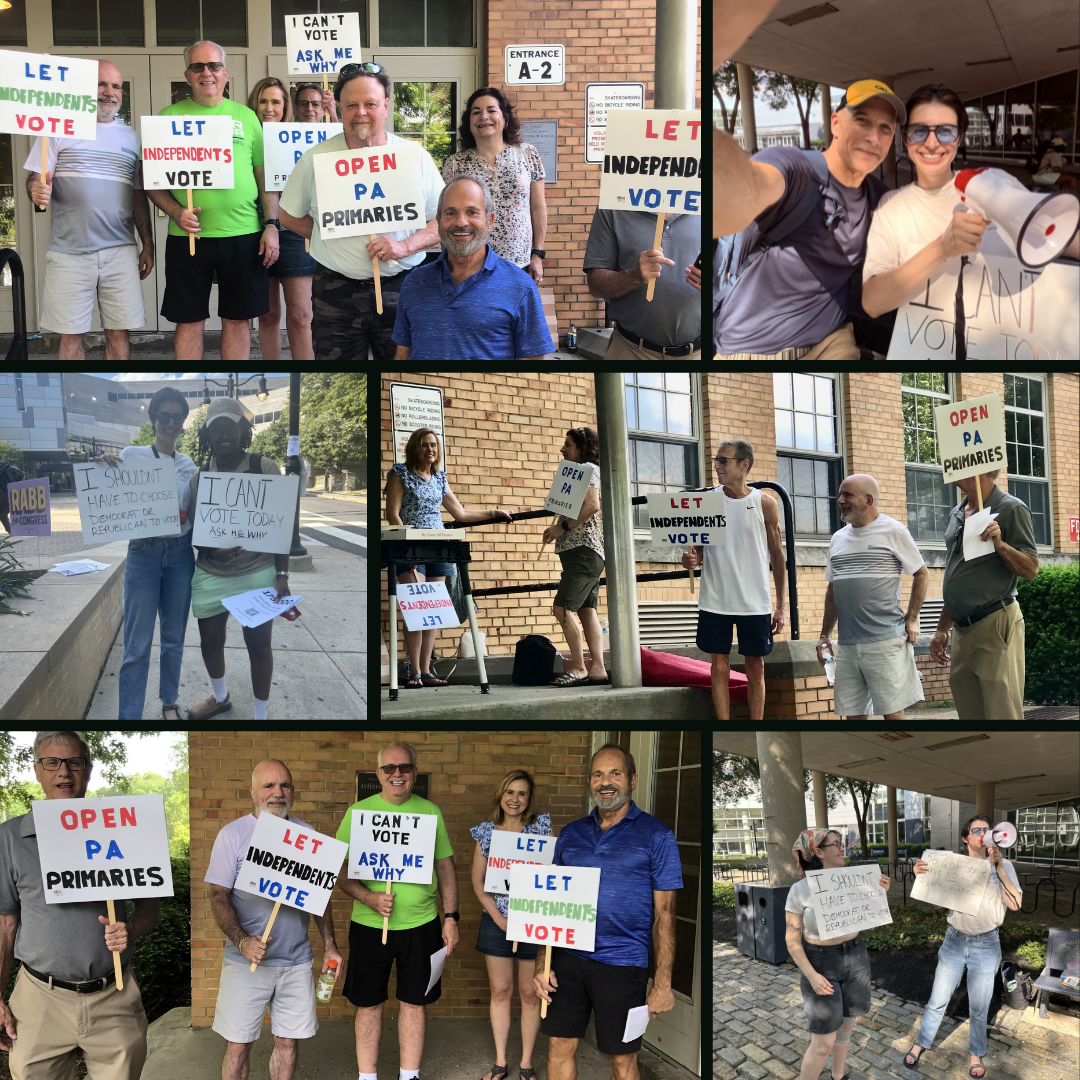
The fight to end Pennsylvania’s closed primary system is breaking into the mainstream. Open Primaries President John Opdycke and National Organizing Director Cathy Stewart were featured in media outlets across the state, from the Pennsylvania Capital Star to a headline piece in USA Today, calling out a system that disenfranchises millions of voters by design.
Meanwhile, independent voters in Philadelphia and Pittsburgh showed up at polling places across Pennsylvania last week with a simple message: stop locking 1.5 million voters out of taxpayer-funded elections.
For more than a decade, Open Primaries has been on the front lines in Pennsylvania — building legislative coalitions, organizing independent voters, and filing groundbreaking litigation alongside our partners at Ballot PA Action to challenge the state’s closed primary system head-on.
The pressure is growing, and it’s having an impact: Pennsylvania Governor Josh Shapiro has announced his support for primary reform!
Upcoming Events
Rule of Law: The Operating System of Capitalism. A Conversation with Danielle Allen.
Friday, June 12th 2-3pm ET | 11am-12pm PT
The event is hosted by YPO Democracy Group. Be sure to register here
Every business is built on systems it does not control, the rulebook of the public market-- courts, regulations, public institutions.
- At its core is the Rule of Law, the foundation of economic trust, market stability and sustained growth.
- But, Rule of Law depends on a political system capable of making legitimate decisions that endure beyond the next election cycle, news cycle or partisan fight.
- When businesses can no longer trust the stability of the rules, growth slows, investment retreats and the cost of uncertainty rises for everyone.
Does our democratic system have the capacity to function at a level that supports a modern economy?
Join YPOer Seth David Radwell as he interviews Professor Danielle Allen and asks: What is the government’s role in creating robust systems that people trust?