Skip to content
Subscribe

The Abu Ghraib Settlement: A Form of Reparations?

Published:

Photo: Khalid Mohammed
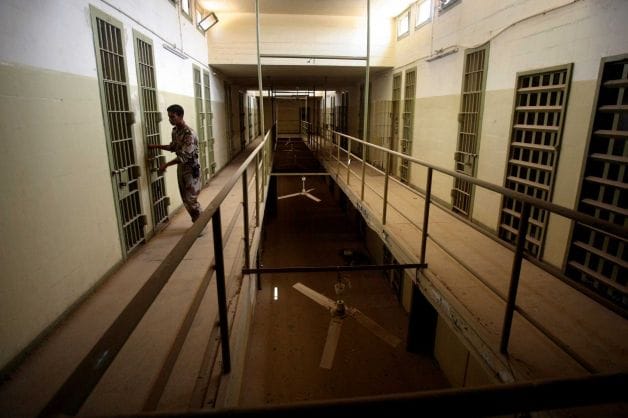
Photo: KHALID MOHAMMED

The first lawsuit involving defense contractors accused of conspiring to torture detainees at Abu Ghraib in Iraq concluded last week with a $5.28 million settlement to the 71 former inmates. Each received a portion of the money.

The Abu Ghraib settlement was the result of a successful lawsuit against Engility Holdings Inc. and is only the first of many cases against contractors that have been filed in courts across the U.S. Another contractor, CACI, has a projected trial date of summer 2013.

Between 2003 and 2007, prisoners at the detention center were subjected to mock executions, severe beatings, and torture. Evidence of the abuse became public in 2004 when photographs of naked inmates surfaced in the press. Lawsuits for the abuses were filed in 2008.

Across the United States, many human rights groups cheer the decision, even if they did argue that the dollar amount rewarded might be inadequate in relation to the scope of the crimes. The legal director at the Center for Constitutional Rights (CCR), Baher Azmy, reported that "private military contractors played a serious but often under-reported role in the worst abuses at Abu Ghraib. We are pleased that this settlement provides some accountability for one of those contractors and offers some measure of justice for the victims."

The legal action against the defense contractors rather than the U.S. military itself is a concerted legal strategy, since the U.S. government has immunity from suits involving combat activities of the military in times of war. Since courts have not decided whether contractors in a war zone should be accorded the same immunity, legal actions have focused on the contractors, as this settlement shows, to a measure of success.

However, if, as the CCR argues, the settlement is providing a form of accountability and justice, then the settlement acts as a method of reparations. The International Center for Transitional Justice, a New York based NGO, defines reparations as a form of compensation for acknowledging and taking responsibility to address harms caused by widespread or systematic human rights violations. While the United States might be immune from prosecution, states are seen as holding a legal duty to acknowledge and address gross violations of human rights. The focus on defense contractors is a way to receive a form of tangible reparations for the former inmates at Abu Ghraib, but the focus on private entities rather than the U.S. government also elides the responsibility of the government to provide accountability for the actions that were committed there.

George W. Bush, president at the time the scandal surfaced, called the abuse “abhorrent” and eleven U.S. soldiers were eventually convicted of crimes including aggravated assault. However, the U.S. has failed to provide compensation for the abuses, as these contractors are being forced to pay. With no ability to prosecute crimes committed by the military, the focus remains on contractors for the time being.

Adhere to the IVN etiquette

By posting a comment, you agree to adhere to our etiquette rules: No partisan attacks, no personal attacks, substantiate your sources, no self-promotion.

Contact IVN

Questions about this article or our coverage? Send us a message. A free IVN member account is required.

Message sent

Thanks, we’ll review it and get back to you if needed.

Message not sent

Sorry, something went wrong. Please try again.

Sign in to send a message

Messages are tied to your IVN member account. Signing in is free and takes a few seconds.

Republish this article

Republishing guidelines

Republish IVN articles for free. Independent Voter News articles may be republished online or in print under a Creative Commons BY-NC-ND 4.0 license, on these terms:

  1. Credit the author and IVN. Keep the byline ("By Author Name, Independent Voter News") and the attribution note at the end, which links to the original.
  2. Keep the meaning. You may update time and place references and apply your house style. You may trim for length, as long as the cuts don't change the meaning or misrepresent the author. Keep the headline. Mark any additions as your own (for example "Additional reporting by ...").
  3. Translations are welcome. Translate faithfully, add "Translated from English by [your outlet]", and tell us at editor@ivn.us.
  4. Keep the links, including the link to the original article.
  5. Keep the tracking image. The HTML includes a 1-pixel image that counts readers on your page. It collects no personal information.
  6. Photos and illustrations. Images credited to IVN may be used with this article only. Images credited to others (AP, Getty, Unsplash, Wikimedia and so on) stay under their owners' terms. Secure the rights or switch "Include images" off.
  7. Don't sell it. You can't sell our articles or sell ads specifically against them. Your normal site advertising is fine.
  8. No implied endorsement. Don't suggest that IVN or the author endorses you, your candidates or your causes, or that donations to you support IVN.
  9. Keep labels. Opinion or analysis pieces keep that label.
  10. Point search engines to the original. Where your CMS allows, set the canonical URL to the original IVN article.
  11. No bulk or automated republishing, and don't submit our articles to aggregators (Apple News, Google News, MSN) as your own.
  12. Corrections and removals. Update your copy when we correct it, and remove it promptly if we ask. We'll contact you at the email you give us.
  13. Questions or print republication: editor@ivn.us.

IVN staff: fill in who you're inviting above, then create the invite.

Preparing the article

The Abu Ghraib Settlement: A Form of Reparations?

Choose a format
  • HTML
  • Email HTML
  • Markdown
  • Formatted (.docx)
  • Plain text
  • WordPress blocks
  • PDF
Choose a platform

Photos credited to others need their owners' permission.

To for

Republishing somewhere else? Questions? editor@ivn.us