
Today, Robert Reich, the Chancellor's Professor of Public Policy at UC Berkeley and former Secretary of Labor to the Clinton Administration, wrote a blog post on his website about three crises Americans are ignoring - crises scarier than fiscal cliff. Reich writes, "If we had a functional government America would address three “cliffs” posing far larger dangers to us than the fiscal one."
1. The child poverty cliff:
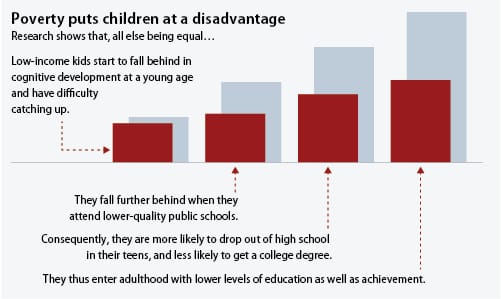
20.7 percent of American children live in poverty, with 1.4 million children having fallen into poverty in 2011 alone. Reich notes, "unless we focus on better schools, better health, and improved conditions for these poor kids and their families, in a few years America will have a significant population of under-educated and desperate adults."
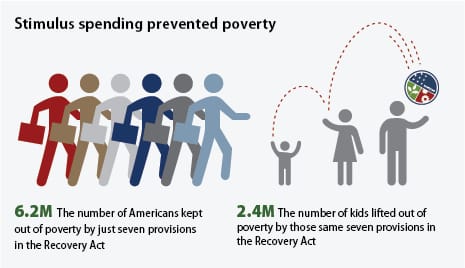
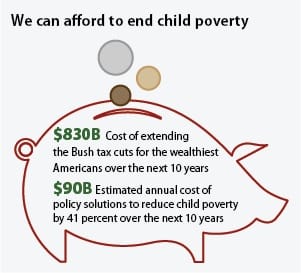
Graphics from the Center for American Progress
2. The baby boomer health care cliff:
The looming fiscal cliff has further pushed the Social Security crisis to the forefront of media attention. It is ever more apparent that Social Security benefits are unsustainable, particularly as the baby boomer generation ages and reaches retirement. The federal government spent almost five percent of GDP this year on federal healthcare programs, a share which is only expected to grow, according to the Congressional Budgetary Office.
Reich concludes, "We can’t avoid the fact we have the most expensive and least effective system of health care in the world that’s spending 30 percent more on paperwork and administration than on keeping people healthy. The real healthcare cliff can only be avoided if we adopt a single-payer healthcare system." Click to enlarge.

3. The environmental cliff:
For some reason, the environment remains a highly contentious issue in the United States. As a global leader, the US's environmental policies set examples for global standards and could determine the urgencies of environmental regulation. The rather unproductive Doha round taking place this week highlights a lack of consensus and priority on the environment, but Reich argues this procrastination is dangerous and costly. Reich makes clear the American responsibility to take the lead on climate change, saying, "Unless we act to reduce carbon emissions, other major emitters won’t do so. The only binding pact so far is the Kyoto Protocol, which the U.S. never joined. And we’re taking no leadership at the international climate talks now taking place in Qatar." Click to enlarge.
