
Young Immigrants Wait to Apply for Deferred Action

 Heather Rogers
Lines of applicants for the Deferred Action Program outside the Coalition for Humane Immigrant Rights of Los Angeles in Los Angeles on Wednesday. Credit: US News
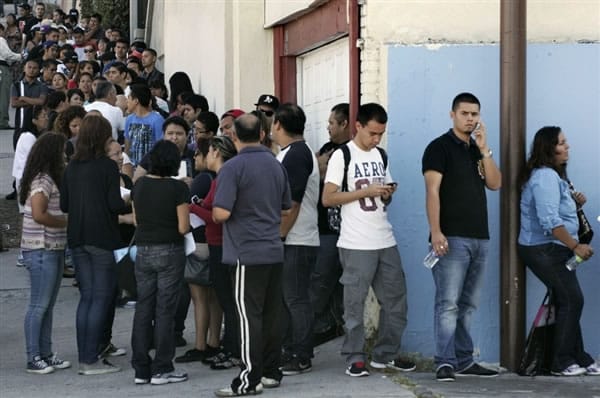
On Wednesday the DREAM Act (acronym for Development, Relief, and Education for Alien Minors) went partially into effect. Prompted by the Obama Administration’s Deferred Action policy, which began accepting applications yesterday, thousands of young undocumented immigrants are now waiting to obtain deportation relief.
According to the National Immigration Forum, “Persons will be eligible for deferred action if they can demonstrate that they:
- Came to the United States before the age of sixteen as of June 15, 2012;
- Were in the U.S. on June 15 and have continuously resided in the United States for at least five years.
- Are currently in school, graduated from high school, obtained a general education development certificate, or were honorably discharged from the Coast Guard or Armed Forces;
- Have not been convicted of certain crimes.
- Are not a threat to national security or public safety.
- Were not above the age of 31 as of June 15, 2012.”
The Deferred Action program will allow undocumented immigrants between the ages of 15 and 30 the opportunity to work and attend school in the United States if they meet the above requirements. It assumes that qualified applicants were brought to the United States as children through no fault of their own.
The application process will cost each applicant $465, and will halt the deportation processes for 2 years while the application is being processed. It will also grant a work permit for those who qualify.
The Deferred Action policy is basically a watered down version of the DREAM Act that has been stalled by Republicans in Congress. The policy is the result of an executive order from the Obama Administration and in consequence, many politicians have criticized the president for bypassing the legislature with his announcement of the policy.
In Arizona, a state with one of the strictest anti-immigration laws, Gov. Jan Brewer, signed her own executive order on Wednesday which would deny public benefits and driver’s licenses to undocumented immigrants who gain work authorizations through the Deferred Action program. She maintains that she is following the intent of the current state law since the program does not give immigrants legal status.
Despite criticism, the Administration’s policy is similar to a modest proposal presented by Republican Sen. Marco Rubio that would grant residency to immigrants who were brought to the U.S. as children. Sen. Rubio has censured the president's executive order saying:
By once again ignoring the Constitution and going around Congress, this short-term policy will make it harder to find a balanced and responsible long-term one.
Though opponents say that it will encourage and reward illegal immigration, calling it “backdoor amnesty”, supporters, of the policy praised the president for taking action. Majority leader Harry Reid stated Wednesday:

I hope Republicans, especially those who expressed willingness to help these young people, will support the administration's efforts to provide them with a reprieve while Congress works out a path forward.
According to Reuters, more than 1.7 million people might be eligible for the program. Long lines of hopeful young immigrants are sure to remain outside of immigration offices during days to come.
You Might Also Like


