
NYC Primary an Example of How Modern Primaries Disenfranchise Voters
 Debbie Sharnak
David Handschuh/New York Daily News

Mark Twain once said that history does not repeat itself, but it does rhyme.
In 2009, Bill Thompson lost what was widely considered an unexpectedly close race for mayor of New York City against two time incumbent, Michael Bloomberg.
Now, four years later, Thompson has lost an even closer race in the Democratic Primary against Bill de Blasio. On Monday, despite no official results being returned that de Blasio had won the requisite forty percent of the democratic primary’s vote to avoid a runoff in October, Thompson conceded the race. At a press conference at City Hall, he joined de Blasio and Governor Andrew Cuomo to demonstrate party unity and endorse de Blasio.
Thompson stated that “I am proud to stand here today and support Bill de Blasio to be the next mayor of the City of New York.” De Blasio will face the Republican nominee, Joseph Lhota in the November general election.
Thus, the primary for the next leader of NYC came to an abrupt halt after months of campaigning and a wild electoral season that included a constant stream of front-runners, from de Blasio to Thompson, and Christine Quinn to Anthony Weiner.
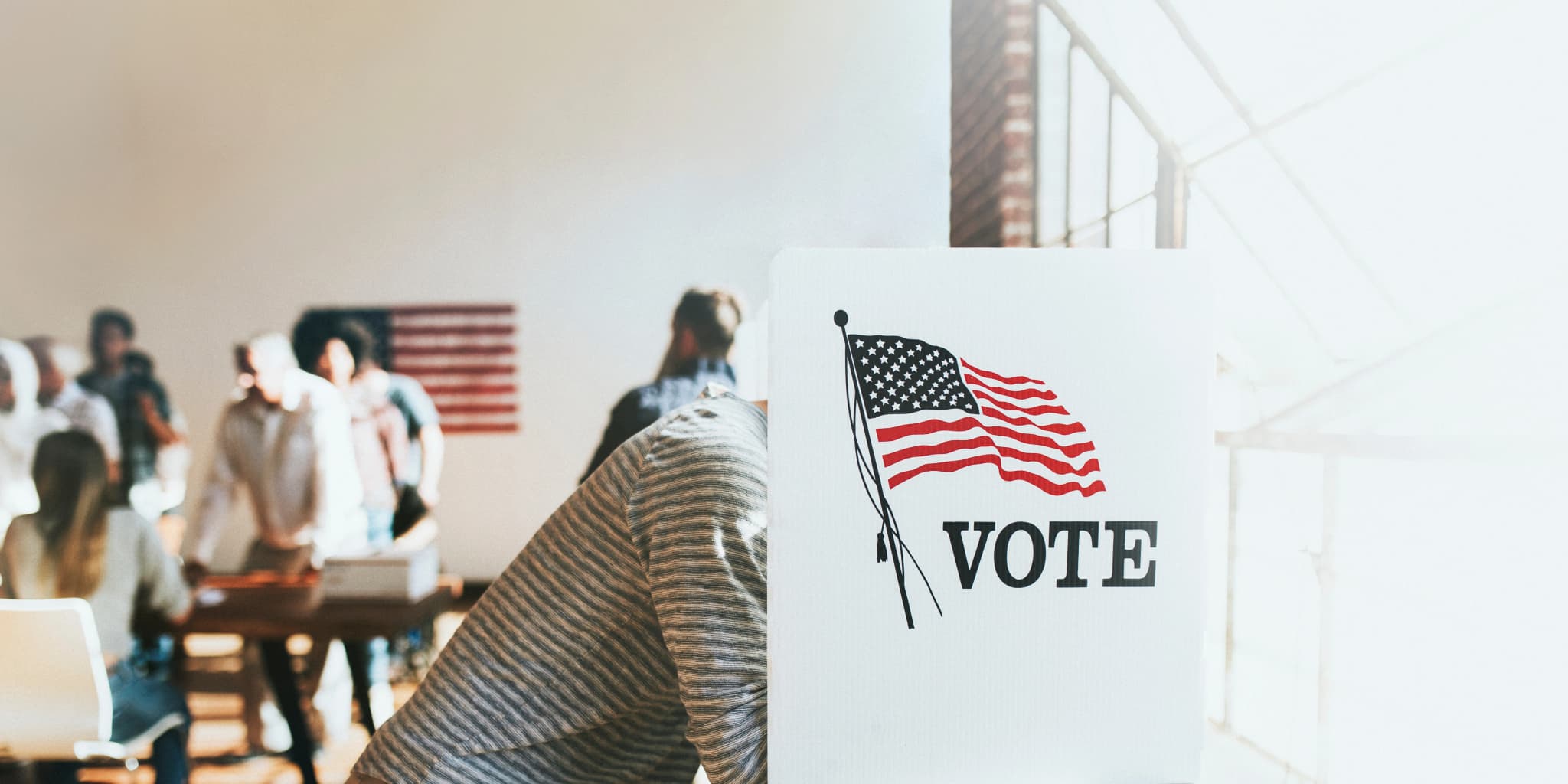
However, despite the recent press and media attention that focused on the primary, only a paltry amount of New Yorkers turned up for the election. About 700,000 voters turned out for electoral campaign and only 260,473 voters chose de Blasio.
While turnout for registered voters who affiliate with one of the two major parties hovered around 20 percent, only 3 percent of all New Yorkers participated in the electoral process to decide the major candidates for the next mayor.
Primary elections, once a hallmark of democratic reform, are now relatively exclusive exercises that disenfranchise an already apathetic electorate.

The history of primaries in American democracy date back to the Progressive Era. The two stage electoral process was put in place at a local level in the early 1900s as a response to the power of local party politics. Reformers of the era saw primary elections as a way to fight against political machines which used to dominate politics during the era.
In addition, primaries were seen as a way to bring in fresh candidates, new ideas, and organized constituencies such as unions which were only beginning to gain a voice in politics during this period.
Primaries proved compelling because they allowed for more voices to contribute to conversation. Rather than just organize voters by party affiliation, primaries were a mechanism for allowing a greater number of candidates to get on the ballot. (Presidential election primaries were instituted during the 1970s as a push back against caucuses and state conventions after the upheaval of national politics during the period).
Most importantly, however, the two stage electoral process was supposed to allow for more fierce and fluid competition to provide voters options and a variety of voices, particularly in districts where there were few options in the general election.
Recent studies by political scientists, however, have found that while primaries originally contributed to more competitive in the first thirty to forty years after their introduction into the electoral system, this is no longer the case. Analyzing data-sets of every statewide executive and federal primaries from 1908-2004, these scholars found that except in open-seat contests, competition in primaries is no longer robust.
In a series of forthcoming articles, I will delve into the history of primaries in the American democratic system and attempt to understand why there has been such a decline in competition among this system, and how primaries have actually led to the polarization of recent politics rather than allowing for a more open political discourse, despite the original intention of Progressive Era reformers.
You Might Also Like


