Americans Believe Their Wages Have Gone Up in Past 5 Years

 Brian Iniguez
It has been five years since the economic crisis of 2008. A recent Gallup poll conducted in August shows that 58 percent of Americans working full time or part time believe they are making markedly higher amounts of money. The poll did not define what "a lot" or "a little" meant, but left it up to the respondent to decide for themselves. In other words, people differ in what "a lot" of money is.
The results show a divide in public perception. Roughly the same amount of people who think they are making either a lot more money or a little more (28 and 30 percent, respectively) also believe they are making less. 14 percent of people haven't seen any change at all. Those figures combined mean that 42 percent of Americans are feeling the lasting effects of the 2008 recession and are getting paid the same or less since then. A graph depicting the Average Wage Index (AWI). Via Social Security.
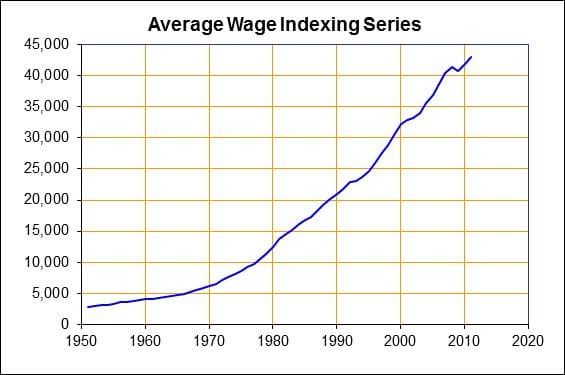
Perceptions aside, the average salary has slowly recovered since 2008, the national average having increased to $47,000 from $41,000 in '08.
The split in opinion over wages could have something to do with age. Older citizens tend to believe their salaries are higher than five years ago. Fifty-nine percent of people aged 30 - 49 agreed they felt their pay had increased, and 45 percent of 50 - 69 year olds thought the same.
The 18-29 age bracket was even more likely to say they were making "a lot more" in funds, over half. However, many within this age group work minimum wage jobs.
About half of all workers with an hourly wage were under 25 in 2012, and have no prior salary to compare it to. That doesn't mean that they are making a lot more money. It's their perception of finally having an income that could influence their response. Minimum wage isn't enough to live on. Indeed, fast food workers in New York gathered in protest of their low salaries.
Even so, Gallup took workers with no prior salary into account:
"51% of 23- to 29-year-olds say they are making a lot more and 22% are making a little more."
In a nation where 16.1 percent of young people are unemployed, and only one in ten college students are receiving federal work study, they may be experiencing the same excitement as they would have had at 18. With the increasing national ambivalence of the national minimum wage, legislation could bump that figure up even more, leading to a faster economic recovery.
Photo Credit: vitma / Shutterstock

You Might Also Like