

Brian Iniguez
Student at UC San Diego. Editing Intern and Contributor at IVN. Arts and Entertainment Columnist at the UCSD Guardian. Music freak and tech geek. Studying American Politics and Communications. Learning every day.
Articles by Brian

Americans Believe Their Wages Have Gone Up in Past 5 Years
It has been five years since the economic crisis of 2008. A recent Gallup poll conducted in August shows that 58 percent of Americans working full time or part time believe they are making markedly higher amounts of money. The poll did not define what "a lot" or "a little" meant, but left it up to the respondent to decide for themselves. In other words, people differ in what "a lot" of money is.
The results show a divide in public perception. Roughly the same amount of people who think they are...
30 Aug, 2013
-
2 min read

NSA Violated Constitution by Breaching Tens of Thousands of American Emails
National trust in the NSA could further deplete in the wake of a 2011
court ruling released Wednesday. Foreign Intelligence Surveillance Court (FISA) chief justice Judge John D. Bates declared the methods undertaken by the agency unconstitutional and overreaching in authority.
The NSA is purported to have gathered and stored thousands of communications belonging to American citizens, a stark difference to what the secret court had been led to believe in both scope and nature. Bates had not bee...
22 Aug, 2013
-
2 min read

Bitcoin Faces Uncertain Future Even after Favorable Court Ruling
A U.S. judge ruled that Bitcoin (BTC) can now be recognized as an official currency, same as the dollar, gold, or silver. The ruling has been used in order to pursue the prosecution of a BTC investor operating a ponzi-like scheme. Previous coverage discussed its growing popularity, but the ruling could create another boom in value.Unlike the dollar, and it is anonymous. Bitcoin value is solely determined by the community that uses it, and by the fact that they are scarce in nature.
Bitcoins a...
20 Aug, 2013
-
3 min read
Confidence in Congress Continues to Drop
Four out of five Americans disapprove of Congress' attempts at serving its nation, a recent study found. This year marks Americans' lowest confidence in Congress since 1973, which amounts to a 10 percent approval rating.
Partisan gridlock is the main culprit for this new low in congressional trust, with 28 percent agreeing that their approval rating was determined by this factor. The second reason given was "failure to accomplish anything or make decisions." At 21 percent of respondents, perce...
19 Aug, 2013
-
1 min read
Where Does Partisan Bias Come From?
The election process has a direct impact on the outcome of any election. Those setting the rules can determine what outcomes are more likely.
In our first-past-the-post, majority-wins system, whoever gets the most votes in a district gets the chair. This gets a little insidious when considering the gerrymandering phenomena: the selective redrawing of districts, and, therefore, the redrawing of who gets elected. A popular complaint of gerrymandering is the tendency for partisan politics to inter...
16 Aug, 2013
-
1 min read

Why We Should Not Raise the National Minimum Wage
As the debates roar on and a concrete decision looms nearer, opponents to the national minimum wage increase have spoken at length of its unintended consequences. While numerous studies have been published that advocate a raise, the loud minority have expressed their concerns as the Fair Minimum Wage Act of 2013 keeps the media buzzing.
(1) It won't reduce poverty
Senior Policy Analyst in Labor Economics, James Sherk, published a 2007 report delineating the specific reasons why poverty is not...
15 Aug, 2013
-
2 min read
Why We Should Raise the National Minimum Wage
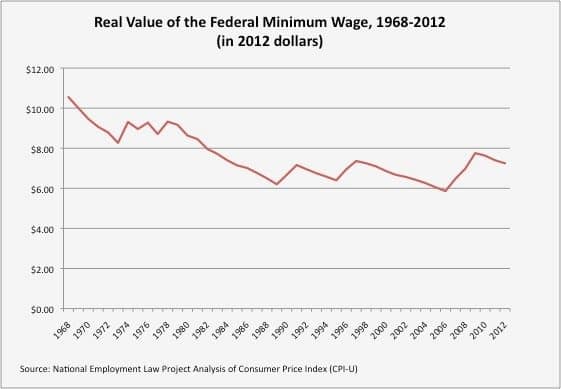
Obama's 2013 State of the Union addressed a lurking issue in today's post-recession America: raising the minimum wage to $10.10 by 2015. This sentiment is echoed by 73 percent of the electorate.
The Fair Minimum Wage Act of 2013 seeks to account for Congress' failure to raise the minimum wage in accordance with inflation and the heightened cost of living over the past decades.
The bill was introduced by Senator Tom Harkin (D-IA), chair of the Senate Health, Education, Labor and Pensions Commit...
14 Aug, 2013
-
3 min read
No Reasonable Expectation to Privacy for Cell Phone Data
anthonyturducken / Flickr
Last week, the Fifth U.S. Circuit Court of Appeals overturned a magistrate judge's 2010 ruling that made cell phone data constitutionally protected from government intrusion under the Fourth Amendment. Cell phone data refers to calls, texts, emails, voicemails, photographs, Internet usage, and GPS tracking systems.
Whenever a call is made from a cellular device, the carrier knows where the call is coming from. It needs to know this information in order to relay the si...
09 Aug, 2013
-
3 min read
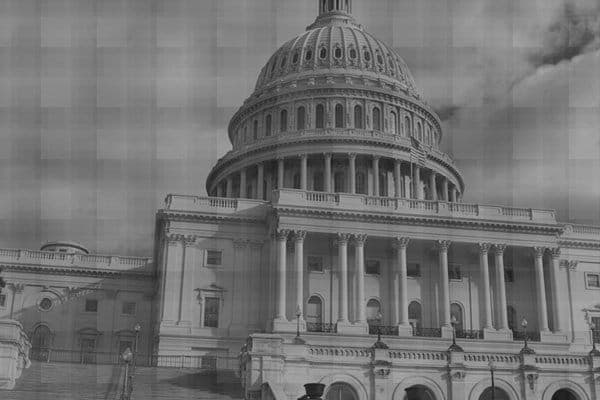
What Causes Congressional Gridlock?
Congressional gridlock is the norm in today's polarizing political climate. Although voters are content with keeping the same people in office despite record lows of approval, the cause for this phenomenon can be rooted to the lack of Congressional moderates, which also means the lack of "bridgebuilders."
Bridgebuilders are the men and women in Congress with incentives that transcend partisan politics, voting on an issue regardless of affiliation. However, with today's almost evenly-split elect...
08 Aug, 2013
-
1 min read