
Modern Depictions of Muslims in Pop Culture

 Zachery Abramson
Credit: Newsweek
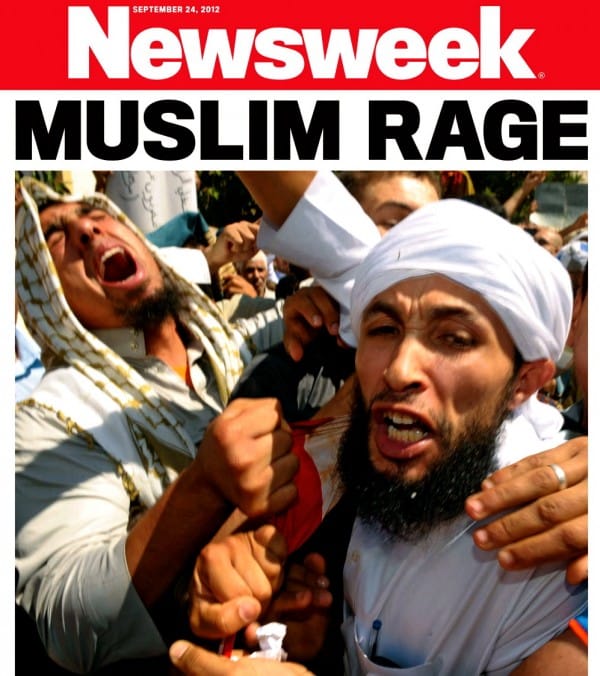
In light of the recent and tragic attacks in Libya, it's important to examine the modern depictions of Muslims in pop culture and how they characterize, distinguish and perpetuate the physical and ideological differences between our two societies. That isn't to say that forms of visual media can't be used as a powerful tool for political critique and change, however, as a part of the media these images serve as a reminder of our stereotypes and culturally accepted views of the Middle East. Allegedly, the September 11th attacks on the U.S. consulate were prompted by excerpts of a viral video, uploaded onto YouTube under the name, “Innocence of Muslims”.
The video was produced and created under the pseudonym “Sam Bacile”, based out of Cerrito, California and was largely distributed via the internet by Morris Sadek, an Egyptian American living in Northern Virginia. Throughout the video, the followers of the Muhammad are cast as violent, pan-sexual bandits, while members of the Middle Eastern Christian and Judaic faith display more traditional American values.
When modern day terrorist loot and attack a medical clinic, they act in a primitive manner, using the same methods carried out by the characterization of Muhammad and his band of thugs. The use of a green screen to illustrate the Middle Eastern landscape and the over-dubbing of the actors' voices, "Innocence of Muslims" exaggerates socially accepted stereotypes of Muslims as extremists wrapped up in turbans in pursuit of fanatical religious violence.
In the wake of the attacks, contributions to this view of the Islamic culture have been circulating the internet and news, in what is described as 'Muslim Rage' against the negative portrayal of their prophet. A current Newsweek publication featured an image of a group of Muslims protesting, and condemned their demonstration as an attack on our right to freedom of speech. Not by a fringe group of radicals, but by the Islamic people at large. Newsweek then encouraged readers to tweet to #MuslimRage in order to spark further discussion regarding the ongoing conflict in the Middle East.
Users of social media have used this opportunity to provide a counter-narrative that de-constructs Middle East stereotypes. An example of which is a is an article in The Gawker, a collection of thirteen photographs of Middle Eastern people engaged in harmless activities having a good time. What makes these images powerful is their reliability; depictions of regular human acts taking place over a number of seasons, settings, and events. There isn't a time stamp on these photos, or emphasis placed on their religious beliefs. In fact, some of the photographs have very little indication that the people in them are of the Muslim faith at all.
https://twitter.com/a_greenberg/status/247849154796195841
https://twitter.com/alikhurshid/status/248524962841894912
https://twitter.com/saidhamideh/status/248121533439021056

https://twitter.com/crystalsinger/status/247849095455207424
You Might Also Like


