
Credit: NPR
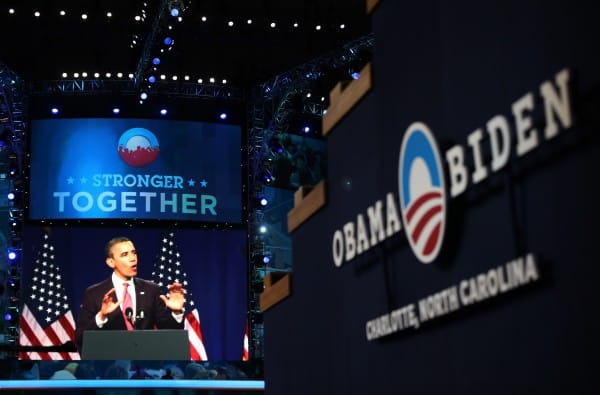
With the talk of political conventions fresh in the air, some might wonder about their relevance in modern day politics. Before the extensive primary election season, political conventions served to officially nominate a party's candidate. While the conventions still do this, they may have garnered another objective since the invention of television. Depending on their quality, political conventions influence and attract millions of undecided voters. In a tight election, these select voters can decide the outcome of the race.
Not everyone will alter their decisions based off of political conventions influence, "but for millions of voters, the decision is made during the conventions," says the National Journal.
The data support this claim as 14% of voters made their decisions at the time of the conventions during the 2004 presidential elections. Despite being far from a majority, the figure translates to roughly 18.1 million voters affected by watching the convention. According to a PBS poll, when asked "Will the events at either party’s convention affect the way that you vote?", 82% said no, while 18% said yes. This traditionally translates into a political "bump" in the polls for the nominees--however small it may be.
In 2008, McCain edged out Obama 6% to 4% in post-convention polls, giving McCain a net gain of 2%. In 2004, Kerry actually lost a percentage point, while Bush gained 2%. Even small, this shows convention and speeches must occur as perfectly as possible. Mishaps or poor speakers may actually harm the nominee's chances of winning the election while the opposite can potentially give a nominee a slight, but important, advantage. In rare instances, a convention can give a substantial boost. Clinton, for example, gained 16% over Bush Sr.'s modest 5%.
These bumps occur because politically inactive voters begin to take notice of the election. In essence, conventions "become a wake-up call of sorts for the politically disengaged, reminding them to start paying attention to an election barely two months off," says a USA Today op-ed. In terms of political milestones, the conventions remain "the most watched political events except for the fall debates."
Along with the potential bump, this probably explains why so much hype surrounds these conventions. For the disengaged voter or casual political observer, the "real" campaign starts here. For the speakers, the conventions serve as an opportunity to give a final, unfiltered message to a national audience. Despite many viewers seeing no value in these conventions, they still have an impact on some voters. This might be reason enough for the parties to continue conducting them.