
 Robert Pease
As the 2026 election approaches, it’s natural for many independents to look back at the many 2024 state election reform ballot initiatives for open primaries and ranked choice voting while wondering what impact more victories might have had on this current election and the resulting Congress.
- A US Senate with a fulcrum of pragmatists to pass major legislation or check the executive branch?
- A US House with 50 competitive districts rather than the 20 deciding which party will next attempt to control the chamber?
Those possibilities were so intriguing to me as a journalist and lifelong independent that I covered many of those 2024 reform ballot measures as a podcaster (The Purple Principle) then as a documentary filmmaker (People vs Politics), compiling over 500 hours of footage across 5 states (AK, NV, ID, MT & CO) and Washington, DC.
This was eventually edited down to the 99-minute version of the film playing at the Glendale, Catalina, SOHO festivals this fall—along with others. (Visit peoplevspolitics.com for a full list)
The result, I like to think, is that rare political film by, for, and about independents, spotlighting these democracy-over-party Americans:
- Lisa D.T. Rice, the charismatic Washington, DC reformer and film’s main protagonist, who wears a sandwich board urging voters to ask why she can’t vote on DC primary day.
- Cesar Marquez, systems engineer turned Nevada activist with both traditional Catholic and progressive values, who introduces rank choice voting to college students and other volunteers.
- Rebecca Himschoot, a former science teacher and unaffiliated member of the Alaska House, who doorknocks her Sitka neighborhood encouraging voters to maintain the “top four” voting system passed in 2020.
- Luke Mayville, the articulate historian & co-founder of Reclaim Idaho, who mobilizes a network of 2,000 volunteers for massive signature gathering and door knocking efforts in 2024.
Not to mention a few dozen other indie-minded citizens across the country who we had the privilege to film and interview. As a result, it was a painful process narrowing down the final narrative to six protagonists, even with the consolation of publishing our Youtube America@250 series profiling those who didn’t make the cut.
Those six main protagonists in the final cut do vary greatly in personal background as well as the political environments they work in. But all share the conviction that the lack of truly competitive elections in the US is a critical cause of congressional enfeeblement and the slide toward authoritarianism.
This was a view echoed by many members of the nonpartisan group Veterans for All Voters, which is also featured in the film.
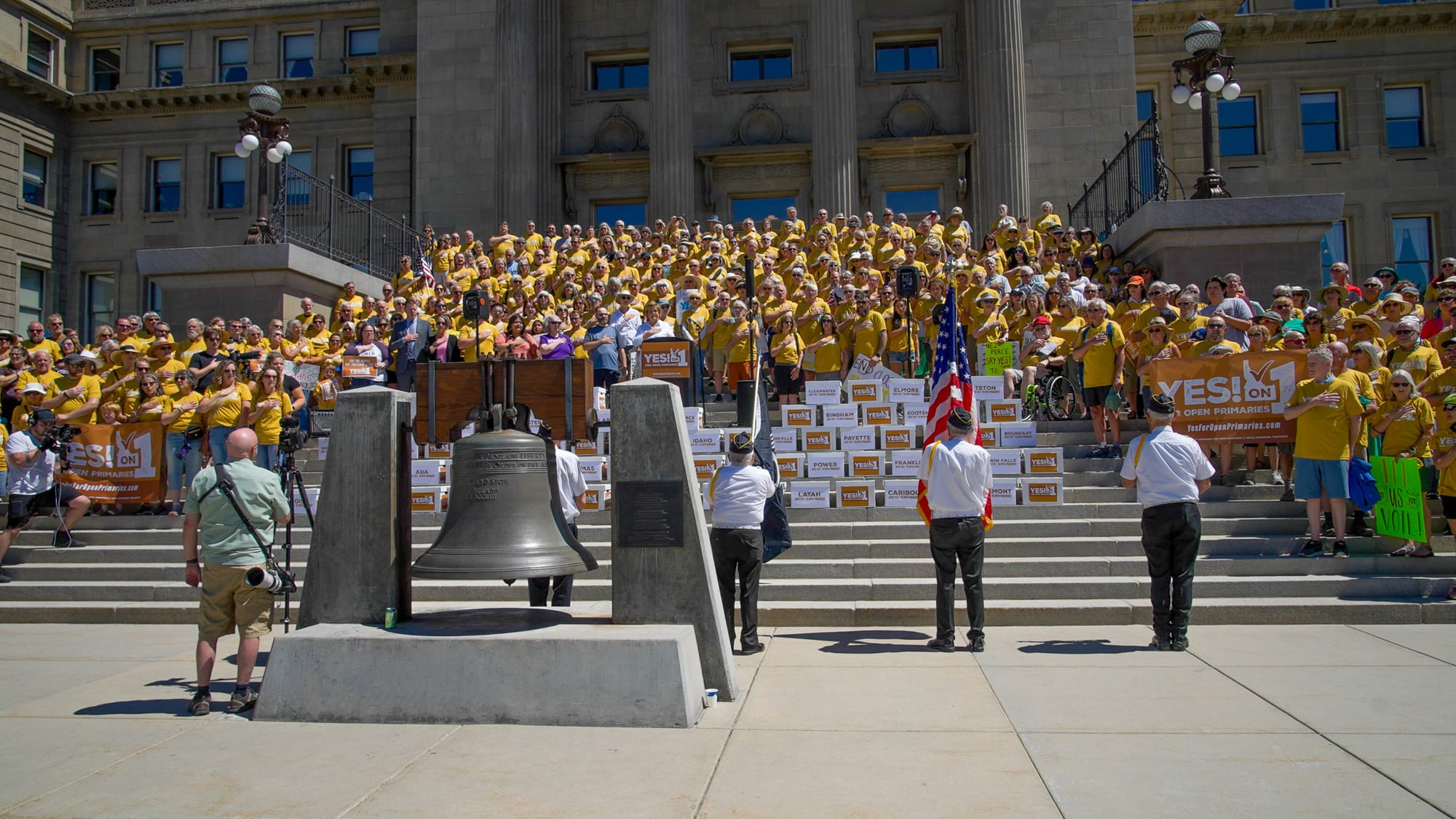
Collectively, this diverse group of nonpartisan warriors conveys the most inspiring element of the film. Not only do many Americans recognize the systemic changes needed to revitalize democracy, but they’re also willing to work toward those reforms for months and years at a time with little or no pay and against great opposition from the powers that be.
In fact, virtually all of the film’s protagonists are still at work today, in 2026, much as they were in 2024. As a result, it’s obvious the energy stirred up two years ago is still circulating today.
Those connections are most apparent in the 2026 Massachusetts All Party Primary Question 3 campaign, Oklahoma’s open primary campaign (currently in legal limbo), and Courageous Colorado’s reforms for 2030.
But they’re also in the vibe around citizen initiative protection efforts in Missouri, a campaign finance reform ballot in Montana and the independent Senate campaigns of veterans Dan Osborn (Nebraska), Todd Achilles (Idaho), Seth Bodnar (Montana), and Brian Bengs (South Dakota), as well as many House and down ballot races.
 John Opdycke
Reform is then still in the air in 2026 even if on fewer ballots than 2024. And through festival, community, and educational screenings, People vs Politics may play some small part in inspiring new groups of independents to join the movement.
Some reforms coalescing for 2028, 2030, and beyond may resemble the 2024 initiatives chronicled in the film. But others may take new forms, learning from past mistakes and recruiting new leaders. Yet, they will still be motivated by the same country-over-party mindsight that to many Americans seems startling, even suspicious at first, then eventually welcome, insightful, and desperately needed.
Robert Pease is co-director of the feature length documentary People vs Politics with upcoming screenings at the Glendale, Catalina, Mystic, WYO, SOHO, Utopia and Alexandria Film Festivals. More info at People vs Politics.com.