

AUSTIN, Texas—A federal court effectively told the Republican Party of Texas Friday that—at least for now—if they want primary elections closed, they will have to convince their members in the legislature to do it. This puts the matter on hold until the 2027 legislative session.
It wasn’t a dismissal. The court did not rule on the constitutionality of Texas’ open primary system. Instead, US District Judge Matthew Kacsmaryk paused the GOP’s lawsuit, stating that the Legislature may soon take steps to close the state’s primary elections on its own.
“Prominent Texas politicians support similar legislative action,” Kacsmaryk wrote.
Notably, there are also prominent Republicans who either oppose or are skeptical of the state moving to a closed primary system. In fact, this fight may further expose a growing divide within the party.
Gov. Greg Abbott and Attorney General Ken Paxton support the change, but outgoing US Sen. John Cornyn has publicly warned that it could hurt the GOP, going so far as to say, “closed primaries are a threat to Texas voters.”
Exactly: Closed primaries are a threat to Texas voters https://t.co/Do8jHnTAKI via @dallasnews
— Senator John Cornyn (@JohnCornyn) June 26, 2026
Cornyn shared an op-ed in The Dallas Morning News written by Suzanne Bellsnyder, editor of the Texas Rural Reporter.
“Closing primaries will not broaden participation; it will narrow it further,” Bellsnyder wrote. “That should concern Texans regardless of party. Democracy becomes more representative when more people participate.”
“It becomes less representative when fewer people do.”
As previously noted on IVN, participation in May’s Republican primary was roughly 7.4% of all registered voters. That number could shrink even more if the independent voters who chose a GOP ballot are suddenly excluded from these taxpayer-funded elections.
Support for closed primaries has existed within the Texas GOP for years. Yet, the legislature has not moved to change the law. Will 2027 be different? That is the question Kacsmaryk wants answered before this case moves any further.
How Did Texas Get Here?
In September 2025, the Texas GOP sued then-Secretary of State Jane Nelson, also a Republican, arguing that allowing independents and Democrats to participate in Republican primaries violates the party’s First Amendment right of association.
 Shawn Griffiths
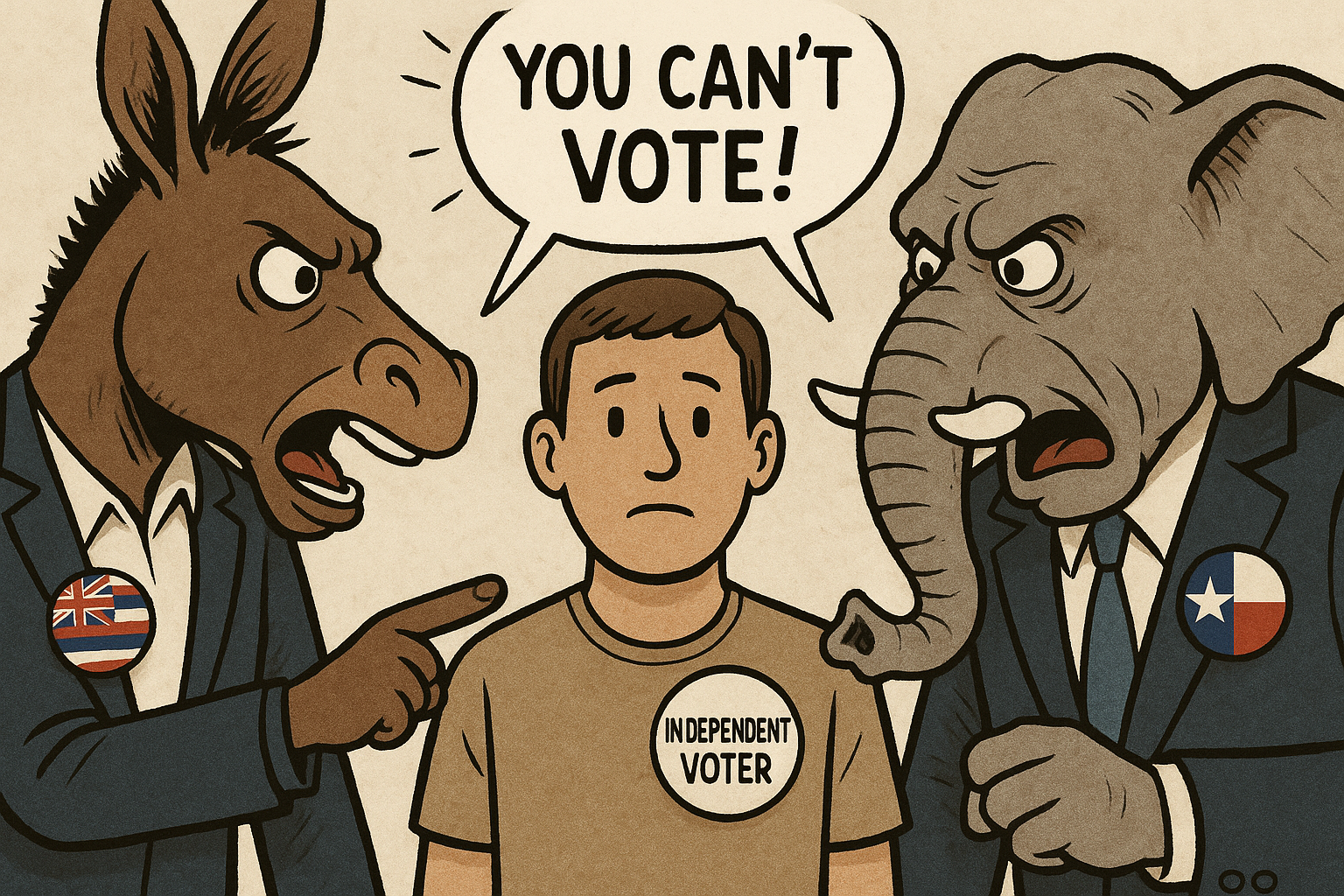
Under current law, Texas does not register voters by party affiliation. Any registered voter can select either a Republican or Democratic primary ballot, but voters who participate in a primary cannot switch parties for that election cycle’s runoff.
Republican leaders argue that the system allows voters who do not support the party to influence its nominees. They blame “crossover voting” for helping incumbent Republicans fend off challengers backed by the party in competitive primaries.
Gov. Abbott told the Texas Republican Convention in June that he wants to ensure “only Republicans vote in Republican Primaries.” It’s worth noting that Abbott easily won this year’s primary under a system he claims is producing weaker party candidates.
The lawsuit also created an unusual divide among Texas officials.
Attorney General Ken Paxton, whose job it is to defend the state in court, sided with the GOP rather than defending the state's existing election law. Nelson maintained that the Legislature, not the courts, should determine whether the primary system changes.
Her successor, Robert Howden, confirmed in August that his office would continue defending the current system, while acknowledging lawmakers could change it.
In May, Veterans for All Voters sought to intervene in the debate through an amicus brief opposing the Texas GOP's effort. The organization argued that closing primaries would exclude millions of Texans who do not affiliate with either major political party.
What Does This Mean for Independent Voters?
For now, nothing changes. Independent voters can still participate in Texas primaries without registering with a political party.
The next statewide primaries are scheduled for 2028. What their rights look like then will depend entirely on what the Texas Legislature does next year.