www.epa.gov
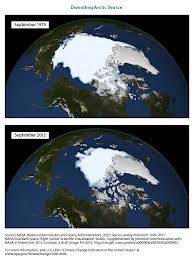
The world has undergone a tremendous climate shift in the last 100 years. As global temperatures have risen, so too have sea levels. Arctic ice is decreasing as well. All of this points to one conclusion: that climate change is real. Detractors can debate the science and causes, whether it is man-made or not, but the longer that debate goes on, the harder it will be to act.
President Obama’s climate change speech at Georgetown on Tuesday could be called his strongest stand against climate change. But even among environmentalists and Obama supporters, the speech still only received mixed reviews. This speech was a long time coming as Obama urged Congress to act soon or else he would use his executive authority to enact some changes.
In particular, there is a strong ideological schism on this issue. Republicans such as President Theodore Roosevelt spearheaded the issue of environmental conservation. President Nixon created the Environmental Protection Agency. Over the decades though, money and increased regulation began to change the scenario.
The big oil and natural gas industries may have a lot of Republican allies, but money aside the real issue is their refusal to accept increased regulations from a government that already has its hands in other industries. Regulation, in their view, stifles growth and yes, it could eat away at profits, but they believe it is more about controlling the free market. Obama is attempting to find a middle path where he doesn’t appear too aggressive with regulation while still playing hero to the environmentalists.
Executive powers are one way to limit the problem, but using such measures could make it appear as if the president is reaching for more power. Obama cannot tell Congress what to do, but he could order the Departments of Energy and the Interior and the EPA to begin cutting pollution and prepare for a future where climate change will affect all human life.
Leadership is a requirement if Obama is to make climate change a serious priority. It already has become a priority as Obama brought it up often in his State of the Union address. What the president cannot do now is leave the issue solely in the hands of Congress, which will likely result in a diluted bill at best or nothing at worst.
The previous attempt at enacting meaningful climate change regulation was the cap-and-trade bill in 2010. For all the majorities Obama had in his first two years, the bill’s passage was halted in the Senate. Unfortunately, Obama, with his attempts at trying to compromise, has never quite brought the issue up again.
Obama’s speech also touched on his upcoming Keystone XL decision. Obama will be looking at the long-term impact the pipeline will have on the environment. Van Jones, the president’s former “green” adviser, summed it up best:
"I think did what was appropriate, which was to clarify the basis of his decision making. Keystone has been sold to the American people as primarily about jobs and he made the conversation ... about climate. That is incredibly helpful to environmentalists and should be alarming to opponents of this pipeline."
It may sound surprising, but global warming is not only an American issue. European nations have also been tackling the problem for years. In 2007, a BBC report found that global awareness and belief in climate change is real and that human activity is a driving force behind it.
If the cap-and-trade bill had been signed into law in 2010, that 2007 report could have been three years away from a historic change, but instead it has been six years and little has been done to break the ideological gridlock. Apparently, even with a growing global majority of support, it is difficult to enact any meaningful change in the U.S.
NASA has an assortment of interactive graphs and maps that show the effects global warming has on the planet. The former employer of environmental scientist James Hansen is one of many such organizations around the world that help clarify the science behind the so-called “climate change hoax.” The United Nations and the Obama administration support policies that will help to combat the effects of climate change.
Climate change is real, but with strong opposition, it is difficult to make strong policy shifts. A long-term strategy is necessary when the comprehensive approach is not so quick and easily attainable. Obama's goal appears to be to make climate change more of an issue down the road, when hopefully some more Republicans will change their minds. Right now, Republicans are the ones holding Obama’s agenda back.
A version of this article has been posted on PolicyMic