Skip to content
Subscribe

Mineral Conflict in Congo Highlights Need For Peace

Published:

Credit: AP / Chattanooga Times Free Press
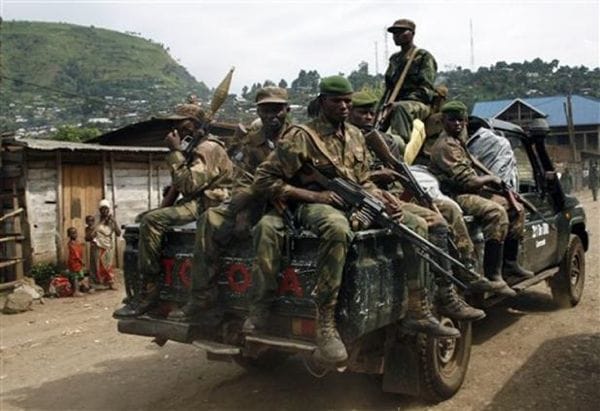
Over the past few months, the Democratic Republic of Congo (DRC) has been in the spotlight because an armed rebel group, M23, took control of the regional capital of Goma. It is the latest reminder of the instability in a region that will become more important in the years to come.

The DRC is one of the richest countries in the world in terms of natural resources but is classified as the poorest country in the world by the International Monetary Fund. Congo mining resources are estimated to be worth $24 trillion and include the biggest gold reserves in the world, five percent of the world's copper, fifty percent of the world's cobalt, diamonds, oil, tar, and uranium.

However, it's because of its immense reserves of mineral used in tech industries that Congo’s strategic importance for the world will rise in the coming years. Congo possesses an estimated eighty percent of the world's supply of coltan, when refined as tantalum, is a vital component of computers, personal electronics, and mobile phones. The significance of this mineral can be illustrated by the fact that a shortage of coltan led to an abrupt halt in the sales of the popular Sony Playstation 2.

The current situation is a vicious cycle. Precious minerals, especially gold, are smuggled to neighboring countries such as Rwanda, Uganda, and Angola. Then, the minerals are sold to the rest of the world and used to fund armed groups in the region.  This allows these groups to control many mines and trading chains, especially in the east. Foreign companies are reluctant to invest in the country and, as a result, most of the mining industry is left underdeveloped.

In recent years, efforts beyond a simple military operation have been made in order to help solve the region's mineral conflicts. A system of tracking the origin of minerals has been advocated for through United Nations resolutions. The Obama administration responded by insisting that the 2010 Dodd-Frank Act include a section requiring companies to disclose if goods such as mobile phones or aviation contain minerals coming from the Congo region.

However, despite the good intentions behind these type of laws, a fine line needs to be drawn between the need to diminish multinationals' indirect funding of war lords and the negative effect of increasing the underground mineral business if the rules become too binding.

To be really efficient in the long term, these actions will require better cooperation between the Congo, multinationals, consumer countries, and international organizations such as the UN, the IMF, and the World Bank. If all the players do not decide that it is in everybody's interest to have a peaceful Congo, the situation will continue to deteriorate.

Last week, the IMF decided to interrupt a loan payment of $561 million because the Congolese government failed to provide sufficient information on how a mining contract involving the sell of a public company to a company based in the Virgin Islands would benefit the Congolese population. It is a reminder that peace is a long way from happening.

Adhere to the IVN etiquette

By posting a comment, you agree to adhere to our etiquette rules: No partisan attacks, no personal attacks, substantiate your sources, no self-promotion.

Contact IVN

Questions about this article or our coverage? Send us a message. A free IVN member account is required.

Message sent

Thanks, we’ll review it and get back to you if needed.

Message not sent

Sorry, something went wrong. Please try again.

Sign in to send a message

Messages are tied to your IVN member account. Signing in is free and takes a few seconds.

Republish this article

Republishing guidelines

Republish IVN articles for free. Independent Voter News articles may be republished online or in print under a Creative Commons BY-NC-ND 4.0 license, on these terms:

  1. Credit the author and IVN. Keep the byline ("By Author Name, Independent Voter News") and the attribution note at the end, which links to the original.
  2. Keep the meaning. You may update time and place references and apply your house style. You may trim for length, as long as the cuts don't change the meaning or misrepresent the author. Keep the headline. Mark any additions as your own (for example "Additional reporting by ...").
  3. Translations are welcome. Translate faithfully, add "Translated from English by [your outlet]", and tell us at editor@ivn.us.
  4. Keep the links, including the link to the original article.
  5. Keep the tracking image. The HTML includes a 1-pixel image that counts readers on your page. It collects no personal information.
  6. Photos and illustrations. Images credited to IVN may be used with this article only. Images credited to others (AP, Getty, Unsplash, Wikimedia and so on) stay under their owners' terms. Secure the rights or switch "Include images" off.
  7. Don't sell it. You can't sell our articles or sell ads specifically against them. Your normal site advertising is fine.
  8. No implied endorsement. Don't suggest that IVN or the author endorses you, your candidates or your causes, or that donations to you support IVN.
  9. Keep labels. Opinion or analysis pieces keep that label.
  10. Point search engines to the original. Where your CMS allows, set the canonical URL to the original IVN article.
  11. No bulk or automated republishing, and don't submit our articles to aggregators (Apple News, Google News, MSN) as your own.
  12. Corrections and removals. Update your copy when we correct it, and remove it promptly if we ask. We'll contact you at the email you give us.
  13. Questions or print republication: editor@ivn.us.

IVN staff: fill in who you're inviting above, then create the invite.

Preparing the article

Mineral Conflict in Congo Highlights Need For Peace

Choose a format
  • HTML
  • Email HTML
  • Markdown
  • Formatted (.docx)
  • Plain text
  • WordPress blocks
  • PDF
Choose a platform

Photos credited to others need their owners' permission.

To for

Republishing somewhere else? Questions? editor@ivn.us