Photo: Habitat for Humanity
Hurricane Sandy produced unparalleled damage in the New York metropolitan area. Not only did it plunge all of Manhattan south of 39th street into darkness, but areas in Long Island and parts of New Jersey are still reeling from the loss of homes, offices, and lack of power.
What has been left out of these stories, however, is the way Sandy affected the Caribbean prior to hitting the United States shores, particularly on the island nation of Haiti. The small country continues to suffer from the effects of the earthquake in January 2010, and Sandy’s destruction only added more suffering to the nation’s woes.
The initial impact of the earthquake in 2010 was multiplied by high levels of poverty, unstable infrastructure, and continued political problems. Over 350,000 displaced people from the capital city of Part-au-Prince are still living in displaced person camps around the country, a population which proved particularly vulnerable to Sandy’s destructive path. Temporary homes were destroyed, the world’s worst cholera epidemic is still not under control, and food and medical supplies have been short at hand.
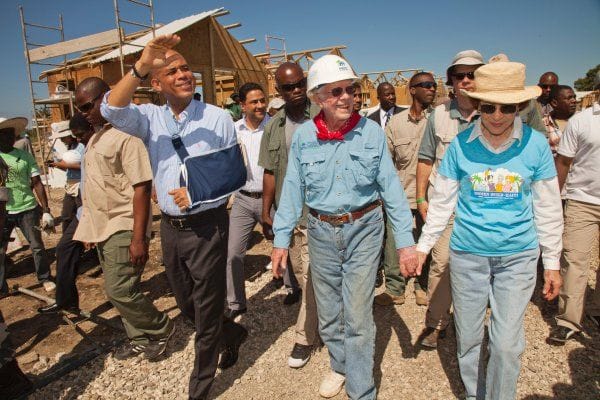
Former president Jimmy Carter, at the age of 88, traveled to Haiti last week on a Habitat for Humanity mission seeking to highlight these issues. Jimmy Carter’s post-presidential career continues his presidencial legacy, as his humanitarian work around the globe has proved both passionate and unrelenting. As historian Douglas Brinkley documented in his work, The Unfinished Presidency: Jimmy Carter’s Journey Beyond the White House, since 1981 Carter’s career has been dedicated to eradicating Guinea worm disease, monitoring elections, and promoting human rights internationally.
Carter’s fervor is now directed squarely on Haiti’s plight. In his second trip to the country this year alone (and his eleventh overall), Carter urged donor nations and institutions to follow through on pledges to the nation in the aftermath of earthquake, which promised $4.46 billion to help rebuild the country. Only about half of the money has been delivered due to nations’ own economic woes following a global recession as well as a hesitance to give the full amount promised based on Haiti’s own political challenges which include the slow inauguration of Michel Martelly’s presidency and cabinet.
Carter urges nations to look beyond the political milieu to the humanitarian issue at hand wherein Haitians are still suffering from consistant nature-related disasters. In building homes this week, he stressed the importance of attending to the large displaced population and urged other organizations to follow suit.