
(Joshua Roberts/Reuters)
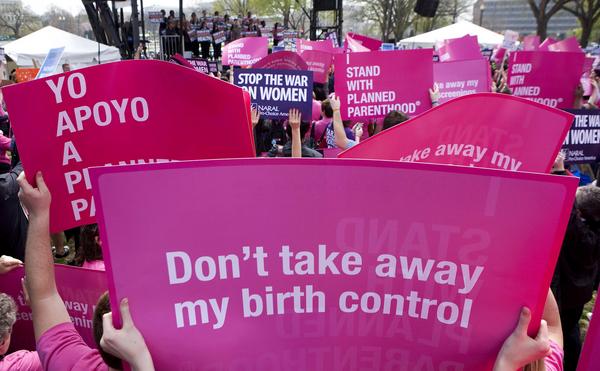
On March 27th of this year, the Arizona House of Representatives passed HB2036, a bill aimed at outlawing selective abortions past 20 weeks of conception. Women's rights activists breathed a sigh of relief on Wednesday when the US Court of Appeals granted an injunction to halt the implementation of HB2036.
HB2036 somehow flew beneath the national radar, passing quietly with a majority vote of 20-10. The bill contained the following major provisions:
- Requires the person who performs the abortion to be a trained medical professional.
- Outlaws the act of coercing a woman to have an abortion.
- Requires the informed consent of the woman in order to perform the abortion.
- Bans abortions later than 20 weeks after the woman's last menstrual period.
- Requires an ultrasound immediately prior to a selective abortion.
The harm done by those last two provisions in HB2036 heavily outweighs the good in the first three provisions, especially since the positive aspects of the bill were already in effect. Most of the bill is simply the conduit for the sponsor, Rep. Kimberly Yee's (R-Phoenix) real agenda: instituting a bill outlawing late term abortions based on dubious fetal pain studies.
In 2010, a wave of anti abortion laws were passed in 8 states based on the findings of a 1987 article published on the effects of pain on a fetus. Supporters of the bills cited the article as proof that a fetus as young as 20 weeks is able to feel pain. Since then, the article has been widely disputed within the scientific community. The author of the original article has stated himself that, "I have every reason to want to believe that the fetus feels pain... but if you look at the evidence, it’s hard to conclude that that’s true."
On an even more mystifying note, HB 2036 would outlaw abortions 2 weeks earlier than the 20 week gestation period cited by the 1987 study. The bill defines "gestational age" as "the age of the unborn child as calculated from the first day of the last menstrual period of the pregnant woman."
According to HB 2036, all women of menstruating age can be considered pregnant until proven otherwise. By the bill's definition of gestational age, if a woman were to have her period and then get pregnant (up to a month afterward), the age of her fetus is bound to the period she last had before the actual conception. So, if a woman were to menstruate on the 2nd and conceive on the 20th, her fetus is already 18 days old at the moment of its conception.
As bizarre as the definition is, the implications are much worse than one might imagine. Many fatal prenatal diseases and deformities can not be measured before the 20 week mark. HB 2036 would force mothers of an unhealthy fetus to carry to full term if the issue was not found within the 20 week gestation age.
Recently, similar bills have been cropping up all over the country. In January, Rep Trent Franks (R-AZ) proposed a bill banning late term abortions in Washington DC based on the same logic as HB 2036. The mentality and disputed scientific foundation of fetal pain is the real issue here. The US Court of Appeals may have halted its enforcement at the last minute, but so long as its underlying ideology exists, a different iteration of HB 2036 could appear in any statehouse across the country.