Skip to content
Sign up free
California

California Doesn't Have a System Problem. Republicans Do.

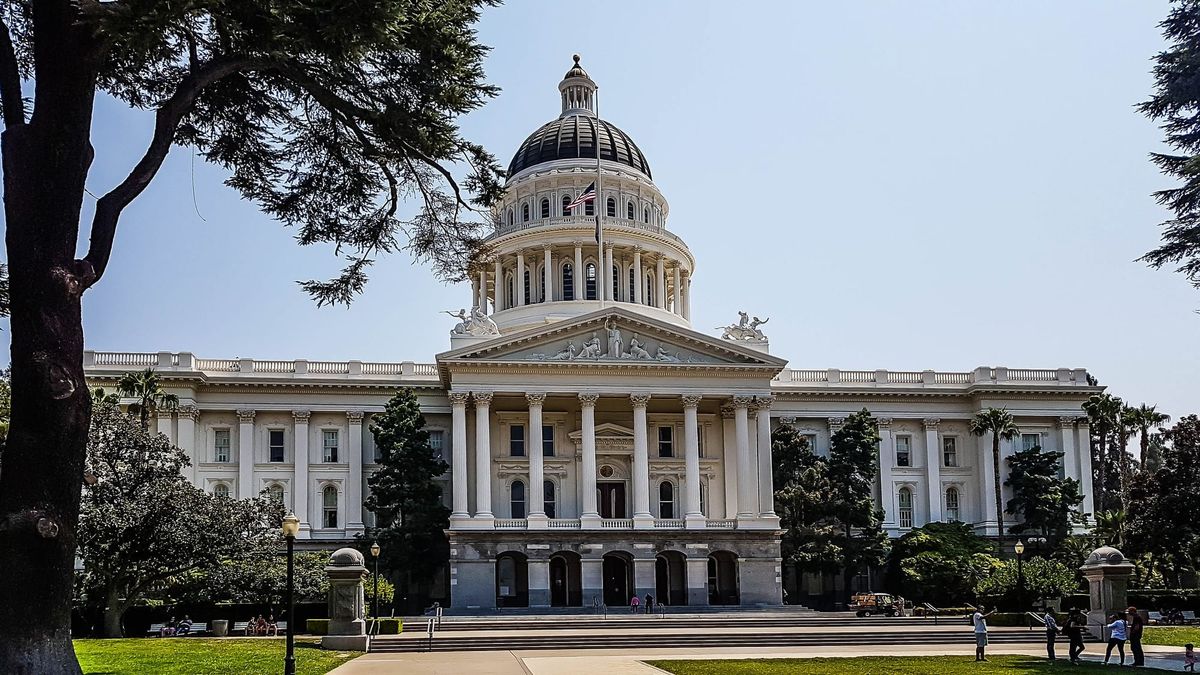
Image Credit: © Elliott Cowand Jr on Dreamstime.com. Image license obtained and used by IVN Editor Shawn Griffiths.
Image Credit: © Elliott Cowand Jr on Dreamstime.com

California's Top Two primary system isn't broken, but the state's Republican Party is.

By Steve Peace

4-minute read

The only competitive statewide race in California this cycle was for insurance commissioner. Why? Because two Democrats finished in the Top Two.

That single fact tells you most of what you need to know about the renewed push to bring back partisan primaries. Republicans are not close to being competitive statewide in California. When the only real contest on the ballot is between two members of the same party, that is not a failure of the system. It is the system doing what it was designed to do: giving voters a meaningful choice in November, even when one party has no realistic path to victory.

We believe elections should be decided when the most people vote. In California, as everywhere else, that means general elections, not primaries. Primary electorates are smaller, older, and more partisan. General electorates look much more like the state itself.

Returning to partisan primaries would shut 6 million independent voters out of the elections that actually matter. It would also sideline millions of Republicans and Democrats who are the political minority in the 80 percent of legislative districts that are overwhelmingly red or blue. In those districts, the winner of the dominant party's primary is the winner, full stop. The November election becomes a formality.

How California's Top Two Nonpartisan Primary Transformed the Legislature
The system Republican and Democratic party insiders want to "undo" produced a legislature where women hold 49 percent of seats, people of color hold 55 percent, and Latinos have reached a third of the body for the first time.

The damage would not stop at the district level. Under partisan primaries, even statewide officeholders would effectively be chosen in the primary. Consider the math. When turnout is low, and only one party's voters choose the nominee who is all but guaranteed to win, California's Governor and other statewide officials would likely be selected by less than 25 percent of the electorate. That is not democracy working better. That is a small, partisan slice of the state making decisions for everyone else.

So let's be clear about what is happening. California does not have a system problem. The Republican Party has a problem.

National politics has grown hopelessly partisan, and the national party's influence on California Republicans has made them irrelevant in this state. Their struggles here are not the product of Top Two. They are the product of a brand California voters have rejected again and again.

Changing the rules of the primary will not fix that. It will only entrench one-party rule by removing the one moment when voters outside the dominant party still have a say.

Competition is what keeps politicians accountable. Top Two preserves competition where it would otherwise disappear, and it forces candidates in safe districts to answer to all of their constituents, not just the activists who turn out in June.

Those calling for a return to partisan primaries have either not thought through the consequences or have been drawn into the same partisan dysfunction that is paralyzing our national politics.

California should always be open to reform and improvement.

Author of California’s Top-Two Primary Says It’s Time to Reform the Reform
In 2010, California voters took the first step in empowering every California voter by abolishing party-controlled closed partisan primaries in favor of open nonpartisan primaries that advance the top two vote-getters to the November election.

If Republicans want to compete in California again, listening more closely to women voters would be a good place to start.

But going backward, stripping away voting rights, and handing even more power to private political parties would be a serious mistake.
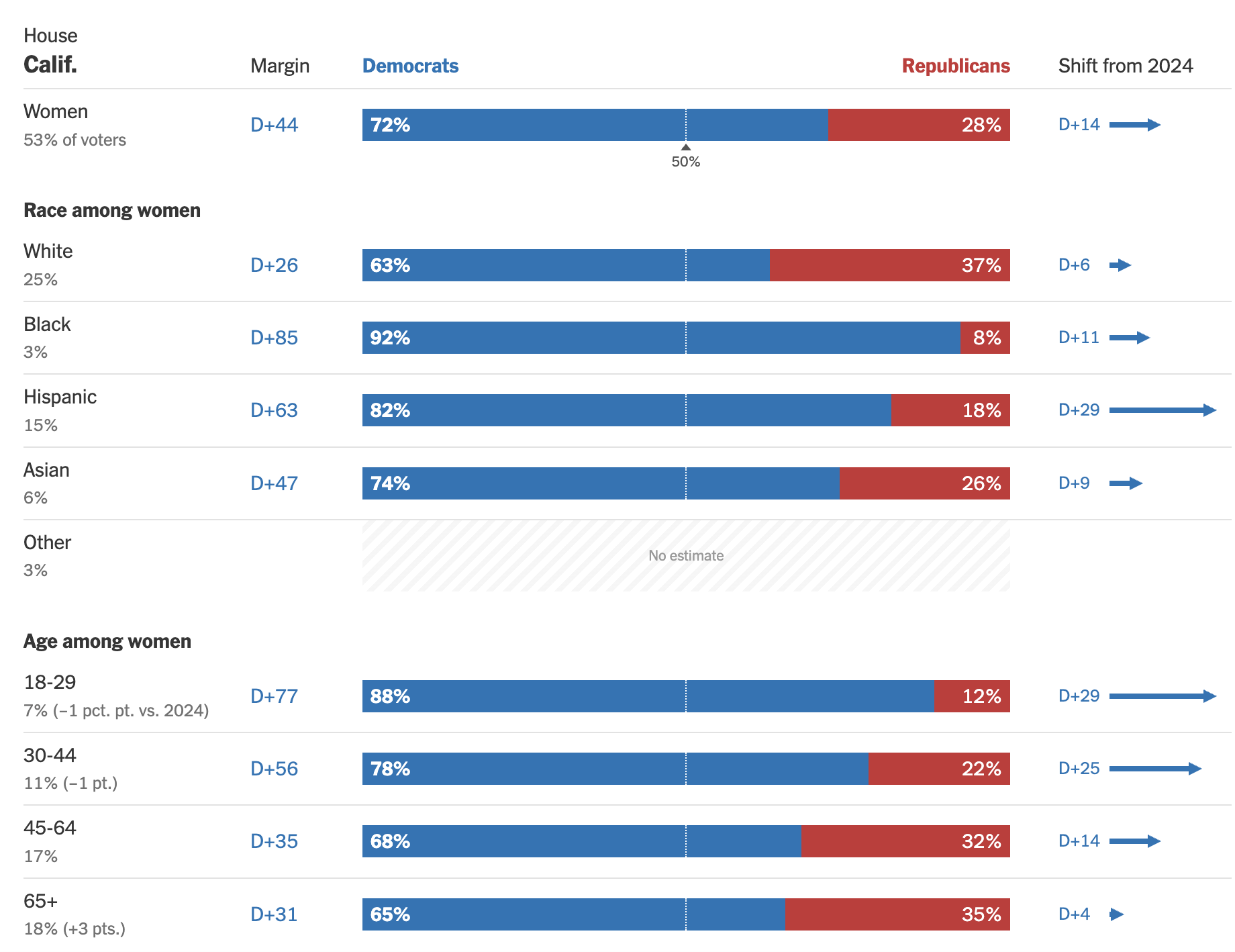
(Source: The New York Times, Updated Nov. 20, 2026 at 7:01 p.m. E.T., Times Voter Trends estimates the results of the 2026 election by age, race, education and gender for every state.)

Sources

  1. IVN: Can Ben Allen Fight Off Jane Kim and the DSA Machine to Become California’s 9th Insurance Commissioner?
  2. IVN: How California's Top Two Nonpartisan Primary Transformed the Legislature
  3. IVN: Author of California’s Top-Two Primary Says It’s Time to Reform the Reform
  4. The New York Times: Updated Nov. 20, 2026
  5. The New York Times: Times Voter Trends

Adhere to the IVN etiquette

By posting a comment, you agree to adhere to our etiquette rules: No partisan attacks, no personal attacks, substantiate your sources, no self-promotion.

Get IVN’s Free Weekly Newsletter:Get IVN’s Free Newsletter

Get IVN’s Free Weekly Newsletter:Get IVN’s Free Newsletter

Nonpartisan Issues. Diverse Perspectives.

Check your inbox and click the link to confirm.

Republish this article

Republishing guidelines

Republish IVN articles for free. Independent Voter News articles may be republished online or in print under a Creative Commons BY-NC-ND 4.0 license, on these terms:

  1. Credit the author and IVN. Keep the byline ("By Author Name, Independent Voter News") and the attribution note at the end, which links to the original.
  2. Point search engines to the original. Set the canonical URL of your copy to the original IVN article (the HTML we give you includes the tag).
  3. Keep the meaning. You may update time and place references and apply your house style. You may trim for length, as long as the cuts don't change the meaning or misrepresent the author. Keep the headline. Mark any additions as your own (for example "Additional reporting by ...").
  4. Translations are welcome. Translate faithfully, add "Translated from English by [your outlet]", and tell us at editor@ivn.us.
  5. Keep the links, including the link to the original article.
  6. Keep the tracking image. The HTML includes a 1-pixel image that counts readers on your page. It collects no personal information.
  7. Photos and illustrations. Images credited to IVN may be used with this article only. Images credited to others (AP, Getty, Unsplash, Wikimedia and so on) stay under their owners' terms. Secure the rights or switch "Include images" off.
  8. Don't sell it. You can't sell our articles or sell ads specifically against them. Your normal site advertising is fine.
  9. No implied endorsement. Don't suggest that IVN or the author endorses you, your candidates or your causes, or that donations to you support IVN.
  10. Keep labels. Opinion or analysis pieces keep that label.
  11. No bulk or automated republishing, and don't submit our articles to aggregators (Apple News, Google News, MSN) as your own.
  12. Corrections and removals. Update your copy when we correct it, and remove it promptly if we ask. We'll contact you at the email you give us.
  13. Questions or print republication: editor@ivn.us.

IVN staff: fill in who you're inviting above, then create the invite.

Preparing the article

California Doesn't Have a System Problem. Republicans Do.

Choose a format
  • HTML
  • Email HTML
  • Markdown
  • Formatted (.docx)
  • Plain text
  • WordPress blocks
  • PDF
Choose a platform

Photos credited to others need their owners' permission.

To for

Republishing somewhere else? Questions? editor@ivn.us