
Photo Courtesy: AP/PABLO MARTINEZ MONSIVAIS; AP/CHARLES DHARAPAK
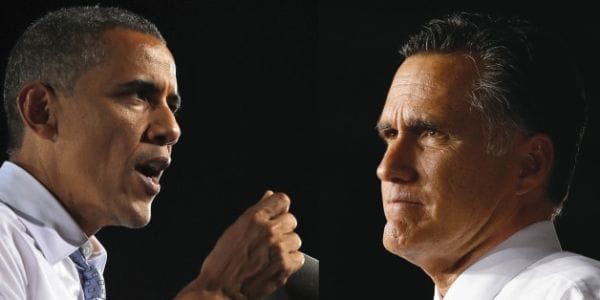
There is no denying Ohio will play a considerable role in the November 6 election. Recent polls from TIME magazine and CBS News have put President Obama ahead of Governor Romney by 5 points. Obama's gains in Ohio, however, may not be as significant as the campaign had hoped, given that the margin has been cut in half since September, according to a new Quinnipiac poll.
The Quinnipiac poll reports the president holds a 50 to 45 percent lead on Romney among likely voters, which is down from a 53 to 43 percent lead on September 26. Only three percent of likely voters in Ohio are undecided, and the poll’s margin of error is plus or minus three percentage points.
Ohio’s early voting period, which began on October 2 and runs through November 5, has clearly benefited the president. Among respondents who say they have already voted, TIME reports that Obama holds the lead over Romney, 60-30 percent.
Independent voters, however, actually back Romney 53 to 38 percent, according to the TIME poll.
"The bad news for Romney, and the good news for Obama, is that no Republican has ever won the White House without carrying Ohio, and the challenger is running out of time to make up the remaining difference."
The TIME poll also reflects an obvious gender gap that is working in the president’s favor. Obama is winning the women’s vote 56 to 37 percent in Ohio. By comparison, 51 percent of Ohio men back Romney while 42 percent of men prefer Obama.
Overall, 51 percent of voters think Ohio's economy is on the right track, compared with just 43 percent who say it is on the wrong track. Independents also say that it is on the right track by 51 to 45. Sixty-five percent of those who said the economy is going in the right direction are voting for Obama.
The candidates and their running mates, all stumping for Ohio’s 18 electoral votes, have made exhausting attempts to sway Ohioans by regularly visiting the state. Obama has focused on colleges and universities, while Romney has primarily visited factories and businesses.
Gary Hunter, a resident of Cuyahoga County, considers himself a member of the three percent who has yet to decide who he will vote for in two weeks.
These polls don’t speak for me or the dozens of other people in Ohio who don’t want to be defined by the majority. So many people don’t weigh all of the pros and cons before going to their polling location. I don’t make up my mind before I’ve seen as much of each candidate as possible.
In 2008, Obama carried Ohio by five percentage points over Sen. John McCain, but Republicans performed well in the 2010 midterm elections, winning back the governor's office and five House seats from the Democrats.
With Election Day inching near, these polls illustrate a close race in a state that could very well determine the next president. With the race tightening, a landslide win by either candidate is unlikely.