 IVN Editorial Board
Voters are told that democracy happens on Election Day in November. In most cases, this is not true.
By the time voters enter a polling place, open a mail ballot, or pull up their county’s voting portal, many of the biggest decisions have already been made: who makes the ballot, who gets to vote, what choices voters have, and whether their district was designed to produce a real election.
The United States does not have one national election system. It has 50 state systems, thousands of local rules, and two political parties that have significantly more control over public elections than any other developed democracy allows.
With so many different election rules across the US, it can be difficult at times for voters to navigate the process. This complexity is not just confusing; it is designed to be controlling as well.
Here are 10 ways the two-party system shapes your ballot long before you cast it.
1. Closed Primaries Block Independent Voters from the Election That Actually Matter
Many voters are told that the real election—the election that matters most—is in November. But this isn’t true for over 90% of races, especially in the midst of an ongoing mid-cycle gerrymandering fight that has reduced the number of competitive elections even more.
In most districts, Election Day in November is little more than a formality. A single party dominates the district, which means the real contest occurs in that party’s primary months prior. And independent voters are often locked out.
Or, the process is so convoluted and complex that it is difficult for independents to navigate the rules.
For a time, the number of states with closed primary systems was on the decline. However, under an environment in which 47% of the nationwide electorate identifies as independent, party leaders are frantically trying to close these taxpayer-funded elections.
NYC Mayor Zohran Mamdani says he is “quite content” with the closed primaries in his city, despite the fact that they deny 1.2 million independent voters a meaningful say in a city controlled at every level by the Democratic Party.
Closed primaries are known for their low turnout. In fact, only 1 out of every 6 registered Democrats in NYC turned out for the 2026 primaries.
Republican Parties in South Carolina, Texas, and Colorado have turned to the courts to close their primaries because the legislature will not change state law or—in the case of Colorado—voters made their desire for open primaries clear at the ballot box.
 Shawn Griffiths
Under closed primary systems, a voter can be registered, eligible, informed, and willing to participate—and still be told they cannot vote in the contest that will effectively decide who represents them just because they choose not to identify with a private political club.
2. Party Registration Is Often The Price of Admission
In some states, voters must formally affiliate with a political party before participating in elections.
That means a voter may have to join a private organization they do not support simply to have a meaningful say in who represents them.
But party registration can be required for more than voting. In some states, like New York, the law says voters have to be affiliated with a party just to be an election inspector or judge.
Other states, like Arizona, require election boards to provide representation from the two largest parties. Independents need not apply.
Parties don’t just control who gets to vote, but who gets to administer and oversee elections.
3. Party Insiders Often Shape Who Reaches The Ballot
Candidates in every state must navigate filing rules, signature requirements, party endorsements, fundraising expectations, consultant networks, donor relationships, and institutional support.
However, for candidates outside the Republican and Democratic Parties, these obstacles are much steeper at every step. They face higher signature requirements, more restrictive petition rules, smaller fundraising windows, and often lack any institutional support.
 Matt Shinners
On top of that, major parties and/or their candidates often challenge the legitimacy of independent and minor-party campaigns. This forces candidates to drain what money they have on legal expenses just to fight for their ballot line.
Major-party candidates also benefit from built-in name recognition, voter data, volunteer infrastructure, and a media ecosystem that treats their nomination contests as the only races worth watching.
The result is a ballot that often reflects what political institutions were willing to permit—not the full range of candidates voters might want.
4. Ballot Access Rules Can Keep New Voices Out
Independent and minor-party candidates routinely face requirements that major-party candidates do not.
They need to collect large numbers of signatures, meet strict deadlines, pay filing fees, overcome challenges to petitions, or qualify separately for every election cycle.
For example, in Alabama, an independent candidate for most statewide or district offices must collect signatures equal to 3% of the votes cast in the last gubernatorial election. This is among the highest statewide requirements.
In Georgia, the requirement is 1% of the registered electorate eligible to vote for any given race. This means non-major-party candidates have to collect tens of thousands of signatures just to qualify for US House races.
A 2025 presentation to a Georgia legislative committee asserts that the state’s rules make qualifying for many partisan offices “practically impossible” for independent and minor-party candidates.
When the system makes it easy for Democrats and Republicans to appear on the ballot while forcing everyone else through a legal and procedural obstacle course, voters are not receiving equal access to political competition.
They are receiving a curated ballot.
5. Gerrymandering Decides Your Election Before Candidates Announce
As previously stated, more than 90% of elections in the United States are safe for one of the two major parties. This is partly because of an escalation in partisan gerrymandering—or how politicians draw their own electoral boundaries.
Legislative district lines determine which voters are grouped together, which communities are divided, and whether either party has a realistic chance to win. In heavily gerrymandered districts, the outcomes are functionally predetermined.
Gerrymandering is nothing new. It has existed in the US even before the ratification of the US Constitution. However, what was once a process that occurred once every 10 years has increasingly become more frequent.
 Shawn Griffiths
Especially, following a mid-decade redistricting fight that began in the summer of 2025 and continues today. Some states, like California and Virginia, have even moved to suspend independently drawn maps to retaliate for gerrymandering in another state.
The message this sends to voters is that even in states where they passed anti-gerrymandering reform, partisan lawmakers are more than willing to circumvent independent redistricting commissions and other failsafe proposals when control of Congress is on the line.
6. Safe Districts Turn Elections Into Partisan Gatekeeping Contests
A safe district is when one party has such a strong advantage that the general election is merely a taxpayer-funded formality. According to Cook Political Report, this now accounts for about 94% of US House elections.
As explained already, this makes primaries the only election that matters in many cases. However, there is another consequence at the state level: When districts are too safe, no one bothers to challenge the incumbent or party in power.
BallotReady reports that 40% of state legislative races in 2024 only had one candidate. This is nationwide. The numbers can be jaw-dropping when looking at individual states. For example, 75% of open state house races in Massachusetts went uncontested by one of the two major parties.
It makes the competition outlook in US elections even worse, especially in contests where the incumbent knows they won’t have to face any kind of competition or challenge—whether it is from within their own party or outside their base.
7. Runoff Rules Can Shrink the Electorate Even Further
Some states require a primary winner to receive a majority of the vote. When no one clears that threshold, the top candidates advance to a separate runoff. This extra election comes at a cost—both to taxpayers and voter choice.
The general rule for primary runoffs: take the primary turnout and cut it in half. In low turnout partisan primaries, this means the winner in the most decisive elections are chosen by 4% of the total voting population or less.
Meanwhile, the runoff electorate becomes smaller, older, more partisan, and more motivated, while everyone else is less likely to show up a second time (or are not allowed to vote at all).
The idea is straightforward—the nominee needs a majority—but the outcome is far from majority approval.
8. Presidential Primaries Are Party Events Paid for By Taxpayers
There is perhaps no greater example of how the two major parties control elections than presidential primaries and caucuses, which may look like ordinary elections—but they aren’t, even when compared to other primary elections.
Voters don’t actually pick a nominee when they vote in a presidential primary. That is, if the parties let them participate at all. They are voting for how delegates will be allocated in each state and the parties have full control over the rules.
 Shawn Griffiths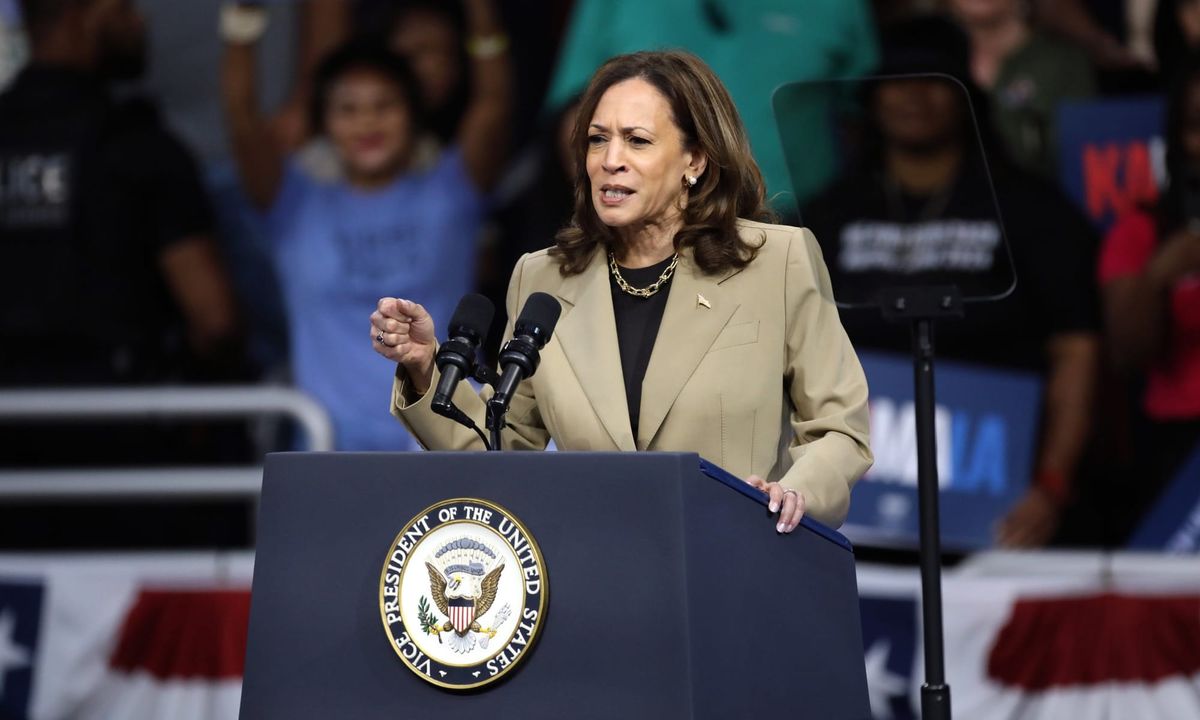
Both the Republican and Democratic Parties decide if there will be debates, if candidates can appear on the ballot, what order the primaries are held, and if they don’t get their way on that—they can decide to strip a state of their delegates.
They can even cancel primaries and outright tell voters in a state, “You don’t matter.”
Presidential primaries are really presidential preference elections. Some states even explicitly call them that, and the parties can decide whether or not these taxpayer-funded contests actually mean anything.
Think Joe Biden in 2020. The eventual Democratic nominee, then-Vice President Kamala Harris, wasn’t on the ballot in the primaries.
And while none of this may sound democratic, it is all perfectly legal and has been successfully defended in court.
 Independent Voter Project
9. Debate Rules Decide Which Candidates Voters Get to Hear
The parties don’t just have control over primary debates. They have control over the general election debates as well.
At first, they did this through the Commission on Presidential Debates, which set insurmountable barriers for independent and third-party candidates to overcome.
 Shawn Griffiths
Notably, the last time there were more than two candidates on a debate stage run by the debate commission was Ross Perot in 1992. Then, in 2000, it changed its rules.
The most consequential was the 15% rule, which states that candidates must poll at 15% or higher in 5 national polls handpicked by the commissioners.
Without media coverage or inclusion in the polls, this rule alone discouraged many potentially viable independent candidates from running.
Then, in 2024, both the Trump and Biden campaigns ditched the debate commission and demanded that the campaigns have more control over the time, place, and format of the debates—and the media gave it to them.
 Shawn Griffiths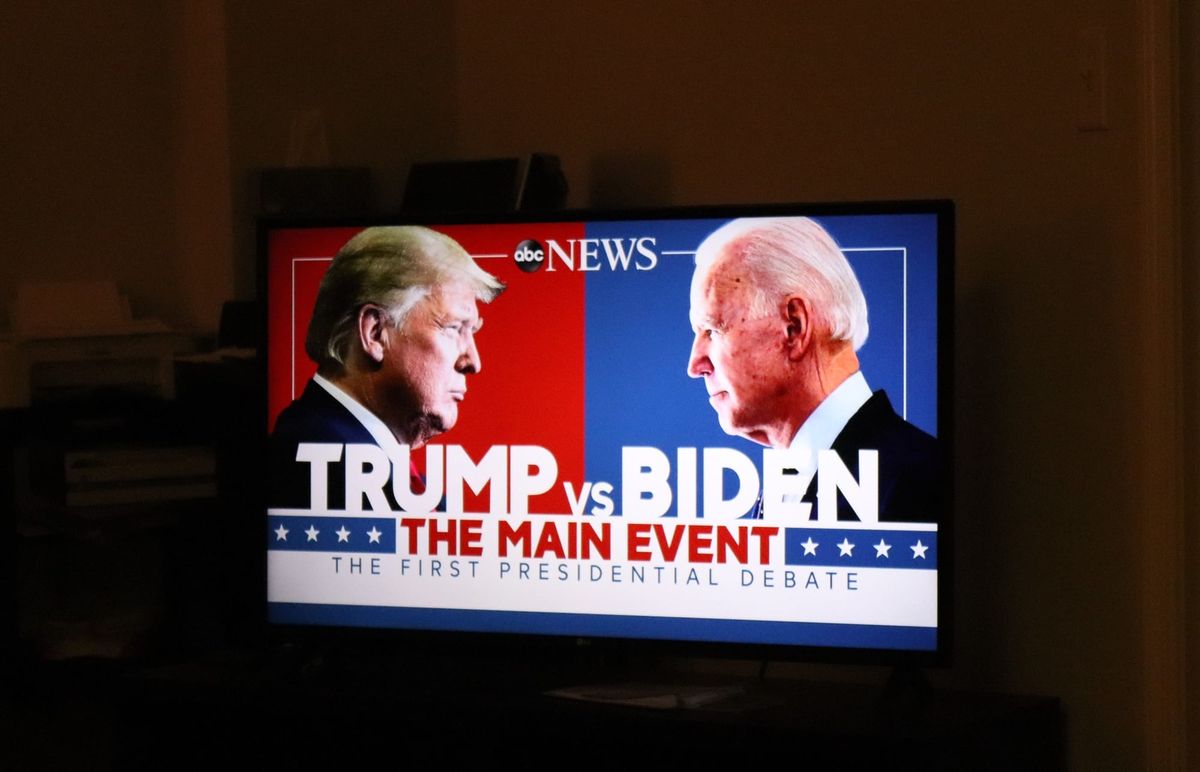
Despite the CPD being founded by and composed of leaders and members of both parties, Trump and the RNC accused it of Democratic favoritism, while Biden and the DNC accused it of not enforcing its rules on etiquette.
The outcome was the same. The parties ultimately dictated who got access to the national audience and candidates outside the two-party structure were excluded before voters had a genuine chance to evaluate them.
This creates a self-reinforcing cycle:
Candidates are excluded because they lack support (and because the two major parties don’t want competition).
They lack support because voters rarely see them (because the media reinforces two-party control).
And voters rarely see them because the system has already decided they are not viable.
That is not a free marketplace of ideas. It is a political bouncer at the door.
10. The Ballot Itself Is Built Around Two-Party Assumptions
Even when voters have other options, the ballot is often designed around a Democrat-versus-Republican framework.
Media coverage follows the same script. Polling questions reinforce it. Fundraising systems reward it. Election-night analysis treats every race as a red-versus-blue scoreboard.
Meanwhile, independent candidates and reform-minded alternatives are treated as side stories—unless they become disruptive enough to threaten the major parties.
Then, they are just “spoilers.”
The two-party system does not need to compete for votes because it structures the choices voters are allowed to make.
Voters Are Asked to Trust a System They Did Not Design
The takeaway from all of this should not be anti-party. None of this means political parties should not exist.
Voters have every right to organize around shared values, nominate candidates, and compete for power. Parties play a legitimate role in the democratic process.
But public elections should not be designed primarily around protecting private political organizations—nor should they be controlled by them.
The central question should be simple:
Does the system give voters meaningful choices and meaningful influence?
When independent voters—who make up 47% of the national electorate—are excluded from decisive primaries, when districts are drawn to eliminate competition, when ballot-access rules favor the same two institutions, and when most races are effectively settled before November, the answer is clearly NO.
The two major parties control far too much of what happens before voters ever get the ballot. That does not mean they shouldn’t exist, but this is why reformers are addressing equal voting rights for independents, how candidates are elected, and the need for more choice.