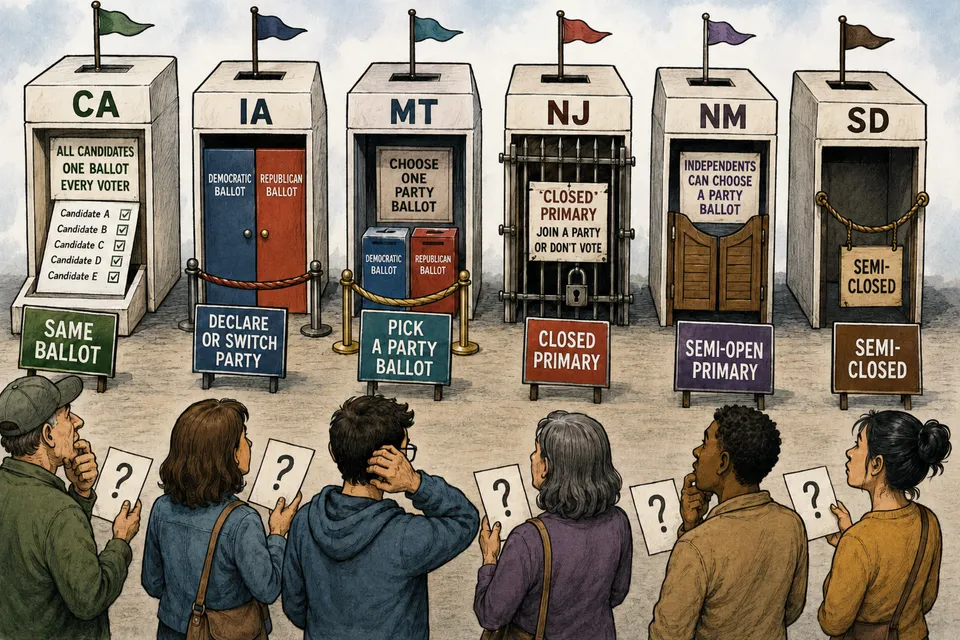
Last week in Staten Island, the NYC Charter Revision Commission held its next-to-last public hearing. As Commissioner Diane Savino commented, addressing NYC's closed primary system “is the single biggest issue we’ve heard this year.”
Much of the election coverage on Tuesday focused on the New York primaries, especially in NYC and the hotly contested ranked choice election for mayor. What got less attention, however, were the 3.5 million independent voters in the state locked out of elections they paid for.
North Carolina voters are encouraged to check their voter registration. On June 24, the party affiliation of about 34,000 voters will change in the voter registration database from a now unrecognized political party to unaffiliated.
We’re halfway into 2025 and the year has already delivered several wins for independent voters and their right to equal participation in elections following a campaign cycle in which statewide ballot measure losses threatened to slow down the movement.
Registered unaffiliated voters in Nevada – the state’s largest registered voting bloc – came close to gaining real electoral power in elections with the adoption of semi-open primaries. That is, until Gov. Joe Lombardo decided to keep their voices suppressed.
As the New York City Charter Revision Commission considers a wide breadth of reforms to city policy, one reform in particular is catching the attention of both voters and the media: Ending the city’s use of closed partisan primaries.
New Jersey will hold its statewide primary elections on Tuesday, June 10, to determine who will appear in the general election for the highest offices in the state, including governor. These are important elections – and yet they will be decided by a marginal percentage of voters.
South Bay voters are navigating a monsoon of negative, and often misleading, political ads tied to the July 1 runoff election for San Diego County’s Board of Supervisors. But here’s the kicker: taxpayers are footing a $4.6 million bill for this completely unnecessary second round of voting.
A surprise last-minute bill to open primary elections to Nevada’s largest voting bloc, registered unaffiliated voters, moved quickly through the state legislature and was approved by a majority of lawmakers on the last day of the legislative session Monday.
Pressure continues to mount for New York City to change its primary election laws to include all eligible voters, regardless of party, as independent voters rally behind a simple message: "No voter should be required to join a political party to vote."
More than 330,000 independent voters will have access to state-administered primary elections in future New Mexico elections after the legislature passed SB 16 in March to end the state’s use of closed primaries.
A new lawsuit filed Wednesday by the Open Primaries Education Fund along with the law firm, Angor, Rapaport, & Skainy (DATRS), asserts that Maryland is violating its own constitution and the voting rights of nearly 1 million independent voters in the state by denying them access to taxpayer-funded p