 Jeremy Gruber
Editor's Note: The following is an exclusive series on IVN from the better elections group Open Primaries. The content originated from the group's weekly newsletter, "Primary Buzz."
After failing yet again to convince the legislature to close South Carolina's primaries, the South Carolina Republican Party has filed a federal lawsuit seeking to restrict participation in Republican primaries to registered party members. The case mirrors a similar lawsuit filed by the Texas Republican Party, where litigation is also underway to limit who can vote in taxpayer-funded primary elections.
The South Carolina lawsuit is the latest front in a growing national campaign by party organizations to use the courts to shut millions of independent voters out of public elections. The strategy has already suffered several legal setbacks: earlier this year, the Colorado Republican Party advanced a similar constitutional challenge and lost in federal court, and the Hawaii Democratic Party also failed in its effort to close taxpayer-funded primaries through litigation several years ago.
But perhaps the goal is more political than legal. In Texas the GOP’s lawsuit has put successful pressure on legislators to move forward legislation that had been languishing to close the primaries. That’s the power of going to court.
Either way, at stake is nothing less than who gets to participate in the elections that often determine who ultimately holds public office. Open Primaries is closely evaluating these cases and will continue monitoring developments as this legal battle over the future of public primary elections unfolds.
What We're Talking About
John Opdycke Takes the Open Primaries Message to Meet the Press
Open Primaries President John Opdycke joined Meet the Press this week to discuss how America’s primary election system is out of step with the country.
“Every single week, 10,000 Americans change their voter registration from Democrat or Republican to independent,” Opdycke said. “It’s now 48% of the country, the fastest growing segment of the electorate. And yet, our election system is set up where independents are seen as interlopers and outsiders.”
 Shawn Griffiths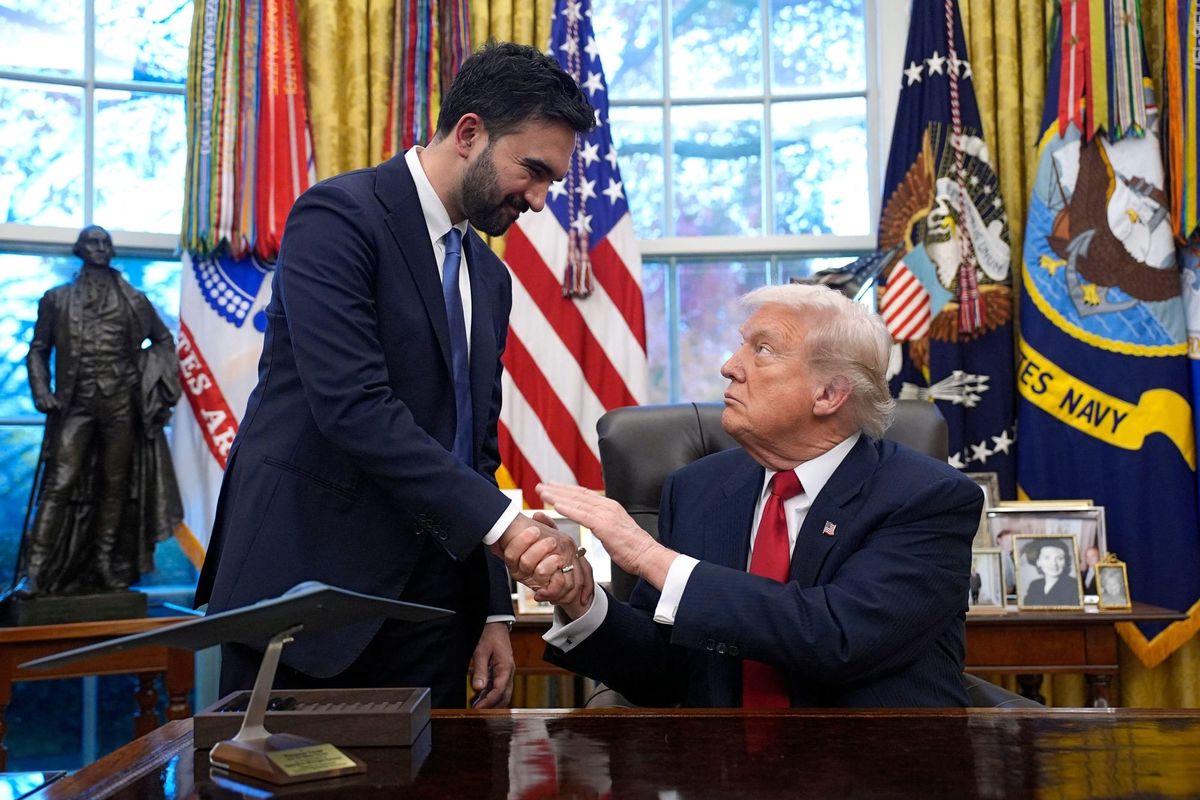
He pointed to states like Alaska, California, and Washington that have moved toward nonpartisan primaries where every voter gets the same ballot and the same choices.
The message: if we want elections that represent the public, we need a system that gives the public a voice.
What We're Watching
Wes Moore Talks Reform. Maryland Voters Are Still Locked Out.
Maryland Governor Wes Moore recently joined Paul Rieckhoff of Independent Veterans of America to talk about the corrosive effects of closed primaries and the urgent need to fix a political system that too often rewards the loudest extremes while silencing millions of voters.
But there is a striking contradiction: the same Governor warning about the failures of America’s political system has so far remained silent about the closed primary system in his own state.
Maryland’s independent voters are shut out of the elections that often decide who holds power. Open Primaries is challenging that system in court alongside former Lieutenant Governor Boyd Rutherford, with Governor Moore among the defendants.
And reform is not coming only from outside the governor’s party. Lily Qi, a Democratic member of the Maryland House of Delegates, has introduced legislation to open Maryland’s primaries and give every voter a voice.
The question now is whether Governor Moore’s calls for political reform will remain national talking points-or whether he will stand up for the more than 1 million Maryland voters currently excluded from the process in his own backyard.
NYC Independents Insist on Being Seen!
There are 1.2 million independents across New York City who cannot vote in primary elections. They are not a statistic—they are teachers, entrepreneurs, parents, and neighbors who are locked out of the elections that often determine who governs their city.
And they are making sure they are heard.
At this week's NYC Charter Revision Commission hearings in Staten Island and Manhattan, more than two dozen independents testified or submitted written testimony demanding the most basic right in a democracy: the right to vote. Many who traveled to speak were never called, but they showed up to make clear that 1.2 million New Yorkers cannot be ignored.
Among those who testified was Angel Ayon, who shared his story of immigrating from Cuba, building a successful architecture firm, and achieving the American dream—only to still be denied a voice in the elections that matter most.
Edwin Hernandez, founder of Building Progress, testified alongside his son, saying:
"I am an American born citizen, a proud New Yorker and I am 1 of the 1.2 million constituents locked out of elections—unable to cast a vote at the polls due to discriminatory practices and biased policies."
The Manhattan hearing was held at the historic Riverside Church, and of the more than a dozen independents who traveled to be heard, only two people were given the opportunity to testify as the Commission gave priority to people testifying on efficiency issues. Independent voting rights being sidelined.
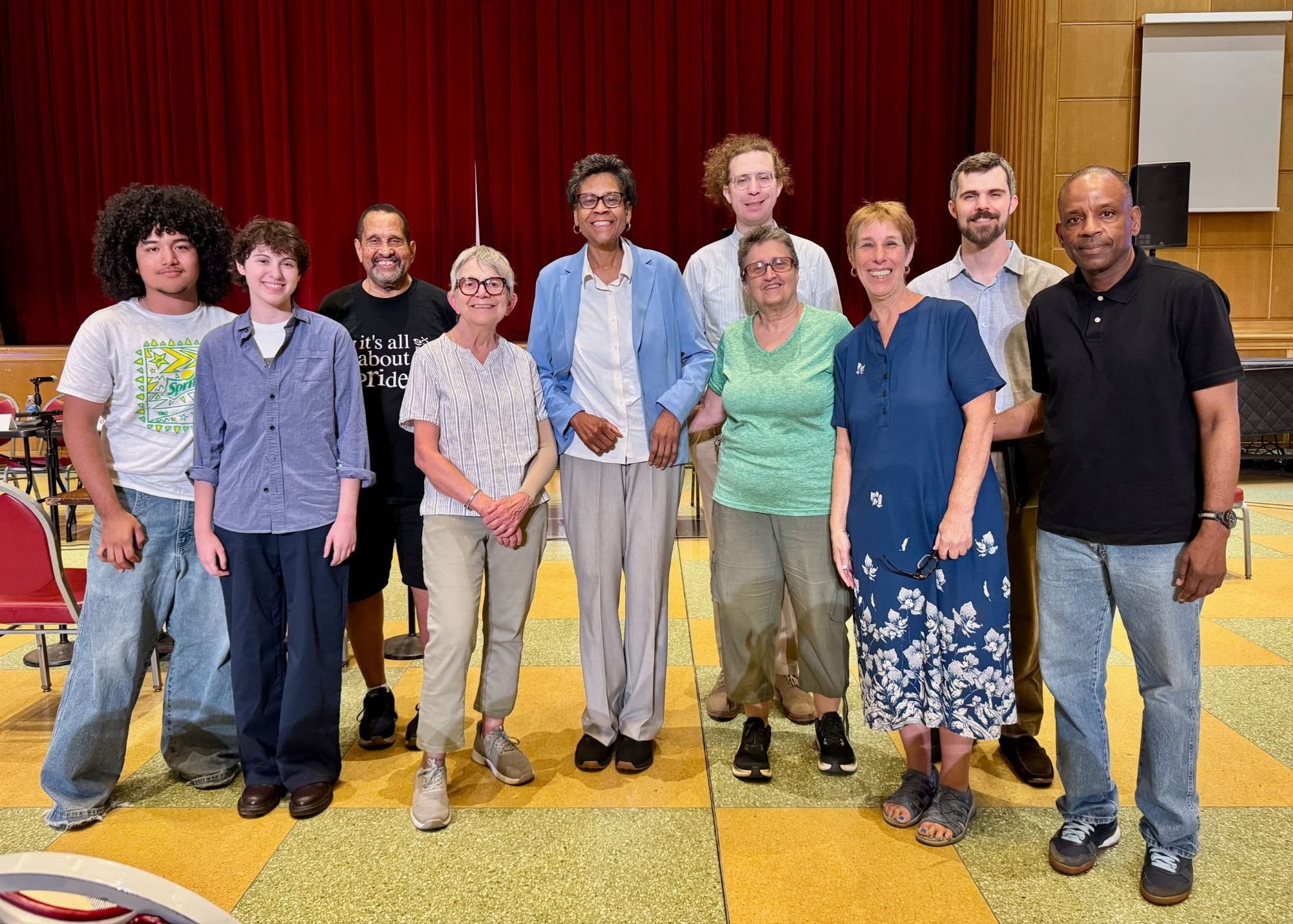
Dr. Jessie Fields spoke about the fight for independent voting rights as a civil rights issue. Quoting the late civil rights attorney Michael Hardy, she reminded the Commission that: "Segregating unaffiliated voters, preventing them from meaningful participation in the primaries, is inherently unequal."
Max Bissonnette, a high school student from Manhattan and the founder of the Instagram account NYopenprimary (you should follow) shared his story of going to testify. Check it out.
The final Commission hearing is in Queens on July 13. But one thing is already clear: NYC independents are not backing down. They will continue organizing and fighting until every voter has an equal voice.
Fast Takes
Arizona Secretary of State Adrian Fontes Gets It
In Case You Missed It
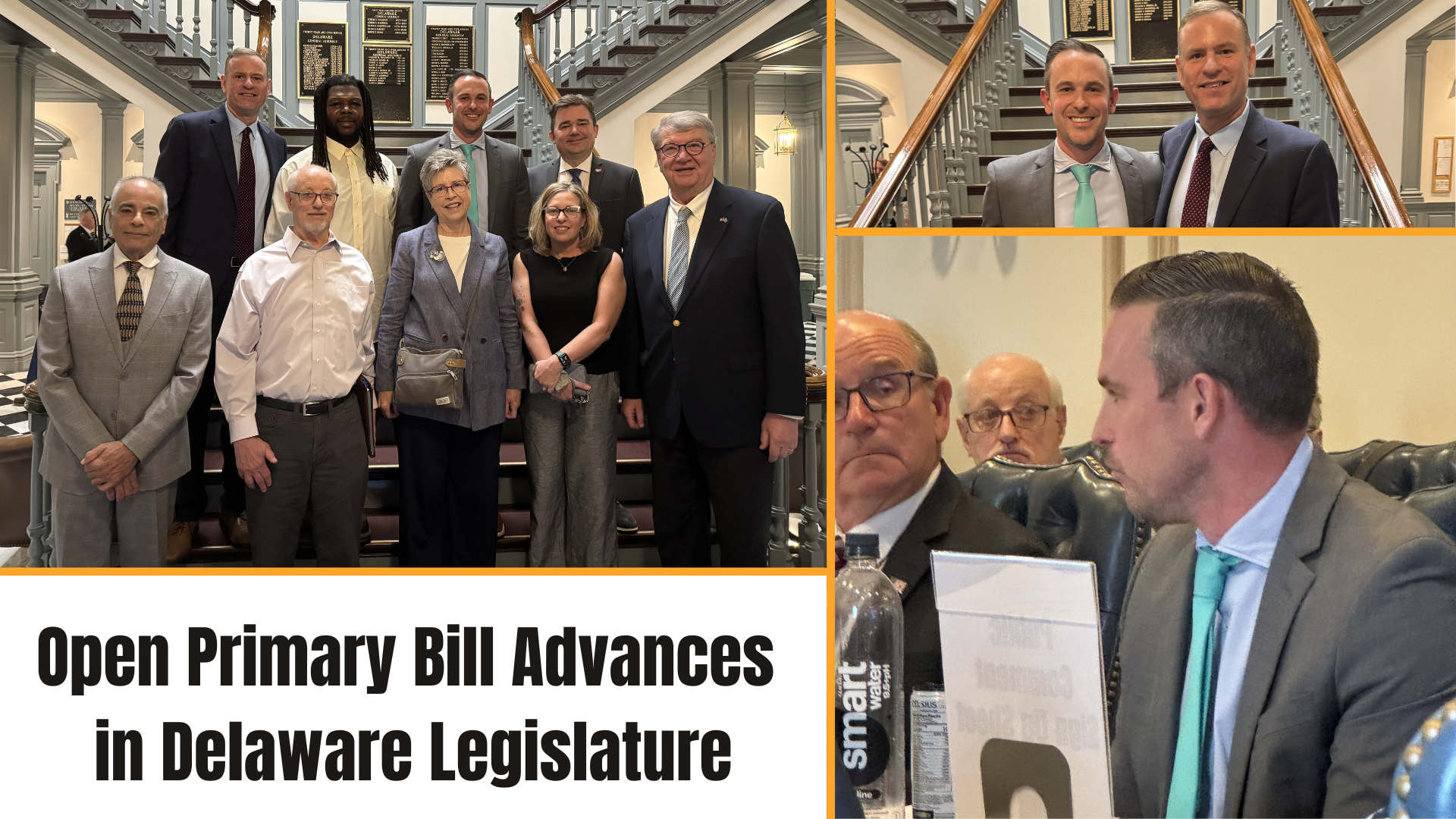
Something extraordinary is happening in Delaware.
Last week, Rep. Smith's HB 188-which would open Delaware's taxpayer-funded primary elections to independent voters-passed the Delaware House, the farthest an open primaries bill has ever advanced in the first year it was introduced. It did so with a majority of members from both parties-a rare feat.
That's not just a legislative victory. It's proof that the political landscape is changing.
For months, independent voters have been showing up everywhere. They packed committee hearings. They met with legislators. They refused to be ignored. Young and old. Black, white, and Latino. Veterans, election workers, lifelong independents, and former Democrats and Republicans alike stood together to demand something simple: if taxpayers fund elections, every taxpayer should have a voice.
Their organizing changed the outcome. A committee that appeared ready to kill the bill instead voted to advance it because independent voters made themselves impossible to ignore.
Congratulations to Rep. Smith for his bold leadership, and to our incredible partners at the ACLU of Delaware, Indivisible Delaware, Future Caucus, and Unite America. Most of all, congratulations to the thousands of independent Delawareans who are showing that when independents stand up….the political establishment notices.
There’s still a long road ahead in Delaware. If you live in Delaware or know someone who does and want to get involved, please email National Organizing Director Cathy Stewart at cstewart@openprimaries.org.
Campaign Updates
Kentucky’s Primary Day: Independents Protest Their Exclusion
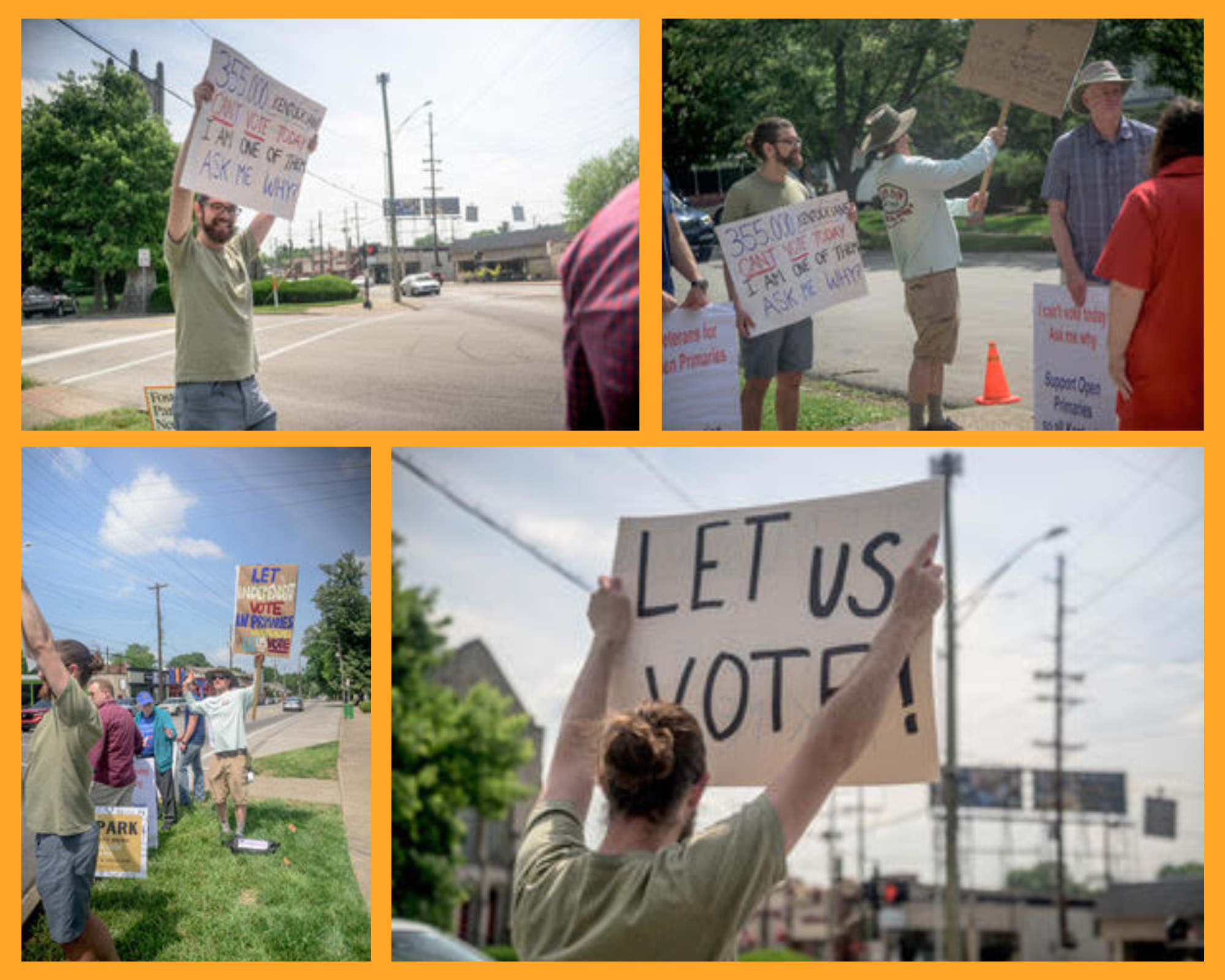
On Primary Day, hundreds of thousands of Kentucky independents were barred from voting in the elections that shape their government.
To call attention to this exclusion, Let Us Vote Kentucky and Veterans for All Voters held a picket in Louisville, where voters highlighted how closed primaries deny citizens a voice in the very elections their tax dollars support.
“This is not a partisan issue, it’s a participation issue,” said LTC Mark Ritter (ret.), leader of Let Us Vote Kentucky. “Hundreds of thousands of Kentuckians are paying taxes for primary elections they cannot participate in.”
The message was simple: Kentucky’s elections belong to all Kentuckians. With more than 348,000 independent voters locked out, the fight to open primaries is a fight for a stronger, more inclusive democracy.