The most basic right in a healthy democracy is the right to vote. Without this right, governments can turn into the worst of autocracies and dictatorships, ignoring the needs of citizens and abusing the power of the state. Voter discrimination is not a new phenomenon and has been around since the very beginning of the United States.
When we talk about voter discrimination in the U.S., many obvious examples come to mind.
When our country was formed in 1776, only white men over the age of 21 were allowed to vote. Black men weren’t legally given the right to vote until the 15th Amendment was added to the Constitution in 1870 and even so, previously Confederate states passed Jim Crow laws that continued to systematically disenfranchise black voters.
While the supreme law of the country proclaimed that states could not deny the right to vote on grounds of race, color, or previous condition of servitude, those in power used new methods to keep black men from exercising their right to vote.
Intimidation with physical violence, literacy tests, property tests, and poll taxes to name a few.
Women were not guaranteed the right to vote until the 19th Amendment was ratified in 1920. However, the same forms of discrimination that were actively being used against black men were passed down to black women.
The same story follows with other minorities as well. The right of Native Americans to vote was not recognized until 1948 and even so they were not eligible to vote in every state until 1962. From the time this article is being written that wasn’t even 60 years ago.
We can perceive this phenomenon as not only a failure of our elected leaders, who were meant to govern and safeguard our democracy, but a failure of the system as a whole. Elected leaders may have decided who was worthy of having a piece of the pie in our democracy, or who was worthy of having a voice, but the system in place was also created by white men for white men.
These are not isolated examples of voter discrimination that impacted one small southern town or affected a few elections. No, these are examples of systemic discrimination that plagued the country for decades and continues to haunt the integrity of our electoral system to this day.
When reflecting on voter discrimination in the United States, there are new forms that have developed within the past few decades that are not as obvious as discrimination based on race or sex.
These new forms of voter discrimination have developed quietly over time as a silent attack on our democracy, justified by private interests and multi-million dollar fundraising. You may not have even heard of these new methods unless you’re one of the 42% of U.S. voters who identify as political independents.
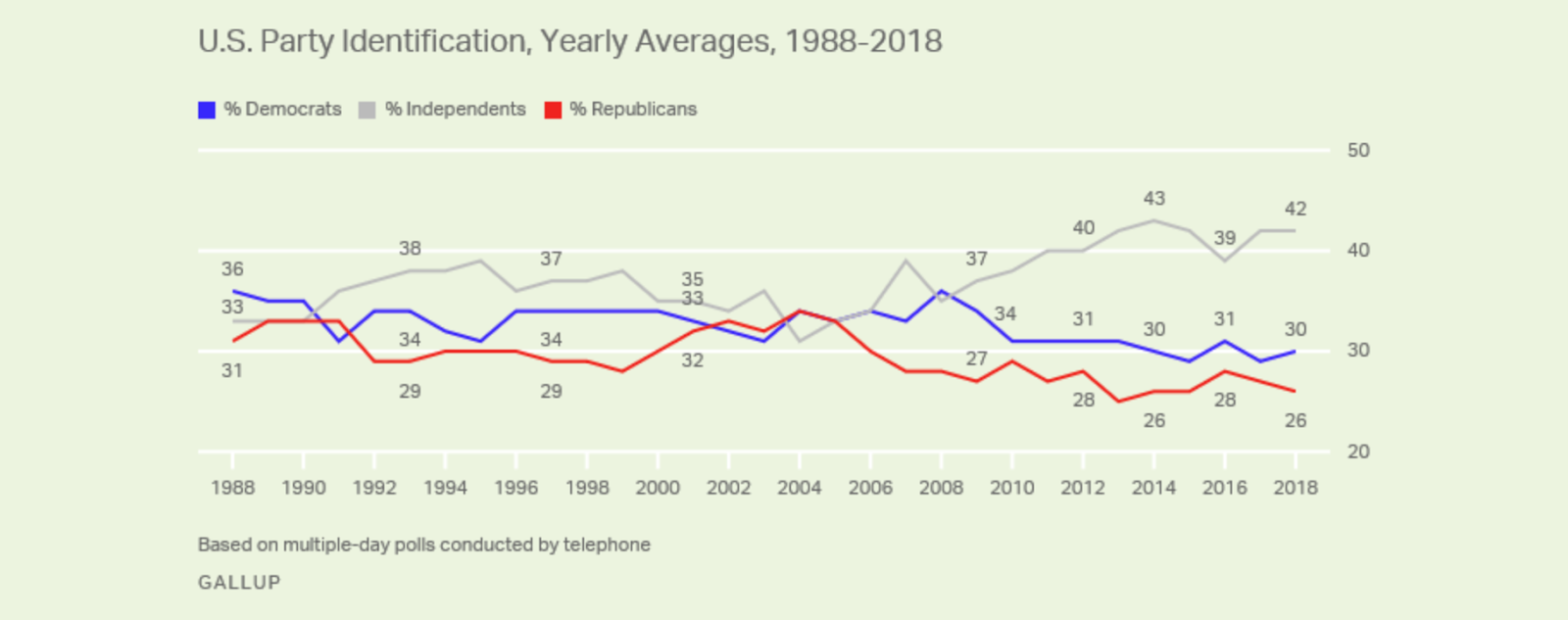
Independent voters know these forms of discrimination all too well and it began with the emergence of the two dominant political parties.
The Republican and Democrat political parties are so powerful that they can control who can and can’t vote.
In the United States, there are essentially two phases of elections. The first, arguably the more important, is the primary elections. This is where party members select the candidate they want to represent the party in the general election.
As a result of the Constitution never specifying how the election process would be carried out, the two political parties have decided their own procedures over time.
Primaries were first introduced during the Progressive Era in the early 20th century. This first phase of elections was actually first introduced to weaken the power of bosses and make the process more democratic.
However, over the years both of the two major political parties have passed laws that make it impossible for anyone not a member of their respective party to participate in the primaries.
And so, similarly to the earlier forms of voter discrimination that were the result of a system made by white men for white men, the primaries became a system by parties, for party members only.
Today, in most states only those registered with either the Republican or Democrat party can vote to send a candidate to the general election. The winner of the general election then becomes a representative for everyone.
For almost half of our country who want to remain independent of either major party, this means your vote does not matter. Most simply, “join a party, or don’t be represented.”
Those who want to keep independent voters out of primary elections often ask, “why would you have the opportunity to vote for the club’s leaders? Primaries are for parties, so if you want to participate, join the party.”
The problem with this viewpoint is that political parties, unlike a private club or company, elect representatives through a taxpayer-funded process.
Further, party primaries are an important component of a public election process and result in leaders who, once elected, do not just impact party members, but affect everyone.
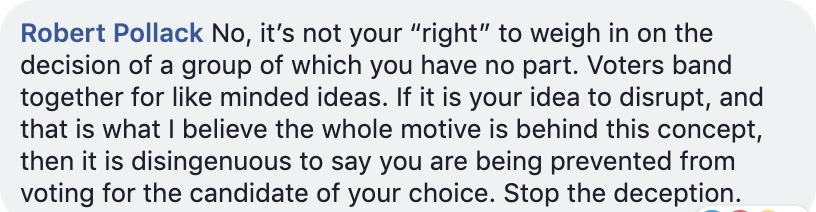
IVP followers weighed in on this very issue not long ago, with several people making statements such as the ones pictured below. While some voters believe independents should not be able to participate in selecting party candidates, others believe the political parties have abused their power as private organizations who are using public funds for their own private activities.

In 2016 alone, nationwide primary elections were estimated to have cost nearly half a billion dollars. Closed primaries, which are closed to non-party members, cost almost 300 million tax-payer dollars yet 26 million voters could not even vote for the very elections they helped fund.
So, how can we have an important stage of the public election process that prohibits half the electorate from participating because they refuse to join a private political party?
But the two parties in power aren't going to give nonpartisan voters a larger voice on their own.
Something has to give, and it must start with independents standing up to proclaim not only that they exist and want to be heard, but also that independents refuse to fund the interests of two private enterprises that have turned the most fundamental right in a healthy democracy into something conditional on joining one of their private clubs.