
Search query: alabama
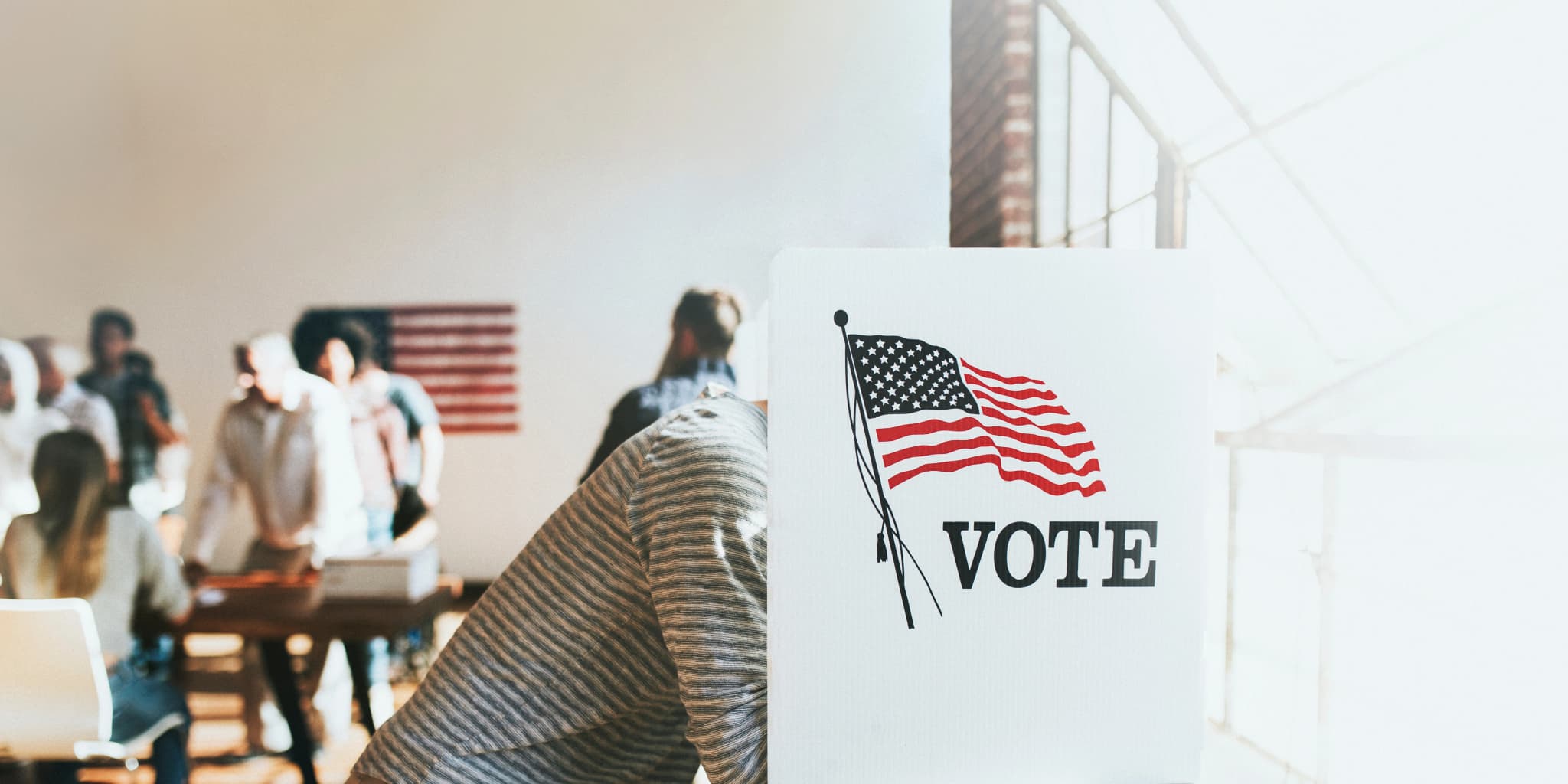
PBS Educates Voters Nationwide on Restrictive Voting Laws with 'Ballot Watch'
The 2014 midterm elections are less than a month away and the GOP is poised to seize a majority in the Senate, though that would require winning some close races. Some are expected to come down to just a proportionally small amount of votes. RealClearPolitics rates 10 Senate races as “toss-ups” and 7 of them involve Democratic incumbents.
The difference between victory and defeat will come down to voter turnout, which in turn depends on voter access laws, which state governments have been keen
09 Oct, 2014
-
2 min read
Improving Elections: Which Voting Method Do You Support?
One of the fundamental laws of psephology (the study of elections) is Duverger’s Law. This “law” affirms that in single-member districts, where the winner is whoever wins the most votes (plurality voting), the system will produce two major parties.
The presence of third parties naturally encourages strategic voting, in which a voter will not choose his or her favorite candidate in order to avoid a “worse” outcome, such as the victory of his or her least preferred candidate.
Though this law has
28 Aug, 2014
-
7 min read
6 Things the Crisis in Ferguson Is Showing Us about America
The shooting death of an unarmed black civilian by a white police officer this month has made Ferguson, Mo., a flashpoint for some of the most divisive issues in America today.
Reports show that Michael Brown, 18, died after Ferguson Officer Darren Wilson responded to an emergency call. Accounts about what happened vary, but an autopsy showed that Wilson reportedly discharged his weapon six times.
Since then, Ferguson has seen protests, riots, looting, curfews, and even more death. The crisis
22 Aug, 2014
-
4 min read
The Strengths and Weaknesses of 3 Proportional Voting Methods
There are three methods of proportional representation advocates most commonly present: cumulative voting, limited voting, and ranked-choice voting. Each has been used in the United States, mainly in local and county elections, with decent success.
The first two systems only simulate proportional voting while ranked-choice can fully incorporate proportional voting.
Cumulative voting is a system used in multi-seat elections where the voter is given a number of ballots equal to the number of sea
12 Aug, 2014
-
7 min read
Independent Candidates See 2014 as Opportunity for Change in Washington
Despite consistently low approval ratings of Congress, candidates outside the Democratic and Republican parties have faced an uphill battle gaining enough exposure and credibility to get elected.
Since 1877 (the end of Reconstruction), there have been 111 third party or independent candidates elected to the U.S. House of Representatives. Since 1949 (the Modern Era), there have only been six.
How many independents are sitting in the House today? Zero. That’s right, zero. All 432 current represe
28 Jul, 2014
-
4 min read
IVN Daily Digest -- July 17, 2014
1. Opinion piece in the Montgomery Advertiser advocates adopting a nonpartisan, top-two open primary system in Alabama.
"Even more importantly, however, this eliminates the unfair choices that some voters have to make under the current system. Because they can only vote in one party's primary, voters are sometimes forced to choose between voting in a local race contested in one primary or a district or statewide race contested in the other primary."
Alabama currently has an open partisan prima
17 Jul, 2014
-
4 min read
IVN Daily Digest -- July 10, 2014
1. The editorial board of Wyoming's Casper Star-Tribune supports a lawsuit challenging the state's heavy restrictions on third party fundraising.
"In Wyoming, the time period for fundraising is tied to the date of the party primary. Campaign contributions are not allowed before that time. With that restriction, Wyoming is inherently presuming that all candidates for statewide office follow the same path to the general election ballot."
Except, not all candidates for statewide office follow the
10 Jul, 2014
-
3 min read
IVN Daily Digest -- July 8, 2014
1. A new lawsuit filed in federal court challenges restrictive ballot access laws for independent candidates in New Mexico.
The lawsuit, filed by a member of the Public Education Committee, says the significantly higher bar in signatures required for independent candidates to appear on the ballot places an unfair burden on independents. Tyson Parker, the committee member, filed the lawsuit after he failed to get the 2,196 signatures needed to gain ballot access.
"For independents running for t
08 Jul, 2014
-
3 min read
Independent Candidates Form Alliance to Permanently End Partisan Gridlock
Is there a way to end gridlock forever? What about gerrymandering, closed primaries, and high-barrier requirements for outsiders? Even then, what about the complete dependence candidates have on a tiny group of funders that have corrupted our government?
When considered all together, we are back to a time of taxation without any meaningful representation. A conclusion that a recent Princeton study resoundingly confirms.
A wave of bold upstart independents from across the U.S. believe there is
10 Jun, 2014
-
2 min read
Psychological Effects of Poverty Just As Bad As Physical
For the 46.5 million Americans living below the poverty line, 16 million of which are children, life has become a consistent struggle. This struggle does not simply begin and end with monetary concerns, but in fact surrounds both a physical and mental exertion of the individual.Using the national U.S. census and NCCP, researchers found that in 2013, the poverty line rested at $11,490, a number which equates an individual working full time while only making $5.00 – far below the national minimum
23 May, 2014
-
3 min read