 Shawn Griffiths
SACRAMENTO, Calif. - After two decades of ranked choice voting in California, a new report from FairVote shows that the reform has delivered on several of its core promises.
Specifically: higher participation in decisive elections, winners with broader support, and lower costs to taxpayers.
Ranked choice voting (RCV) was first used in California in 2004 in San Francisco. Since then, it has expanded to Albany, Berkeley, Eureka, Oakland, Redondo Beach, and San Leandro. Although, its use has been delayed in Eureka.
FairVote’s report comes at a time when debate over election reform is heating up in California amidst attacks on the state’s nonpartisan Top Two primary. The governor’s race, in particular, has raised vote-splitting concerns in a crowded field.
A cross-partisan group of reformers, called the More Choice Coalition, launched to lead the opposition against Top Two repeal, and is pushing for expanding the number of general election candidates to 4 with ranked choice ballots.
 Shawn Griffiths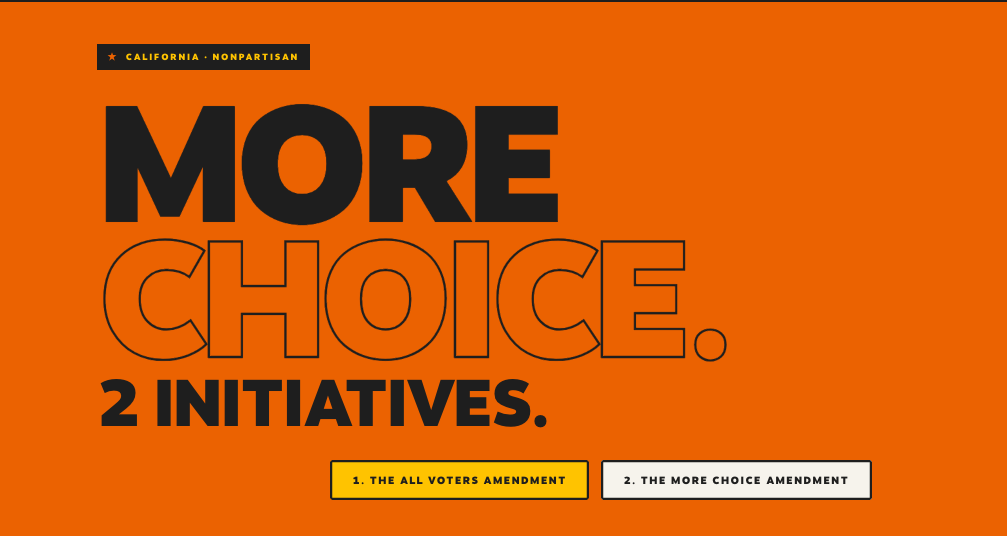
The report’s findings are direct: candidates of color have won 64% of RCV races in California cities, compared with 36% in the same cities before RCV. Women have won 44% of RCV races, up from 34% before adoption.
In other words, the reform has increased representation for historically under-represented groups.
It has also had an impact on turnout.
Before adopting ranked choice voting, many California cities used either delayed runoffs or two-round elections. Both were designed to produce majority winners, but both had a turnout problem.
For example, in San Francisco’s last Board of Supervisors election before RCV, runoff turnout dropped 42% from the November election.
In Oakland, decisive elections were often held in lower-turnout primaries. FairVote notes that from 2002 to 2008, before Oakland implemented RCV, 89% of elections were decided in the primary alone.
General election turnout was, on average, 61% higher than primary turnout during that period. This means the election that actually picked the winner often had fewer voters.
Oakland moved to a single-election system that uses ranked choice voting. These elections not only produce higher turnouts, but save taxpayers money.
FairVote estimates that Oakland saves $140,000 a year under a ranked choice system. San Francisco saves even more at $3.7 million per election. Berkeley saves roughly $760,000 and San Leandro saves $75,000.
In total, across California cities using RCV, the report estimates total savings at $5 million per election cycle.
Then, there is the voter-choice argument.
FairVote found that winners in California RCV elections have broad support from voters. In single-winner races with at least three candidates, winning candidates were ranked in the top three by an average of 73% of voters.
The report calls this “consensus support,” a measure of how many voters affirmatively supported the winner even if that candidate was not their first choice.
On average, winning candidates received 19% of their final vote total from backup rankings. That means voters were able to support their favorite candidate first without losing their ability to help decide the final winner.
FairVote asserts that this is something RCV critics often ignore. Backup choices are not throwaway votes. They are the mechanism that keeps voters from being punished for refusing to vote strategically.
The report highlights San Francisco’s 2024 Board of Supervisors District 5 race as one example. Bilal Mahmood defeated incumbent Dean Preston after receiving strong lower-choice support from voters who backed other challengers.
According to FairVote, when all other candidates were eliminated, 73% of transferred ballots went to Mahmood, allowing voters seeking change to consolidate behind one candidate rather than split their votes.
The report looks into several other data points as it relates to RCV, but the one that advocates will likely point to as more California cities consider new reforms is that voters who use RCV tend to like it.
In Redondo Beach, where voters used it for the first time in 2024, 61% supported the reform afterward. In a 2024 poll across San Francisco, Oakland, Berkeley, and San Leandro, 70% of voters said they wanted to keep using RCV.
Additionally, 42% in that same poll said they wanted to expand it to other elections, including statewide and federal contests.
FairVote notes that there are active discussions around RCV in Los Angeles, Sacramento, San Diego, and Santa Clara County, while the More Choice Coalition looks to incorporate it into future statewide reform.
The broader takeaway is simple: California has already run a 20-year test of ranked choice voting in real elections, with real candidates and real voters.
The results do not show chaos. They show voters adapting, cities saving money, winners building broader coalitions, and historically underrepresented candidates winning more often.
The question is no longer whether RCV is too new or too untested—because in California, it is neither.