Skip to content
Subscribe

Proposed Bill Blocks Retroactive Taxes Being Imposed in California

Published:

Credit: California Franchise Tax Board Facebook
retroactive taxes in California

On Thursday, May 2, the state Senate Governance and Finance Committee approved SB 209 in a 6-1 vote. The bill would protect thousands of small businesses in California from paying 4 years of retroactive taxes.

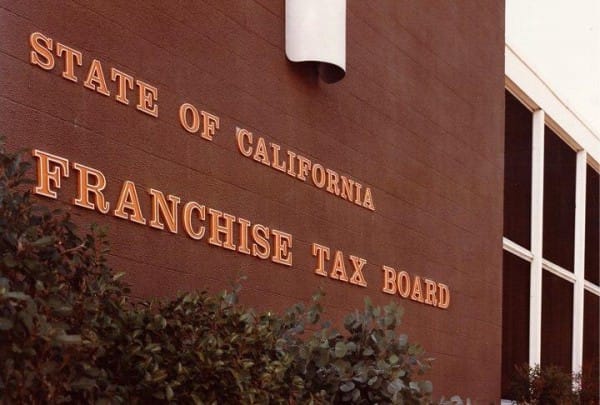
The bill, carried by Sen. Ted Lieu (D-Torrance) and Assemblyman Jeff Gorell (R-Camarillo), is a reaction to a 2012 decision by the California Franchise Tax Board (FTB) to cancel a tax break for small businesses and ask those who took advantage of it after 2008 to return their tax savings.

In August 2012, a California Court of Appeal ruled that a requirement in the qualified small business stock statutes (QSBS) -- in place in California since 1993 -- violated the Commerce Clause.

This tax credit, intended to increase investment in California small businesses, allowed "for the exclusion of 50 percent of capital gains earned from investments in businesses valued less than $50 million that have at least 80 percent of their staff and assets in California."

As a result of the court's decision, the FTB unilaterally decided not only to cancel the QSBS, but also to collect 4 years of retroactive taxes from more than 2,500 entrepreneurs who benefited from the break.

The court's use of the Commerce Clause was already considered by some as a bad decision, but the FTB's decision is even more controversial for a number of reasons. First, the process by which the plan was adopted has been decried.

The FTB's staff made the decision without approval from the FTB's board members or input from the public. In the past, following court decisions declaring tax laws unconstitutional, the FTB took a more collaborative approach to the decision process.

Second, it is highly contested that ordering businesses to pay retroactive taxes was the only way the FTB could comply with the court decision. When a particular provision violates the Commerce Clause, the state has the obligation to cure the discrimination by "leveling the playing field."

However, the state has some flexibility in terms of how to achieve this objective. The court identified three ways to do it:  issue refunds to the discriminated class, retroactively assess the favored class with compliance to due process, or a combination of both.

Third, by deciding to maximize revenues at the expense of California taxpayers, the FTB disregarded any fairness principles. Entrepreneurs who legally took advantages of the tax break are now being sanctioned with tens of thousands of dollars in extra taxes for something that is out of their control.

Thirty-eight legislators sent a letter to the FTB protesting the assessment that penalizing California entrepreneurs was the only solution available to the state. Moreover, with California slowly recovering from the 2008 financial crisis, trying to recoup an estimated $120 million from small businesses could be extremely detrimental to the state's economy.

With Lieu's bill going forward, many hope the rest of the Legislature will agree that California would receive greater long-term benefits by providing a fair and stable tax framework for businesses rather than imposing retroactive taxes.

Adhere to the IVN etiquette

By posting a comment, you agree to adhere to our etiquette rules: No partisan attacks, no personal attacks, substantiate your sources, no self-promotion.

Contact IVN

Questions about this article or our coverage? Send us a message. A free IVN member account is required.

Message sent

Thanks, we’ll review it and get back to you if needed.

Message not sent

Sorry, something went wrong. Please try again.

Sign in to send a message

Messages are tied to your IVN member account. Signing in is free and takes a few seconds.

Republish this article

Republishing guidelines

Republish IVN articles for free. Independent Voter News articles may be republished online or in print under a Creative Commons BY-NC-ND 4.0 license, on these terms:

  1. Credit the author and IVN. Keep the byline ("By Author Name, Independent Voter News") and the attribution note at the end, which links to the original.
  2. Keep the meaning. You may update time and place references and apply your house style. You may trim for length, as long as the cuts don't change the meaning or misrepresent the author. Keep the headline. Mark any additions as your own (for example "Additional reporting by ...").
  3. Translations are welcome. Translate faithfully, add "Translated from English by [your outlet]", and tell us at editor@ivn.us.
  4. Keep the links, including the link to the original article.
  5. Keep the tracking image. The HTML includes a 1-pixel image that counts readers on your page. It collects no personal information.
  6. Photos and illustrations. Images credited to IVN may be used with this article only. Images credited to others (AP, Getty, Unsplash, Wikimedia and so on) stay under their owners' terms. Secure the rights or switch "Include images" off.
  7. Don't sell it. You can't sell our articles or sell ads specifically against them. Your normal site advertising is fine.
  8. No implied endorsement. Don't suggest that IVN or the author endorses you, your candidates or your causes, or that donations to you support IVN.
  9. Keep labels. Opinion or analysis pieces keep that label.
  10. Point search engines to the original. Where your CMS allows, set the canonical URL to the original IVN article.
  11. No bulk or automated republishing, and don't submit our articles to aggregators (Apple News, Google News, MSN) as your own.
  12. Corrections and removals. Update your copy when we correct it, and remove it promptly if we ask. We'll contact you at the email you give us.
  13. Questions or print republication: editor@ivn.us.

IVN staff: fill in who you're inviting above, then create the invite.

Preparing the article

Proposed Bill Blocks Retroactive Taxes Being Imposed in California

Choose a format
  • HTML
  • Email HTML
  • Markdown
  • Formatted (.docx)
  • Plain text
  • WordPress blocks
  • PDF
Choose a platform

Photos credited to others need their owners' permission.

To for

Republishing somewhere else? Questions? editor@ivn.us