No Secret that FBI Targets Occupy Activists: Official Policy
 Terri Harel
Photo: Occupy Wall Street // occupywallst.org
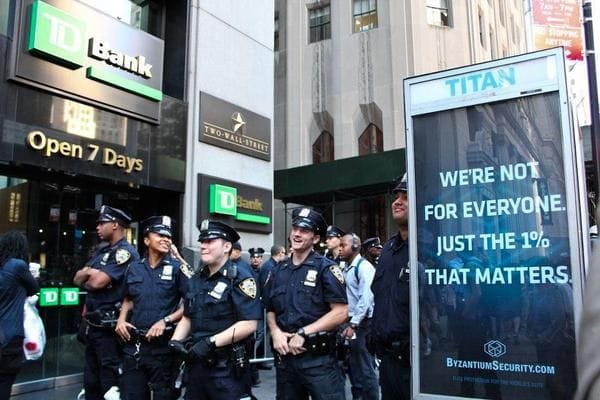
A recent find by the Partnership for Civil Justice Fund revealed secret nationwide monitoring of the Occupy movement’s participants and organizers. While this is not of great surprise, this should alarm, not just Occupy activists, but Americans in general, particularly given the renewal of FISA, NDAA, and the overall conversation surrounding surveillance at the moment.
In particular, the distinct targeting of peaceful protestors reveals the broad scope with which the FBI, Department of Homeland Security, and other government agencies define “threats.” The Occupy movement targets, specifically, corporate banking and not government agencies, entities, or departments. As such, the FBI’s focus on Occupy reveals their commitment to deterring peaceful protest against any corporate interest. As the Executive Director of PCJF, Mara Verheyden-Hilliard states,
“These documents show that the FBI and the Department of Homeland Security are treating protests against the corporate and banking structure of America as potential criminal and terrorist activity. These documents also show these federal agencies functioning as a de facto intelligence arm of Wall Street and Corporate America.”
That the FBI, DHS, and local police departments are acting as a “de facto” intelligence arm of Wall Street is not an accident or a secret, it is official policy. The Domestic Security Alliance Council (DSAC) is a government-private sector partnership whose mission it is to symbiotically share intelligence with one another. The mission of DSAC is:
"The Domestic Security Alliance Council (DSAC), a strategic partnership between the FBI and the U.S. private sector, will enhance communications and promote the timely and effective exchange of information. The DSAC will advance the FBI mission in preventing, detecting, and investigating criminal acts, particularly those affecting interstate commerce, while advancing the ability of the U.S. private sector to protect its employees, assets, and proprietary information."
The agency seeks to satisfy the “growing need for information” in the post-9/11 environment. Its leadership board includes – surprise, surprise – American Express, Barclays, Mastercard, Walmart, Time Warner, Bank of American, and more and partners with over 200 private companies. These companies constitute 34% of GDP and 8.1% of U.S. employment, meaning the well-being of the American economy relies on meeting their expectations and complying with their interests.
What was uncovered in the documents is only a small percentage of communications in DSAC activity. Most of the papers are heavily redacted, making it difficult to estimate the true scope of the projects. Naomi Wolf of the Guardian rightly worries that these corporate-state partnerships aren’t mere “counterterrorism” efforts, but propagate stifling any social dissent.
You Might Also Like