 Shawn Griffiths
Illinois conducted its 2026 primary elections Tuesday, and in some cases the winner advanced to November with around or less than 30% of the vote. In my congressional district, IL-7, State Representative La Shawn Ford won the Democratic primary with roughly 24% of the vote.
There are no runoffs in Illinois primaries. Ford is now the Democratic nominee for the district – and he is all but guaranteed to win in the general election.
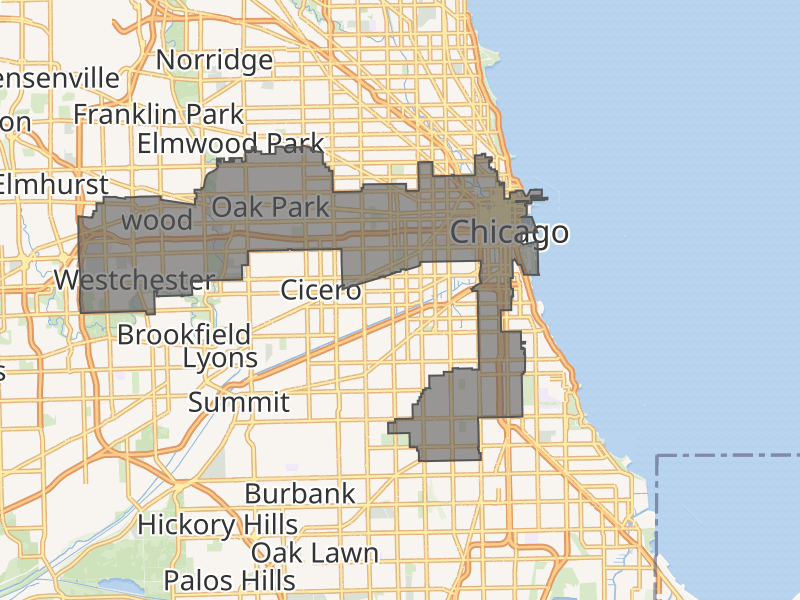
Illinois’ 7th Congressional District is oddly shaped and includes a sizable chunk of Chicago. It is currently represented by outgoing US Rep. Danny Davis, who won re-election in 2024 with nearly 84% of the vote.
He garnered 80% of the vote in 2020 in a three-person race that included an independent who took 6%. In 2022, Republicans didn’t even bother to field a candidate.
 Shawn Griffiths
Davis has held the seat for nearly 3 decades. There is no doubt in anyone’s mind that Ford will be his successor, and Ford did it with about 4% of the district’s total registered voter population.
To be transparent: Voter registration data is released by county in Illinois and there isn’t an official total in a single congressional district that falls in that county (about 7 or 8 overlap into Cook County in some way). However, rough estimates put the registered voter population in IL-7 at around half a million.
Given that this was an open seat in a deep blue district, many Democrats filed to run. Voters who participated in the Democratic primary had 13 names from which to choose – meaning a majority winner was already unlikely.
With so many names in the field, it was an opportunity for monied interests to try to influence the outcome.
Cryptocurrency groups spent $2.3 million on ads attacking Ford. AIPAC donors spent nearly $5 million to help his closest opponent Melissa Conyears-Ervin, who came in second with 20.5% of the vote.
AIPAC stands for American Israel Public Affairs Committee (a pro-Israel PAC). Donors associated with it spent $13.7 million in Chicago-area primaries – and even more statewide. Some of their candidates won and some of them lost.
While Ford didn’t have PAC support, he relied on political capital. Specifically, he was Davis’ choice. Still, special interest groups saw an opening under a system that not only draws low voter turnout but can be decided with a marginal percentage of voters.
Illinois conducts closed primary elections decided by plurality (meaning a majority isn’t needed). Voters have to be affiliated with a party to vote. However, a person states their affiliation at the polls and can change their party affiliation each election cycle.
Voters do not register by party, but a voter’s eligibility to vote in a primary can be challenged. So, independent voters are discouraged from participating.
It is important to note for anyone worried about the influence of money in politics that money has the greatest impact in systems that encourage small plurality winners and bars and/or discourages voter participation.
Consider this analogy. Let’s say I put out a new brand of chocolate bar, and I give my marketing team a budget and tell them to convince 100 people to buy my product. The more I increase that goal, the harder it becomes for my team to hit it without having to spend more money.
Money spent in an election has a greater impact when there are less voters to target. It becomes even more influential when a group knows they only need to get their candidate to about a third or less of the vote to win.
This is why many election reformers tell people the most meaningful improvement to elections in the US is to target how candidates are elected. Special and monied interest groups have less influence in systems that prioritize fairness and accountability for voters.
In what world can an election in which 76% of people voted for someone other than the winner in a deciding contest in which they were picked by 4% of the total electorate be considered democratic?
Taxpayer-funded elections should be open to all voters, regardless of party. And elections should result in majority winners.
Reforms like nonpartisan open primaries and ranked choice voting are growing in popularity because they promote equal voting rights, fairer and meaningful choice, and competition even in districts historically considered safe for one party or the other.
Why do you think party insiders are attacking these reforms?
Why do you think Republican leaders in 20 states have banned ranked choice voting? Or why Democratic leaders in Washington DC don’t want to implement voter-approved open primaries?
Why do you think special interest groups are trying to repeal nonpartisan primaries and ranked choice voting in Alaska? And it is their second attempt after a majority of Alaska voters re-affirmed they want these reforms in 2024.
It is because it is easier to influence and control election outcomes when elections don’t put voters first. It is easier to manipulate results when independent voters are barred, and a candidate can win with less than 30% of the vote.