

Credit: laist.com
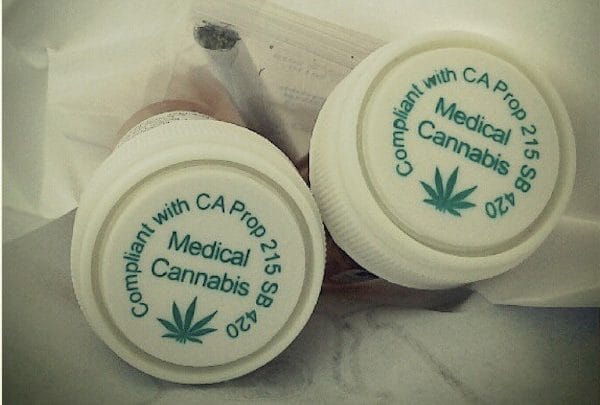
The Los Angeles City Council voted unanimously in July to close medical marijuana dispensaries within the city. This attempt to enact a Los Angeles medical marijuana ban adds another layer of ambiguity to an already complicated California drug policy.
LA City Councilman Jose Huizar wrote the legislation in an attempt, not just to curtail the appearance of medical marijuana dispensaries in areas with schools and children, but to ban the dispensaries outright from the city. This would involve closing over 760 medical marijuana dispensaries currently protected by state law.
Before the legislation came to a vote, it stirred robust debate due to a 2nd District Court of Appeals ruling in 2011 that determined a ban in Long Beach to be unlawful. With other legal challenges such as Pack vs. Superior Court and a popular petition to take the law to ballot in November, the Los Angeles medical marijuana ban appears to be fighting an uphill battle toward enactment.
In the text of the policy, however, there is a legal basis for upholding the ban. The policy calls on the federal government to help enforce it since marijuana is still federally illegal, making the case that federal law preempts state law.
The medical marijuana bans and regulations enacted by Long Beach and other cities in California have been deemed invalid by California courts because they contradicted state law, which preempts local law. Using the same logic, the LA City Council is hoping to gain a powerful ally in the federal government, which claims that medical marijuana dispensaries in California are illegal, irrespective of state law.
Since President Nixon, marijuana has been classified as a Schedule I substance and thus federally illegal. Yet with 17 states and even Washington DC legalizing medical uses of the plant over the last 15 years despite the federal ban, the Drug Enforcement Administration (DEA) does not have enough resources to strictly enforce the federal ban across the country.
By citing federal law in its dispute with state authorities, the city is hoping to find a legal basis for local police to shut down medical marijuana dispensaries, so that even if the local ban is struck down according to California law, the Los Angeles Police Department, at the direction of the city council, and operating under the auspices of Washington's federal Controlled Substances Act of 1970, may still shut down LA medical marijuana dispensaries.
This stirs up a very interesting policy question regarding where local police departments derive their enforcement power. For the LAPD to use federal law as a basis to legally enforce a ban struck down by California courts, its power would have to be derived from federal authority, and it would have to be ultimately answerable to the federal government rather than its state government.
With the Obama Administration fairly quiet on the issue of marijuana and a state legislature that has historically stayed silent on the subject of local bans, the courts and the voting populace will most likely decide the fate of this legislation. This would mean the confusing and contradictory state of marijuana's legal status in both the state and country would remain relatively the same and just as convoluted.
With the legalization of medical marijuana starting in 1996 and expanding in piecemeal jumps by referendum, assembly bills, and senate bills, there is yet to be a comprehensive policy that defines the sale and use of the plant indisputably for the state.
Unless all levels of government can work to enact a comprehensive, coherent, and enforceable marijuana policy, there will inevitably be more costly court and legislative battles to come.