

Back in April, The New York Times ran an article purporting what they considered to be a disturbing new trend of increases in the number of police officers being killed. The article points out how 72 police were killed in 2011, representing a 25 percent increase from the year before, and a 75 percent increase from 2008. An accompanying chart shows the number of officer deaths per year going back to 2000, and aside from 2001 (which includes those police officers killed during September 11) and 2011, the numbers are fairly consistent over that time.
While the Times even points out that the number of officer deaths declined sharply since the start of this year, the article still contains all sorts of suggestive quotes from law enforcement officials bemoaning how we haven’t seen violence aimed towards police like this in a long time, that each day a cop goes out on duty could be his last, and that every encounter could potentially be deadly.
At the time, I was slightly perplexed by the Times article. Just two days prior I read a post at the police watchdog blog Clark County Criminal Cops, detailing the 56 percent reduction in law enforcement killings so far from the previous year, as well as the lack of any kind of attention being paid to it– despite Attorney General Eric Holder publicly calling the number of cop deaths in 2011 simply unacceptable.
If there were an article being written in the national press regarding the number and trend of police deaths, I assumed it would surely point out this good news. Rather, it was merely mentioned in passing, and in a manner that paints an image of cops ducking whizzing bullets all day every day. To me, the chart provided by the Times and the 56 percent decline in officer deaths in 2012 seems like anything but an alarming trend.
This alleged ‘ugly’ trend becomes even less troubling when considering a larger sample size of statistics available on police fatalities. Over at the Huffington Post, Radley Balko digs through the numbers and finds no real reason to be alarmed:
since the late 1980sthe homicide ratesthe 10 most dangerous in America
So while officer fatalities are steadily declining– going on twenty years– incidents of police officers killing civilians are curiously on the rise. Data from the Bureau of Justice Statistics shows that the number of justifiable homicides committed by police from around 2000 through 2008 increased roughly 30 percent overall– despite crime rates continuing to fall over that time. Moreover, while 72 cops were shot and killed in all 2011, 54 civilians were shot and killed by police in Los Angeles County in 2011 alone, a 70 percent increase from the previous year. Not to mention at least 12 of them were completely unarmed.
Now, I certainly do not mean to imply that cops are shooting and killing civilians with wanton disregard, nor am I intending to minimize those officers killed while on duty. Policing is a profession that certainly exposes those who choose it to legitimate dangers – and I do not want to diminish the perils many cops face on a daily basis. However, choosing statistics from an extremely small sample and making broad generalizations from said numbers isn’t very telling– about the amount of police deaths or civilians killed by law enforcement.
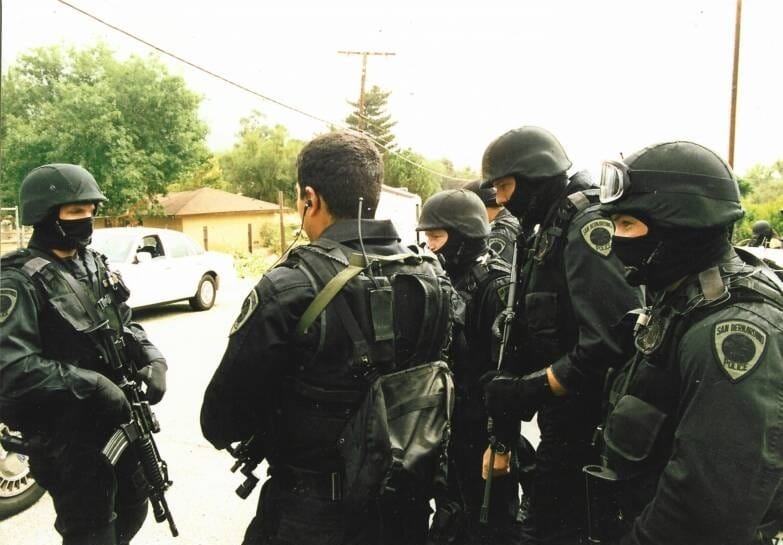
Even more so when such a small sample is being used to conjure up fears about how cop-killing civilians are roaming the streets – thereby painting an inaccurate picture of the relative dangers of police work today. Besides, as Balko notes, sometimes politicians and law enforcement officials have incentives to make police work seem far more dangerous than it actually is. As this dramatized imagery can form the basis of arguments advocating “for more gun-control laws, …increased police departments…, …the increasing militarization of America's police forces, … against more accountability and oversight…, and…for more leeway for police officers to dispense ‘street justice’ in order to maintain order and to ensure that criminals still fear them.”