
 Shawn Griffiths
Editor's Note: At the time this article published, ballots were still being counted in Los Angeles. With 47% of precincts reporting, Spencer Pratt had 29.8% of the vote, which would be enough to force a general election against incumbent Karen Bass if Pratt manages to keep his second-place status.
Update (6/8/26): Nithya Raman surpassed Spencer Pratt in the vote count to take second place with 83% of precincts reporting. As of the most recent count, Pratt is at 26.7%, which is a large enough segment of the electorate to shape a two-Democrat general election.
Paul Rieckhoff, founder of Independent Veterans of America, was invited onto CNN's Out Front with Erin Burnett to talk about several things, including what Spencer Pratt's mayoral campaign actually means in Los Angeles.
While critics point to Pratt's inexperience, or that he is a reality TV star, or he has MAGA support, Rieckhoff says his support comes from people who feel forgotten, ignored, and/or unrepresented in local government.
“People don’t care,” he said bluntly. “They are angry, and if you’re not angry then you’re not paying attention.”
“They want vessels for their anger. They want someone to run against all of it, and the people who are going to be the most effective are the ones who run against Trump and the Democrats, and the system, and the city government, and all of it.”
In other words, the candidate who challenges the partisan leadership at the top that is not governing directly to their needs. At a national level, that is President Donald Trump for many voters.
But on a local level, particularly in LA, it is the Democratic leadership in City Hall. “And that’s where Spencer Pratt sits,” Rieckhoff added.
There have been several attempts to link Pratt to Trump. The president even praised Pratt and said, “I’d like to see him do well. He’s a character. I heard he’s a big MAGA person. He’s doing well.”
Pratt said this is a nonpartisan election and he is not running a partisan campaign. “I do not represent a party. I don’t have a campaign manager, I don’t have campaign consults. There’s no political party backing me.”
Contrary to Trump's remarks, Pratt said he is not a MAGA Republican. And he is primarily running against Los Angeles Mayor Karen Bass and City Hall.
Bass is seeking re-election after a first term defined by overlapping crises: homelessness, affordability, public safety concerns, frustration over city services, and lingering anger over the city’s response to the January 2025 Palisades Fire.
Pratt, who lost his home in that fire, has built his campaign around the argument that City Hall failed residents—and that the political establishment is more interested in protecting itself than fixing what Angelenos see every day.
The evidence going into the June 2 primary, as Rieckhoff observed, showed that this message was gaining traction.
A late UC Berkeley-Los Angeles Times poll showed Bass at 26%, Councilmember Nithya Raman at 25%, and Pratt at 22% among likely voters ahead of the June 2 primary. That put the race win play for all three candidates.
Pratt also jumped to 22% from 14% in March—8 points going into the final stretch of the campaign. Bass, by contrast, only moved from 25% to 26% over the same period.
An Independent Voter Project (IVP) poll in May also showed that there is an appetite to see Pratt be successful among likely general election voters. If the general election was held then, he would have actually led with 27%, according to the poll.
 IVN Editorial Board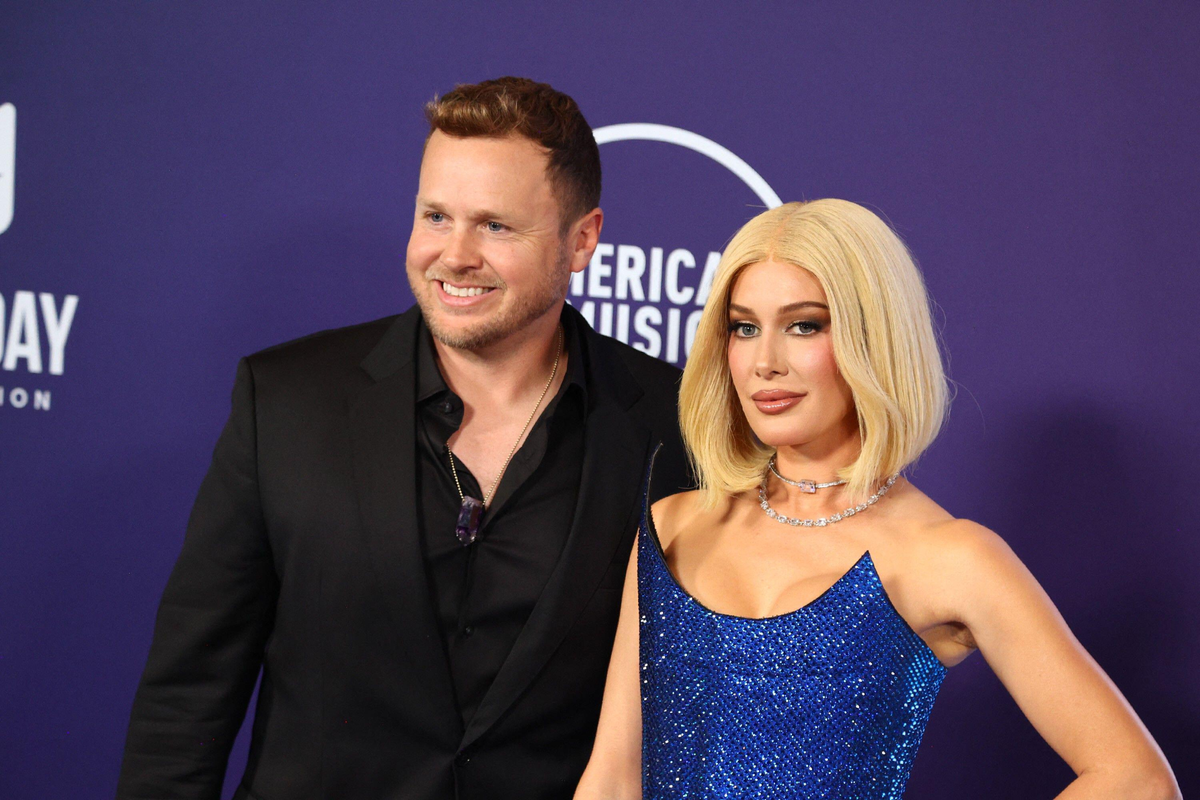
But the question is: How many of those voters participated in the primary? The general electorate looks noticeably different than the standard primary electorate.
Either way, the fact that Pratt is within striking distance of Bass is a warning sign for an incumbent mayor backed by the Democratic establishment. Bass has lined up support from high-profile Democrats, including:
- Kamala Harris,
- Gavin Newsom,
- Nancy Pelosi, and
- Powerful labor unions.
Yet the race was still highly competitive.
Pratt’s rise did not happen in a vacuum. The Associated Press described his candidacy as a national barometer of dissatisfaction with liberal urban governance.
He has focused on homelessness, wildfire response, and a broader sense that LA is becoming harder to afford and harder to trust politically.
This is why Rieckhoff’s point matters. Pratt does not need voters to see him as a conventional candidate. He needs them to see him as a protest vote with a name they already know.
And in Los Angeles, Pratt can tap into the frustrations and anger of a broad electorate. The city conducts nonpartisan primary elections, meaning all voters can cast a ballot for any candidate, regardless of party or political affiliation.
In fact, the candidate's party does not even appear on the ballot.
There is a catch. Under LA’s rules, a candidate who gets over 50% of the vote wins outright without a general election. This is not likely to happen in the 2026 mayoral race, but it is still a possibility for future elections.
It is a contrast to a city like San Diego, where IVP sponsored a ballot measure to ensure elections stopped working this way.
Measure K in 2016 kept the nonpartisan nature of San Diego’s primary elections but changed the rules so that no matter how much a front-runner gets, they will face the second-place candidate in the general election.
It is essentially how the statewide nonpartisan Top Two primary works. All voters get the same ballot. They can choose any candidate. And, there is a guaranteed general election.
But in LA, if Bass manages to get to a majority, she wins outright, and the larger general electorate would miss out on a chance to settle which candidate truly has the broadest support in the city—and is the voters’ choice.
The odds would not favor Pratt in a general election contest against the incumbent. Registered Democrats make up a majority of the city's electorate. However, forcing one raises some big questions.
Specifically, what does his support say about Los Angeles politics? And what does it say about a system that gives voters the freedom to express their frustrations by selecting any candidate they want?
Rieckhoff noted on CNN that California gives independent voters options that other states don't. Nearly 7 million independents can vote in the primary, not have to pick a party, vote for any candidate, and don’t need anyone’s permission to do it.
Contrast that with New Jersey, which also held June 2 primaries and uses a closed partisan primary. Millions of independent voters are locked out—something IVP challenged in court and petitioned the case all the way to the Supreme Court.
 IVN Editorial Board
“Seventy percent of people in California want open primaries,” he said, referring to recent polling from the same party insiders who want to repeal Top Two entirely.
"This is what democracy looks like. It might be messy. You might not get everything you want. But this is a voter-driven primary. It is not a party-driven primary. It is one of only 3 states that are like that.”
He added, “I think this is what the future looks like.”
Rieckhoff is an Iraq War veteran, author, advocate, and longtime independent voice in American politics. He founded Iraq and Afghanistan Veterans of America after returning from combat and later launched Independent Veterans of America, which focuses on mobilizing veterans to run for office as independent candidates.