 Jeremy Gruber
Editor's Note: The following is an exclusive series on IVN from the better elections group Open Primaries. The content originated from the group's weekly newsletter, "Primary Buzz."
Independent voters in New York City are continuing to show up in numbers that the political establishment can’t easily dismiss.
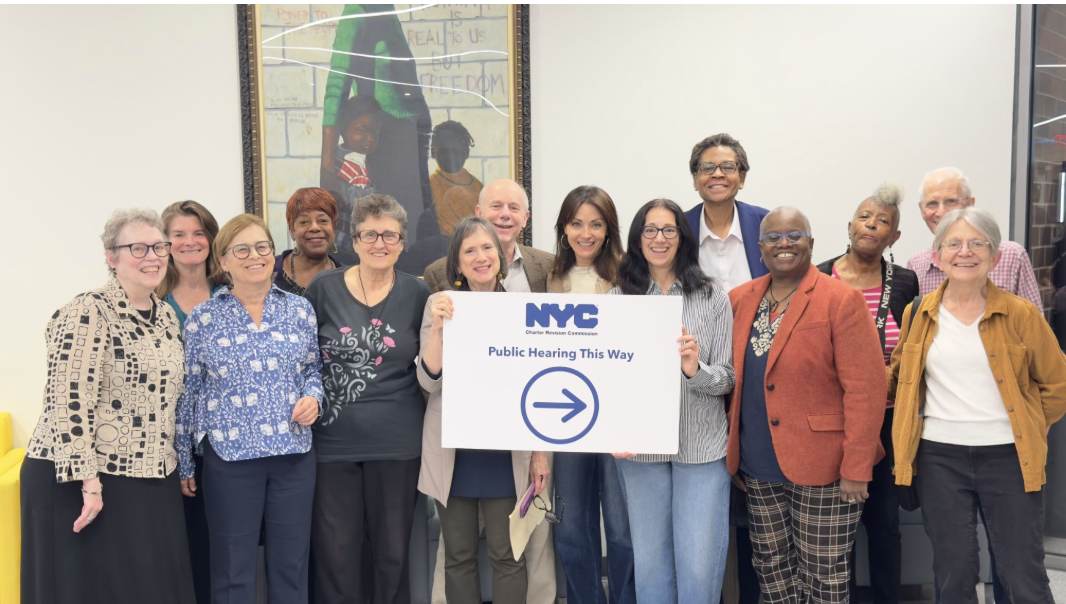
At the first hearing this week of the latest New York City Charter Revision Commission, more than a dozen independent voters packed the room to demand open primaries, setting the tone for what has become a consistent theme across multiple commissions. And they didn’t stop coming for additional hearings this week with the same demand: Let Us Vote!
The scale of that exclusion is now impossible to ignore. 1.2 million independent voters in New York City are shut out of primary elections, and in a very blue city like NYC, the primaries are the ONLY elections that matter.
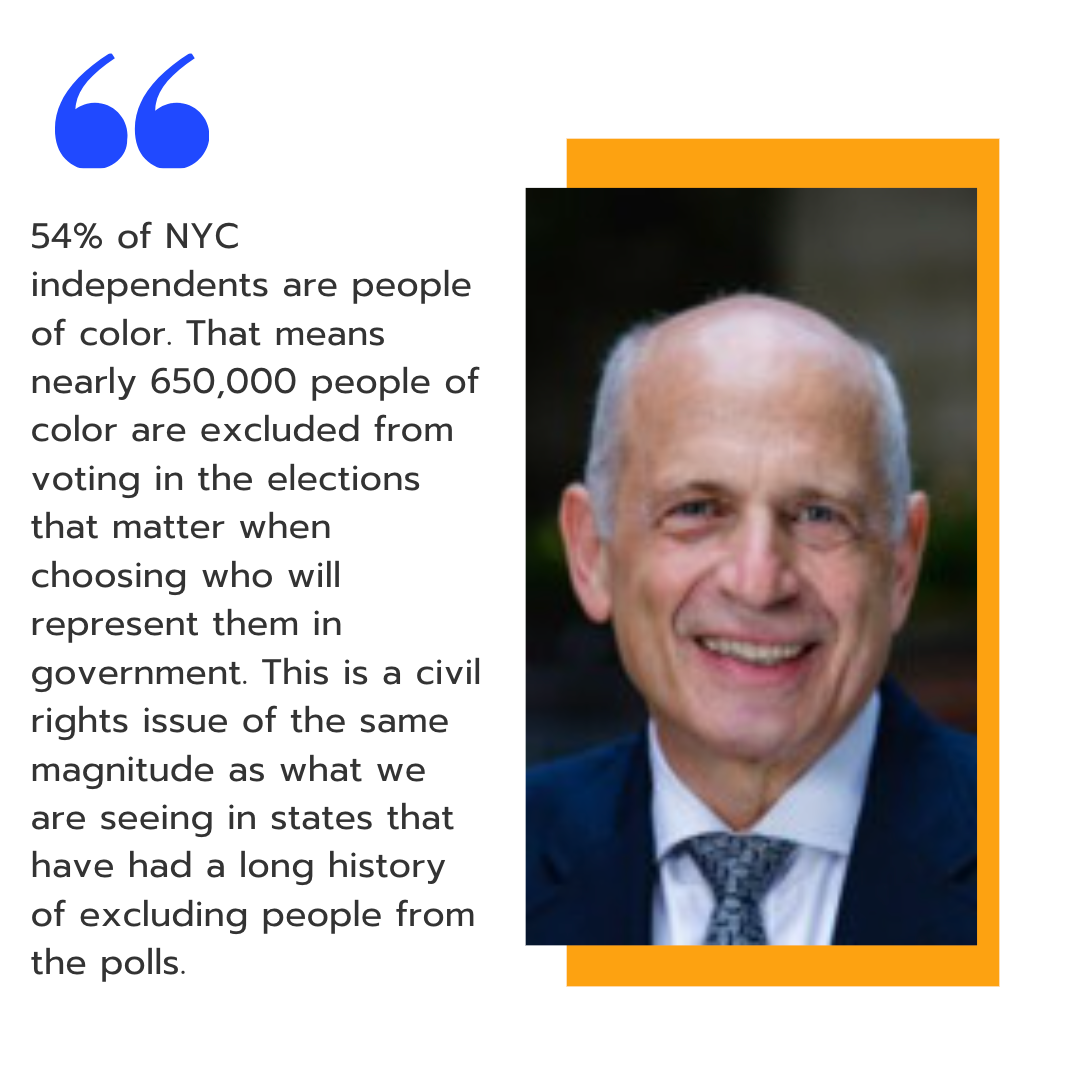
As Open Primaries supporter Jeff Aron testified:
This surge is not new- it’s an escalation. After Open Primaries organized hundreds of independents to testify at last year’s Charter Revision Commission, they launched a historic review of the city’s elections. Their final report included extensive sections on the need to move to a system of open primaries.
It’s not clear yet whether the current commission will respond but independents in NYC are putting their foot on the gas and pressure is building. Will we break through this year? Stay tuned…and get involved! Email OP National Organizing Director Cathy Stewart - cstewart@openprimaries.org.
What We're Talking About
Maine’s Primary Just Showed What Happens When Independents Are Finally Unleashed
This week’s primary in Maine revealed what American politics looks like when independents are finally treated like full participants instead of afterthoughts.
For a decade, Open Primaries and allies pushed the Maine Legislature to confront a simple reality: independents now make up roughly 36% of the electorate, yet for years they’ve been shut out of the election that effectively decides who governs the state. That mismatch has always been the quiet fault line in Maine politics.
But this year, the pressure finally met the moment.
In 2024, the state’s first open primary, independent participation hovered around 15%. This cycle, early indications suggest it nearly doubled - a surge that didn’t just change turnout numbers, it changed the electricity of the election itself. Independents didn’t sit on the sidelines; they moved into the center of the closest and most consequential races, becoming the difference-makers in multiple tight contests where margins mattered most.
And the impact started long before voters even showed up. The mere presence of a fully engaged independent electorate reshaped the entire field. Candidates had to broaden their coalitions. More diverse slates became competitive. Outsiders and reform-minded contenders suddenly had a real path. The parties, for the first time in years, had to compete for voters they could no longer take for granted.
We’ll be bringing you more takeaways from Maine’s primary this year. In the meantime, I broke down the impact on ABC news.
Then read our report: What It Took To Bring Open Primaries To Maine.
A Call to Action – Independent Conversations EVERYWHERE
A message from Cathy Stewart, National Organizing Director
Earlier this week, more than 2 dozen NYC independents gathered on ZOOM for a conversation about the state of play in the NYC open primaries movement. I had the pleasure of hosting the call and interviewing Open Primaries Senior VP, Jeremy Gruber.
We talked about the challenges 1.2 million NYC independents face, and the growing pressure for reform. We explored the pathways that are being pursued and evaluated from the Charter Revision Commission process, to legislation, and possible litigation.
But the MOST important direction to emerge in the call – and the seemingly simplest – came from Jeremy Gruber when he said:
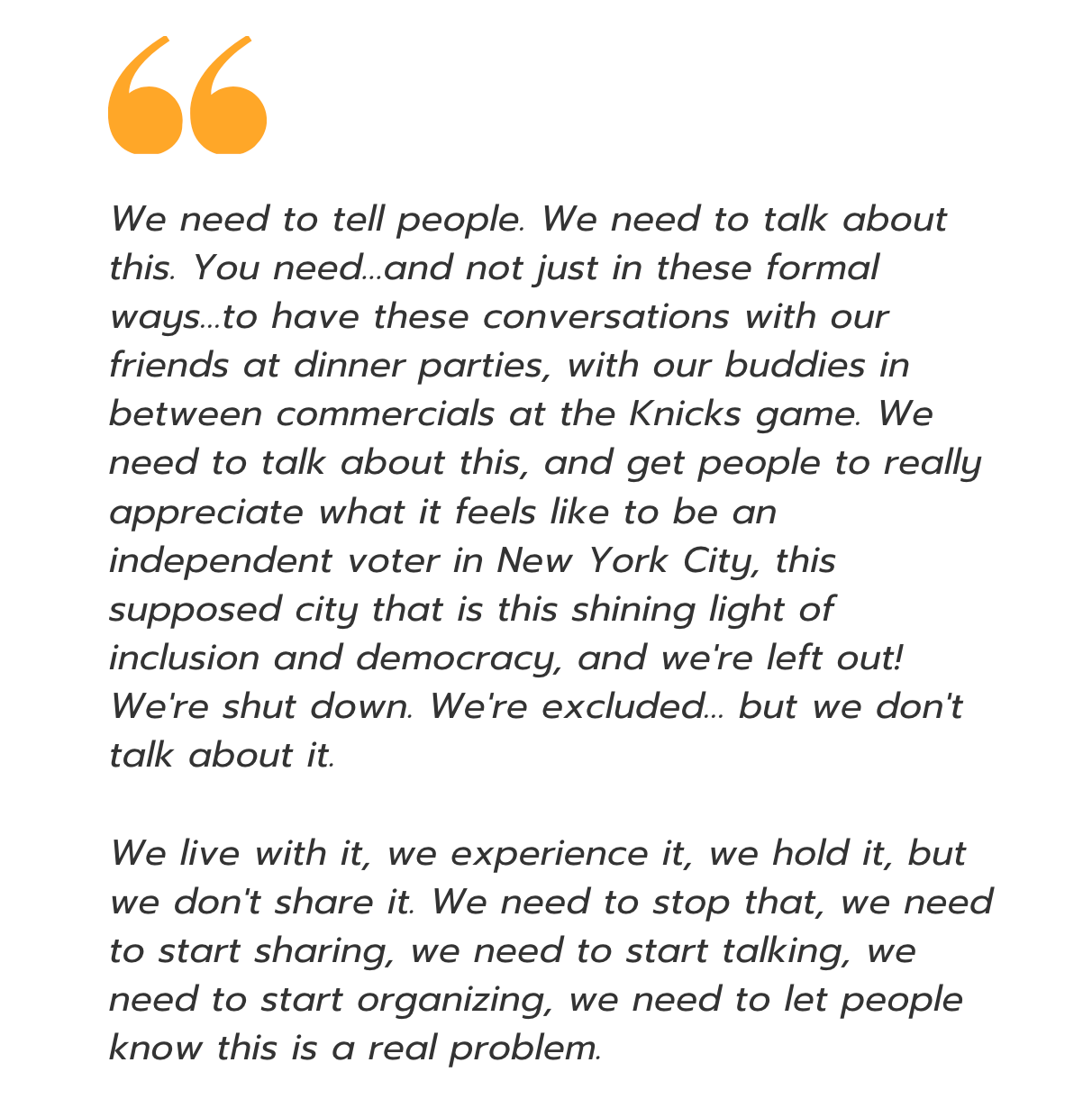
This was one of those aha moments – and a reminder about where change happens! It happens from the bottom up, from the American people. There is nothing more important right now than all of us — in every state — talking and sharing what it feels like to be treated like a second class citizen. That is how we win reform. By asking for help from our friends, neighbors, family, and strangers. Every poll shows widespread support among the American people for open primaries, but it is not an issue people care about. But if they hear from us about the lived experience of being denied a fundamental right to vote, suddenly the issue is not abstract, it’s real and impacting people they know!
I want to invite everyone reading this to join me in a challenge. Talk to some folks this week that you have never spoken with before about the experience of being an independent! Folks you see in your day to day life. Shoot me an email and let me know how it goes at cstewart@openprimaries.org.
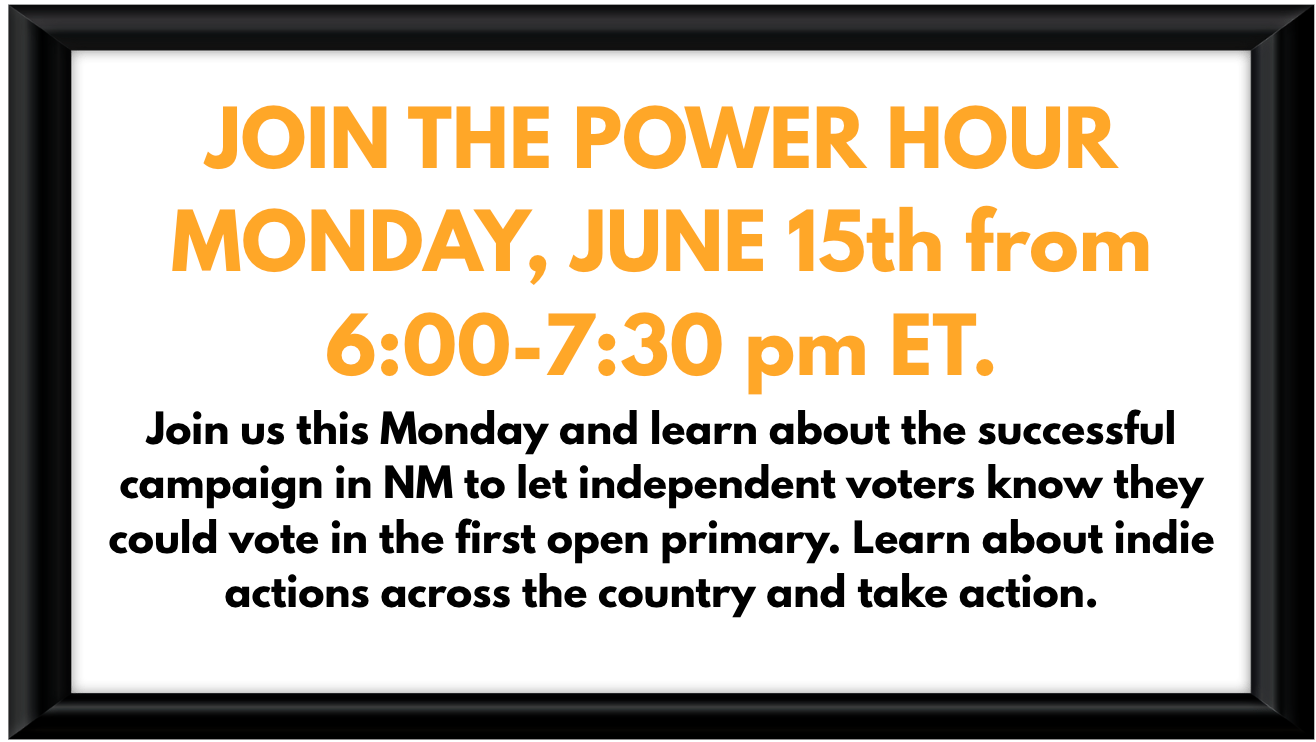
FYI-Check out this great new video of what NJ independents have to say about closed primaries:
What We're Reading
If the Colorado GOP Closes Its Primary, Taxpayers Should Close Their Wallets
Colorado’s primary system is now sitting on a political fault line: a majority of the electorate is independent and the old assumptions about who primaries are “for” are collapsing in real time.
In 2016, Colorado voters adopted an open primary. Since then, independent voter registration has skyrocketed and reshaped the state’s political landscape. Now the Colorado GOP has gone to court to try and force the primaries closed again.
In a new editorial, I place the debate squarely at the intersection of constitutional law and democratic legitimacy. Courts have long held that parties have a First Amendment right to define their own membership and nomination rules. But, he argues, that right does not extend to a guarantee of public subsidy.
I write:
“[T]hose decisions establish a narrower principle: the state may not interfere with a party’s internal choices. They do not hold-and no court has held-that political parties have a constitutional entitlement to taxpayer-funded administration of their nomination processes.”
The question Colorado is forcing into the open is no longer whether independents matter. It’s whether publicly financed democracy can still be squared with privately controlled gatekeeping at its center.
In Case You Missed It
Congress Has a Primary Election Problem
As competitive congressional districts disappear, primary elections are increasingly deciding who serves in Congress. And in much of the country, those elections are controlled by partisan voters, party insiders, and ideological activists.
A major new NPR report spotlights what Open Primaries and reform advocates have warned for years: closed primaries and partisan gerrymandering are creating a system that punishes independent thinking and rewards ideological conformity.
Current and former elected officials from across the political spectrum are sounding the alarm. From Pennsylvania Congressman Brian Fitzpatrick to Alaska Senator Lisa Murkowski and Louisiana Senator Bill Cassidy, lawmakers are increasingly acknowledging that closed primary systems make it harder to compromise, govern, and represent all constituents.
As Open Primaries President John Opdycke told NPR, the parties have spent years gerrymandering districts into non-competitive territory. Now, many are turning their attention to closing primaries and further restricting voter participation.
The result? More polarization, fewer competitive elections, and millions of independent voters shut out of publicly funded elections.
The good news is that the debate is finally moving into the mainstream. What was once considered a fringe reform issue is now being discussed as a central challenge facing American democracy-and a growing number of leaders are recognizing that opening our primaries is essential to fixing it.
Upcoming Events
Virtual Town Hall: Ballot Access in New Mexico, Texas, and Arizona
Ballot access laws shape who can run for office and how voters are represented—but the rules vary dramatically from state to state.
On Thursday, June 18 from 5:30–6:30 PM ET the Forward Party will host a virtual town hall exploring ballot access in New Mexico, Texas, and Arizona. OP SVP Jeremy Gruber and Oliver Hall (Center for Competitive Democracy) will lead a discussion on the barriers facing independent and non-major party candidates, opportunities for reform, and ways citizens can get involved.
This is a great opportunity to learn how ballot access impacts our democracy and what we can do to strengthen participation and representation.
Join the Conversation!
Featured Guests
Jeremy Gruber, Open Primaries
Oliver Hall, Center for Competitive Democracy
Moderator
Sarah Lenti
Video Call: https://meet.google.com/avz-bdxm-xam
Dial-In: +1 413-489-2831
PIN: 422 297 274#