
 Jeremy Gruber
Democracy won a major victory in Washington, D.C. this week.
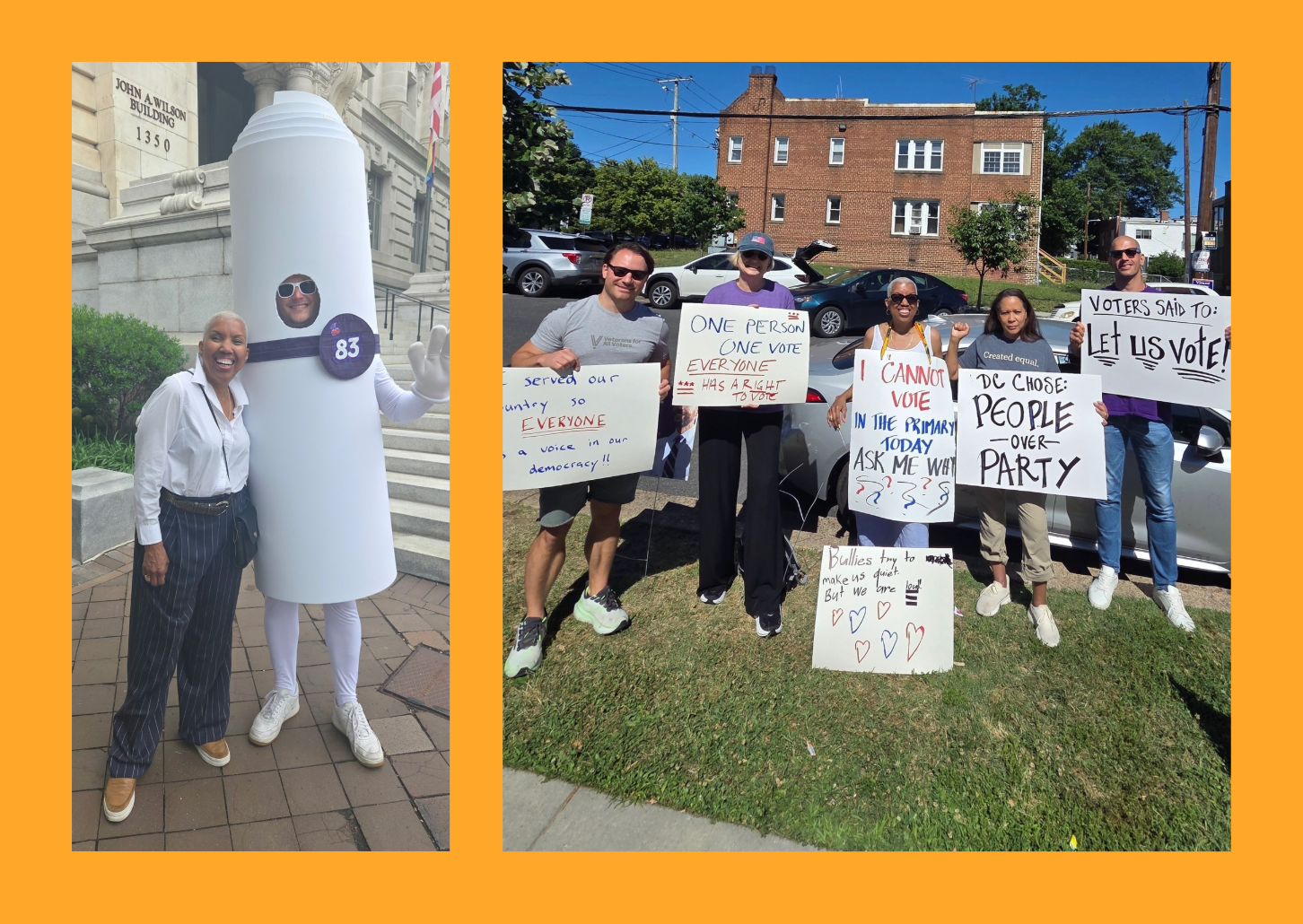
In 2024, D.C. voters overwhelmingly approved ballot initiative 83 to open the city’s taxpayer-funded primary elections, with 73% of voters voting yes. The message from voters was clear: every citizen should have a voice in elections that determine who governs.
Watch DC voters talk about what it means to be shut out in their city:
But for nearly two years, the will of the voters was blocked. The D.C. Council refused to fund and implement the measure, leaving nearly 100,000 independents - including many voters of color -shut out of the elections that effectively decide who represents them.
This week, that changed.
The Council reversed course and passed a resolution to fund and implement open primaries, putting the reform on track to take effect for the 2028 elections.
This victory belongs first and foremost to the voters who organized, mobilized, and demanded that their voices be respected. And special recognition goes to Lisa Rice, founder of Grow Democracy DC, whose leadership and persistence powered this movement from the beginning.
Lisa built the coalition, educated voters, and kept the pressure on when many moved on after the ballot initiative passed.
The lesson from Washington is powerful: voters are ahead of the political establishment. Across the country, millions of Americans are questioning why elections paid for by the public can exclude the public.
The people of D.C. spoke in 2024. This week, their elected officials finally listened.
Congratulations to Lisa Rice, Grow Democracy DC, and every D.C. voter who fought to make this victory possible.
What We're Talking About
Voters Question Why DC and Not NYC?
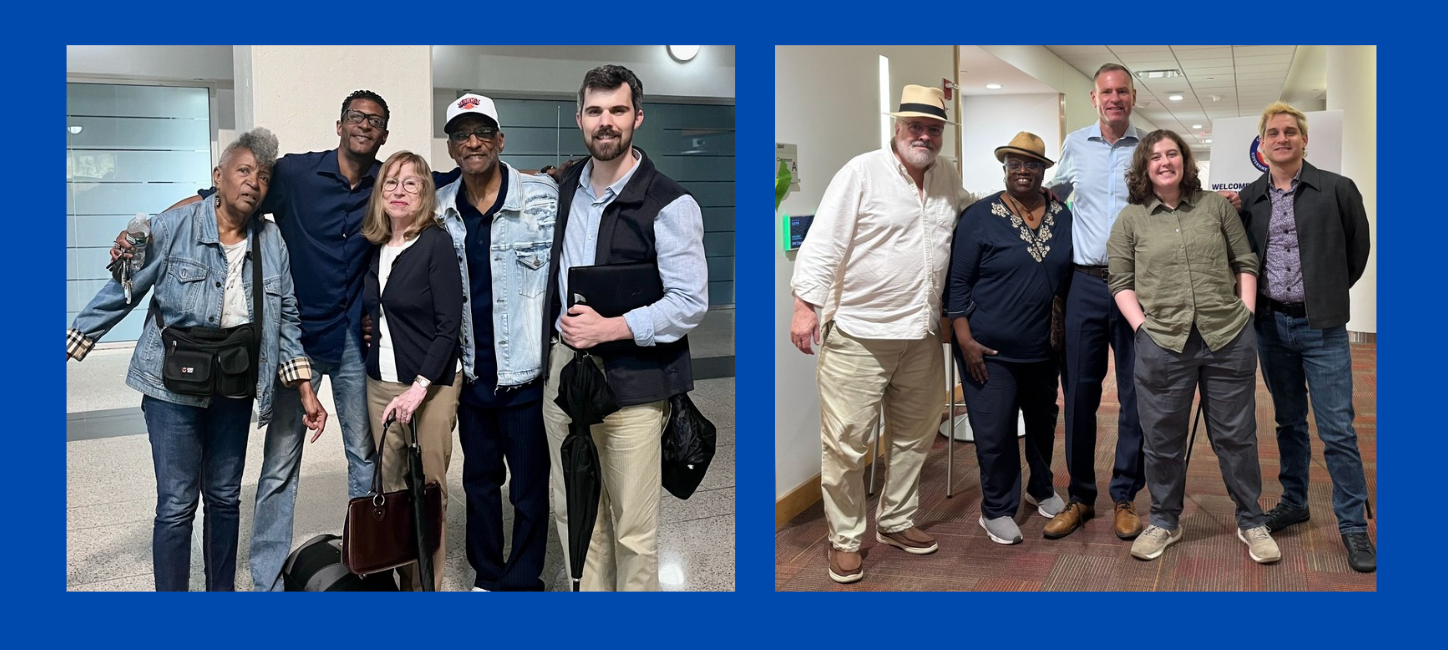
The fight for open primaries is gaining momentum in New York City - and independent voters are making their voices impossible to ignore.
This week, independent voters showed up in droves at Charter Revision Commission hearings in Queens and Staten Island to demand a simple answer: If Washington, D.C. can move toward open primaries, why not New York City?
At the Staten Island hearing where I testified, we engaged the CRC Chair in a lengthy discussion about what it means to tell voters: “just join a party if you want a voice.” I challenged the idea by asking Commissioners to imagine the city telling Democrats they had to join the Republican Party in order to participate in an election that determines their representation. The outrage would be immediate - and justified.
 Shawn Griffiths
That is the reality facing more than 1 million independent voters in New York City, including a majority who are voters of color.
*It’s not just registered independents. A new survey conducted by IVC Media detonates a core assumption of “party membership”. Roughly 40% of registered Democrats in NYC say they are not actually Democrats but explicitly describe themselves as independents forced into Democratic registration just to vote
And the issue is gaining national attention. Watch OP President John Opdycke as he joins Open Primaries NYC supporters Jeff Aron, Ed Brady and Torsha Childs on MSNOWs Morning Joe:
The timing could not be more urgent. New York’s latest Democratic primary once again exposed the problem with a closed system, with turnout hovering around just 10% of registered Democratic voters. In a city where the Democratic primary often determines who wins the general election, millions of New Yorkers are effectively shut out of the most important elections.
Watch OP SVP Jeremy Gruber as he joins News 12 NY to lay out the problem:
The contrast with Washington, D.C. is becoming harder to ignore. After D.C. voters approved open primaries with 73% support in 2024, grassroots organizers kept fighting until leaders agreed to fund and implement the reform.
New Yorkers are asking: why not here?
Campaign Updates
A Million Marylanders Are Shut Out and They’re Fighting Back
This week Maryland held its primary elections, and more than 1 million voters were told they don’t get a say.
Amber Ivey was one of them. A plaintiff in Open Primaries lawsuit challenging the state's closed primaries, she wants to participate in the elections that will likely decide who represents her community - but because she is not affiliated with a political party, she is locked out. As she told Maryland Matters:
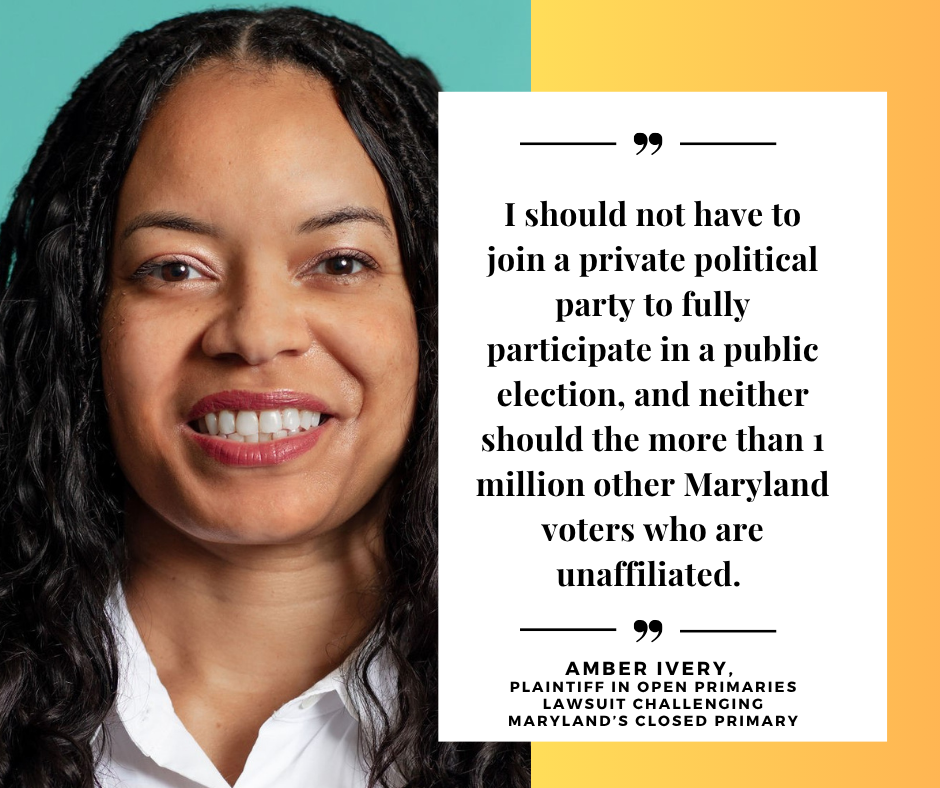
That is the heart of the growing fight for open primaries in Maryland: whether elections funded by taxpayers should be open to all eligible voters.
Former Lt. Gov. Boyd Rutherford is representing Ivey and other plaintiffs in the lawsuit arguing that Maryland should not fund elections that exclude a quarter of the state’s voters. The case does not challenge political parties’ right to organize or choose their nominees - it challenges the government’s role in financing a system that denies citizens a meaningful voice.
The stakes are growing. As Open Primaries Senior Vice President Jeremy Gruber told WBAL News Radio, when elections are increasingly decided in low-competition environments, closing the primary means denying millions of voters the only meaningful opportunity they have to influence who governs.
Maryland voters are asking a simple question: Why should anyone have to join a private organization just to vote in a public election?
What We're Watching
Independent Veterans of America leader Paul Rieckhoff has been all over the airwaves this primary season talking about the fight for independent voter rights. This week he joined the panel on CNN's Erin Burnett OutFront on New York City primary night and argued the evening was a perfect illustration of the problem with closed primaries. With fewer than 500,000 people deciding the fate of a city of five million voters, Paul says New York City is "ground zero" - a closed system where roughly a million independents like him can't cast a ballot at all, millions more voters stay home, and partisan turnout machines run the tables.
Operation Independent 2026
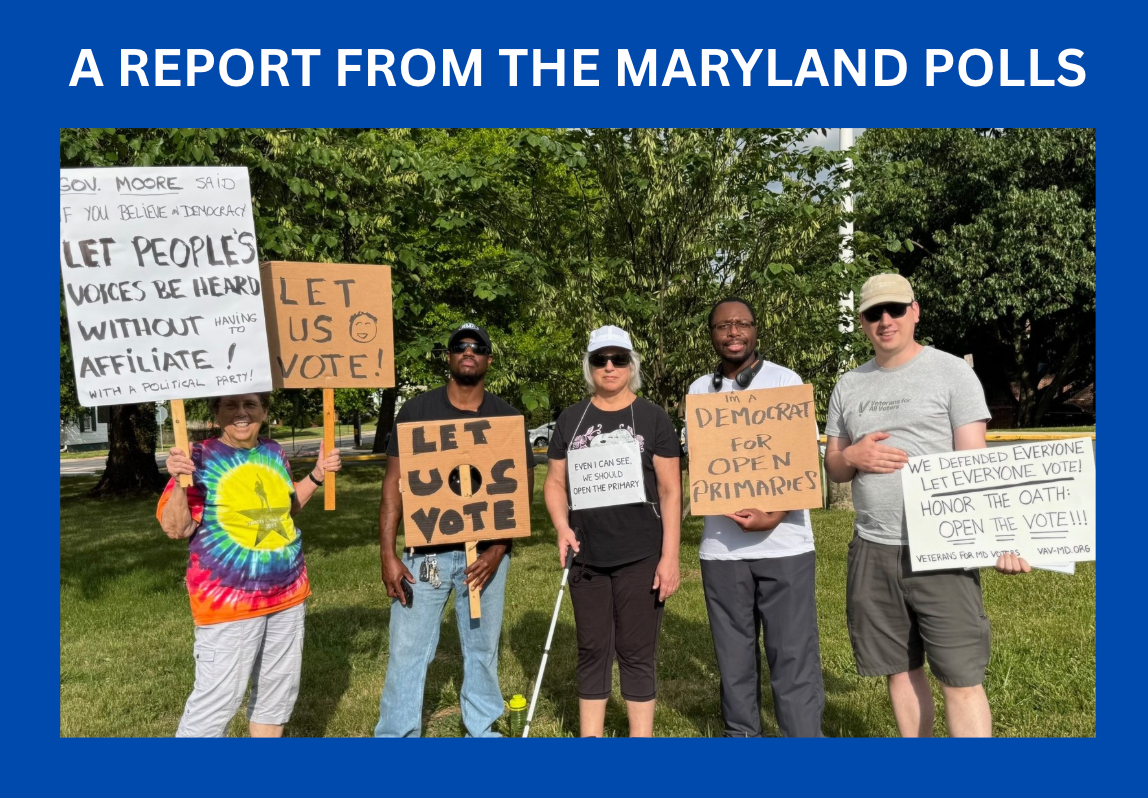
Over one million independent Marylanders were locked out of the primaries on Tuesday. Independent Voters of Maryland (IVM), Veterans for All Voters, and Let Us Vote took action across the state to draw attention to what it is like to be excluded from being able to vote.
In Laurel, independent activists were outside the polling place at Laurel Elementary School. They had a simple request – LET US VOTE– and a simple goal, to let fellow Marylanders know that their unaffiliated neighbors don’t have equal voting rights.
They were joined by DJ Clark. The night before the Primary, DJ was looking up who to vote for and making his plan to vote when he discovered that because he is unaffiliated with a private political party he cannot vote. Which rightfully made him mad! He found information about the rally and came to join and protest being shut out. This was the first time that DJ had even participated in a rally.
A couple of hours away, Joseph Nicholas who works as a Quality Control Inspector for a machinist company took time out on a rainy primary day to go to his polling place. Joseph is 23 years old and has been an independent since he first registered to vote when getting his driver’s license. Initially, he registered as an independent because he was “not that aware of politics and did not want to align with a party. As I became more aware of the political environment, I became disenfranchised with both parties.” Joseph is not alone, according to Gallup, 56% of Gen Z voters are independent. Joseph participated in Operation Independent because he wants to have the ability to vote and wants to “actually dedicate myself to this issue instead of being complacent.”
Independents taking action – whether in the rain, at a polling place, with a letter to their elected official, testifying at a hearing – is what drives change and builds power. If you want to be involved in the fight for independent voting rights, reach out to cstewart@openprimaries.org.
What We're Reading
Steve Peace on Bill Cavala and the Fight Over California’s Open Primaries Legacy
In a sharp reflection, former California legislator and reform architect Steve Peace revisits the legacy of legendary strategist Bill Cavala and what it means for today’s renewed push to roll back California’s open primary system.
Cavala, who died in 2009 just before voters approved the Top Two nonpartisan primary, spent his career inside California’s closed partisan system but ultimately became a behind-the-scenes supporter of opening primaries to all voters. A UC Berkeley professor and longtime adviser to legislative leaders, he came to believe that voters, when given the chance, make decisions more wisely than political insiders often assume.
Peace contrasts that outlook with today’s effort by political consultants to repeal Top Two and restore closed primaries — a move that would once again exclude nearly 7 million No Party Preference and minor-party voters from participating in primary elections.
The piece points to California’s experience since adopting Top Two: broader participation, sustained public support, and a more representative legislature. It frames Cavala’s legacy as a reminder that when voters are included, they tend to support systems that keep them included.
In an era of renewed institutional pushback, Peace’s reflection lands as both history and warning: the fight over primary elections is ultimately a fight over whether democracy expands or contracts.
Juneteenth and Black Voter Power: Why Open Primaries Matter Now
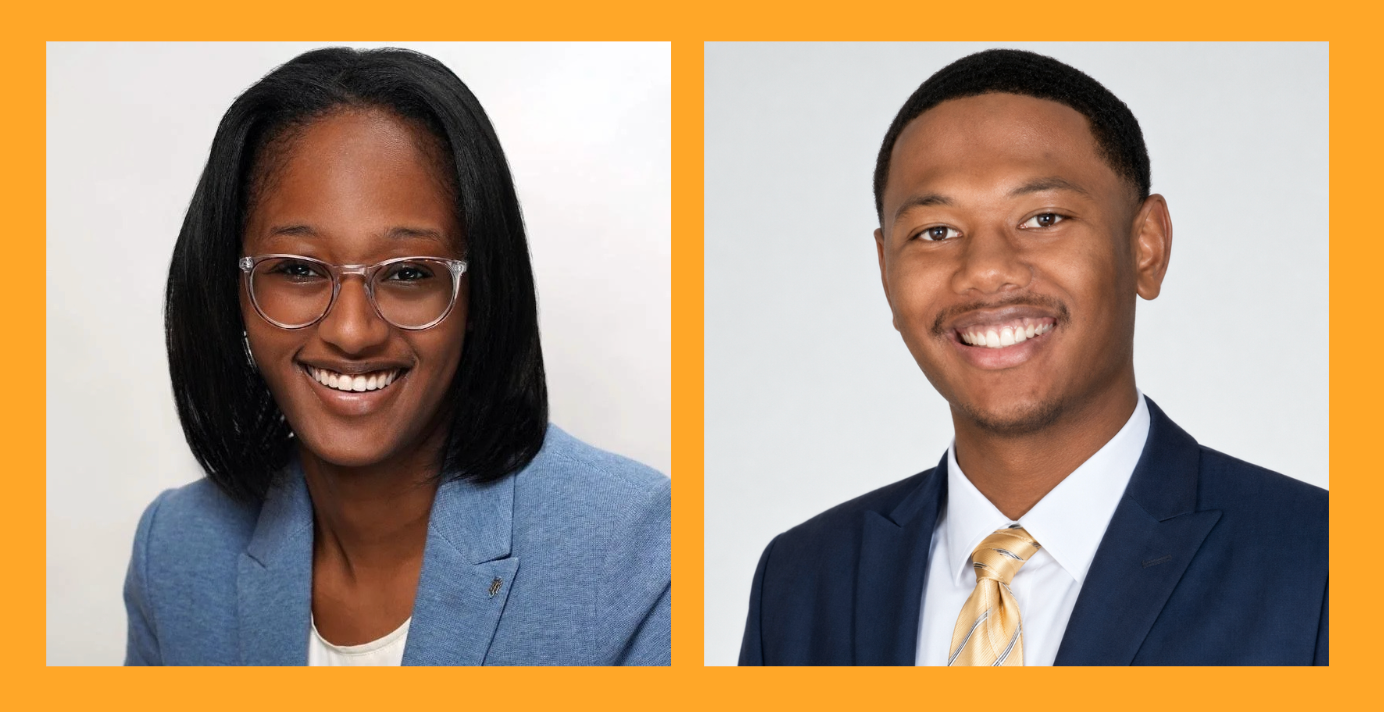
A new essay, “Breaking the Barriers: Why America Needs Open Primaries Now,” reframes the fight for open elections through the lens of Black voter power and unfinished civil rights work.
Written by Bree Doldron, National Organizer at Open Primaries, and Nate Roseboro of the Forward Party Black Voters Committee, the piece highlights how closed primaries disproportionately exclude voters of color - including millions of Black voters who are increasingly choosing to identify as independent.
As the nation marked Juneteenth this past week, the authors argue this moment demands more than reflection - it requires confronting systems that still limit political participation. In many states, Black voters who step outside party affiliation are effectively shut out of the elections that determine their representation.
The essay points to a growing shift: younger Black voters are far more likely to identify as independent than previous generations, challenging old assumptions about party loyalty and political power.
At its core, the piece makes a direct claim: you cannot talk about Black political power in 2026 without talking about access to primary elections.
That’s been the mantra of Open Primaries Board member and Harlem-based physician Dr. Jessie Fields for decades. Check out her compelling words as she speaks out before the CRC and the National Action Network.