Credit: newamericamedia.org
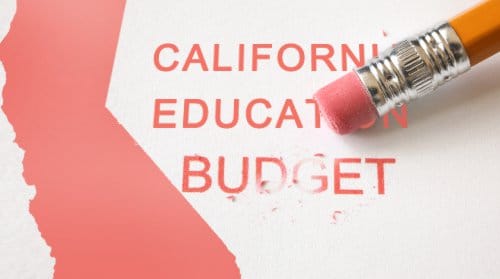
Throughout the year, Governor Jerry Brown and the state legislature created a new way to fund California's schools, known as the local control funding formula (LCFF). It provides unprecedented per-pupil funding for school districts with high proportions of disadvantaged students -- English learners and low-income students.
However, the formula requires significant spending increases from the state, which may not be sustainable. LCFF will take eight years to fully implement, and requires a total of $18 billion in K-12 spending increases. The state budget will need to be certain through the 2020-21 school year.
The California Legislative Analyst's Office (LAO) released an overview of LCFF on July 29, and touched on budget uncertainty:
Given the cost, coupled with projected growth in Proposition 98 funding, fully implementing the new system is anticipated to take eight years. Each year the total General Fund cost of the new system will change somewhat due to providing cost-of-living adjustments, fluctuations in average daily attendance and student demographics, and growth in property tax revenue.
The state must also consider the gains from Proposition 30, a tax measure passed last election cycle. The measure increased income tax rates on high-income earners, but will be effective through 2018. Sales tax have also increased by a quarter-cent through 2018. This leaves three years without Prop 30 revenue streams.
Previously reported, California's good financial state can be attributed to one-time revenues from capital gains tax:
capital gains tax
Budgetary matter change on a year-by-year basis, and it's difficult to tell what revenue will look like in the year 2020. Another tax measure could pass by the time Proposition 30 expires, or another set of unpredicted one-time revenues may come through in the future. The state will have to conscious of its funding obligations to K-12 schools in every budget, and keep reserves intact and avoid being overzealous with surpluses.