
 Jeremy Gruber
Editor's Note: The following is an exclusive series on IVN from the better elections group Open Primaries. The content originated from the group's weekly newsletter, "Primary Buzz."
First, Some Breaking News: Delaware Open Primaries Bill Advances
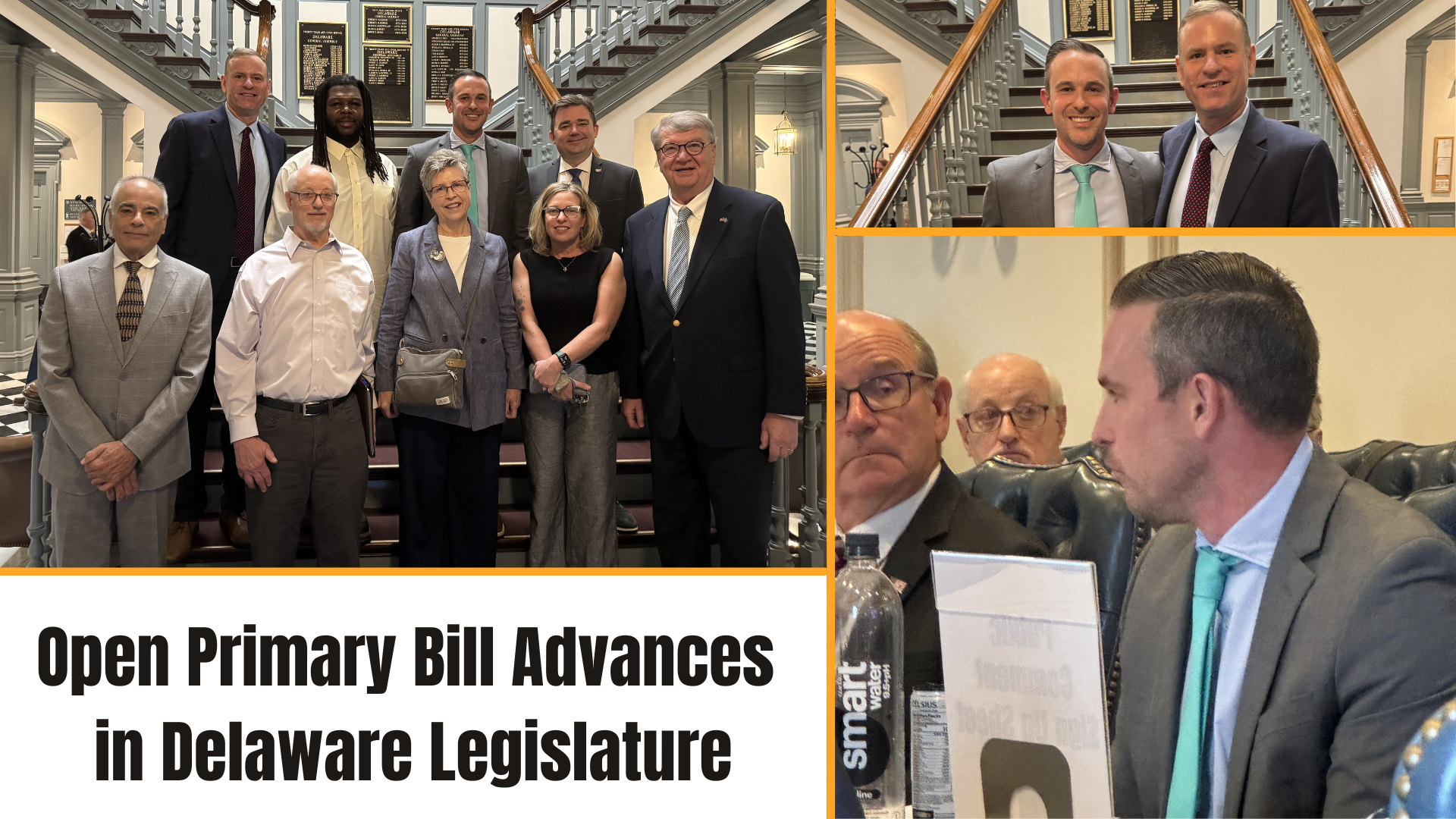
Something extraordinary is happening in Delaware.
This week, Rep. Smith's HB 188-which would open Delaware's taxpayer-funded primary elections to independent voters-passed the Delaware House, the farthest an open primaries bill has ever advanced in the first year it was introduced. It did so with a majority of members from both parties-a rare feat.
That's not just a legislative victory. It's proof that the political landscape is changing.
For months, independent voters have been showing up everywhere. They packed committee hearings. They met with legislators. They refused to be ignored. Young and old. Black, white, and Latino. Veterans, election workers, lifelong independents, and former Democrats and Republicans alike stood together to demand something simple: if taxpayers fund elections, every taxpayer should have a voice.
Their organizing changed the outcome. A committee that appeared ready to kill the bill instead voted to advance it because independent voters made themselves impossible to ignore.
And the numbers tell the same story.
Just a few years ago, Open Primaries projected that independents would make up 27% of Delaware voters by 2035. We were wrong! They're already 34% today, making them the state's second-largest voting bloc. At today's growth rate, they'll become the largest voting bloc in Delaware within just a few years. In the last year alone, Democratic registration fell by 20,000 voters, Republican registration dropped by 10,000, and independent registration grew by 17,000.
The old political map is disappearing before our eyes.
Congratulations to Rep. Smith for his bold leadership, and to our incredible partners at the ACLU of Delaware, Indivisible Delaware, Future Caucus, and Unite America. Most of all, congratulations to the thousands of independent Delawareans who are showing that when independents stand up….the political establishment notices.
There’s still a long road ahead in Delaware. If you live in Delaware or know someone who does and want to get involved, please email National Organizing Director Cathy Stewart at cstewart@openprimaries.org.
What We're Talking About
A Declaration for America's 250th Birthday
As America prepares to celebrate the 250th anniversary of the Declaration of Independence tomorrow, millions of independent voters are raising their voices to declare that the promise of 1776 belongs to every citizen.
Recently Open Primaries released the Declaration of Independents-a modern declaration affirming that political rights belong to citizens, not political parties. It calls for a simple but fundamental principle: every voter should enjoy equal voice, equal dignity, and equal rights in the democracy their tax dollars support.
Now, that declaration has come to life.
Independent voters from across the country have joined together in a powerful spoken-word performance of the Declaration of Independents, celebrating America's Semiquincentennial while reminding us that the nation's democratic journey is still unfinished. Their voices reflect the millions of Americans who have chosen political independence and believe that love of country should never require allegiance to a political party.
Today, independents are America's largest voting bloc. More than 10,000 Americans leave the political parties every week, and nearly half of all voters now identify as independents. Yet millions remain locked out of taxpayer-funded primary elections and denied an equal voice in choosing the leaders who govern them.
The Declaration is both a celebration of America's founding ideals and a call to complete them. Two hundred and fifty years after the founding, the work of building a democracy that truly belongs to all of us continues.
This Independence Day, we celebrate not only our nation's past, but its democratic future.
What We're Watching
Open Primaries Goes Prime Time
The conversation about open primaries is reaching bigger audiences across the country.
Open Primaries President John Opdycke joined Open Primaries NYC supporters Jeff Aron, Ed Brady, and Torsha Childs on MSNBC's Morning Joe to make the case for opening New York City's closed primary system and ensuring every voter has a meaningful voice in the elections that matter most.
John also appeared on The Julie Mason Show on Sirius/XM Radio, where he discussed why open primaries are essential to a healthier, more representative democracy and why the growing number of independent voters demands a modern election system.
From national television to nationally syndicated radio, the movement for open primaries is reaching new audiences-and bringing the case for reform into the mainstream.
Independent New Yorkers: Persistent and Insistent
With National Organizing Director Cathy Stewart
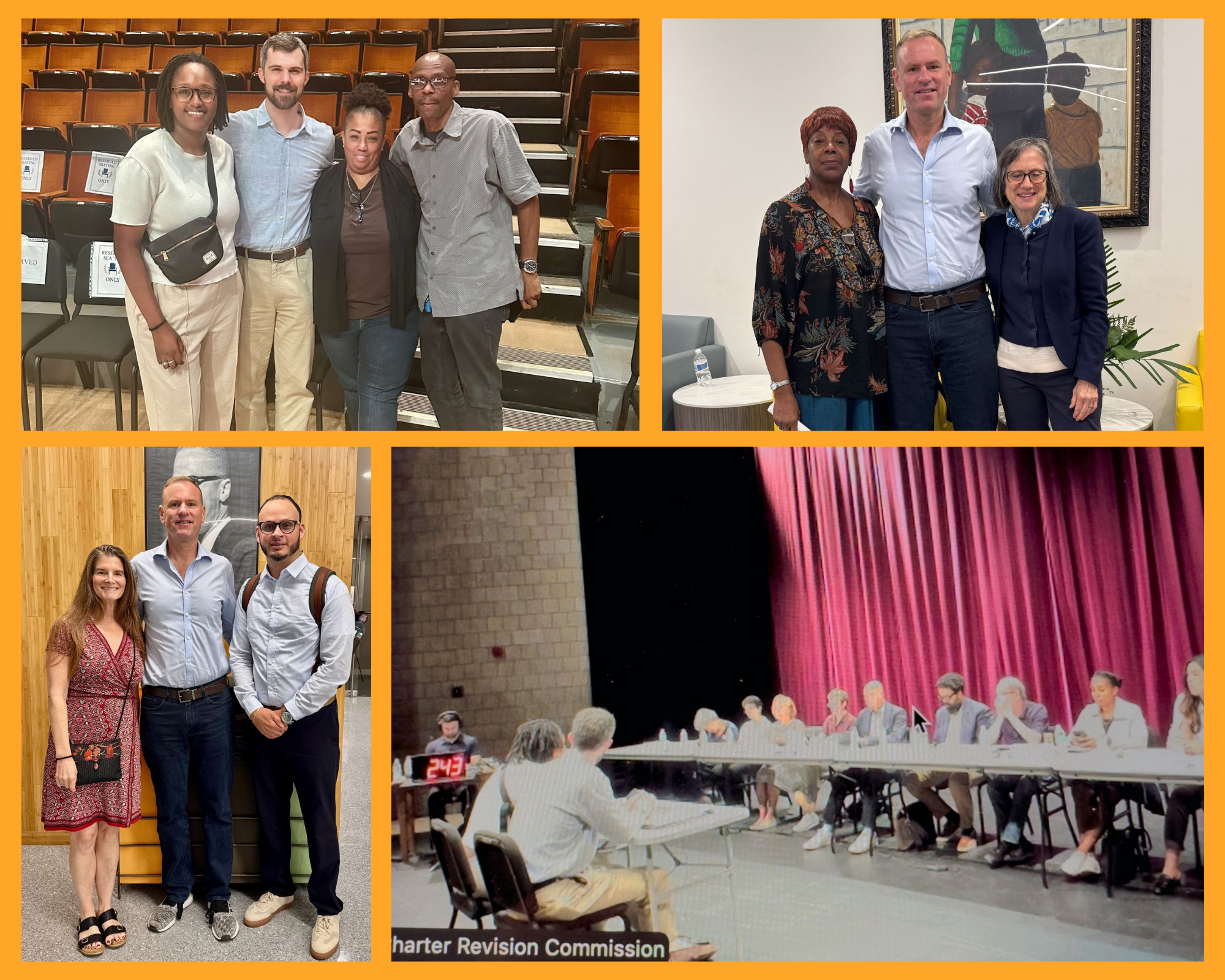
The NYC Charter Revision Commission continued its citywide hearings this week in Brooklyn and the Bronx. While the Commission is charged with examining government efficiency, one issue continues to dominate the public testimony: voting rights for New York City's 1.2 million independent voters.
Independent New Yorkers showed up again-veterans, immigrants, young voters, lifelong New Yorkers-each telling a different story but delivering the same message: Let Us Vote.
Army veteran and teacher Angel Martinez reminded the Commission that the Constitution begins with "We the People," not "We the Parties." As one of the city's 1.2 million independents, he asked why citizens who pay for public elections are denied the right to participate in them. "We serve a nation, not a party," he said.
In the Bronx, Belkis Pérez described immigrating to the United States in 1979 and becoming a citizen in 1987, only to discover that choosing not to join a political party meant being shut out of the elections that matter most.
You can watch her testimony here:
Brooklyn resident Vanessa Rudin called closed primaries "taxation without representation," comparing them to being invited to dinner but told only those wearing red or blue are allowed to eat—while everyone else is expected to help clean up afterward.
Michael Tagariello, a leader with Veterans for All Voters, reminded the Commission that this issue keeps rising because New Yorkers keep raising it. "Last year, open primaries were not expected to be a central issue of the Commission. Then New Yorkers showed up, and it became one of the top issues considered. It happened again this year. That matters."
Open Primaries National Organizer Bree Doldron, a lifelong Brooklynite, spoke for a new generation of voters: "I'm here as a member of the most independent generation our country has ever seen-Gen Z. Personally, I am tired of the endless partisan gridlock, and my generation is, too." You can read her testimony here.
The message is getting through. At the Brooklyn hearing, Commission Chair Patrick Gaspard acknowledged that the Commission has heard substantial testimony on open primaries and assured attendees the issue will be part of its deliberations.
There are three public hearings remaining, and independent voters will be at every one. We're not asking for special treatment. We're asking for the right to participate in the publicly funded elections that determine who represents our communities.
If you live in NYC and want to testify – email cstewart@openprimaries.org.
Fast Take
The Conversation Is Changing on Open Primaries
Two opinion pieces published just one week apart-one from Bloomberg's Editorial Board and the other from American Enterprise Institute scholar Samuel Abrams in The New York Sun-underscore something we've been saying for years: America's closed primary system is no longer a niche reform issue. It has become a central question about the health of our democracy.
The Bloomberg editorial makes the democratic case. It argues that in one-party districts, closed primaries routinely produce elections decided by a tiny fraction of voters, leaving everyone else with little or no meaningful choice in November. The result is lower participation, more ideological politics, and elected officials who are accountable to narrow partisan constituencies rather than the broader public.
Samuel Abrams approaches the problem from a different direction. Drawing on new Open Primaries polling, he shows that nearly four in ten registered Democrats in New York City say they are really independents who registered with the party simply to vote in its closed primary. His argument is striking: closed primaries don't just exclude voters—they pressure millions of Americans to hide their true political identity in order to participate.
These essays come from very different institutions and make different arguments. But they arrive at the same conclusion: closed primaries distort representation, weaken democratic competition, and deny millions of Americans a political system that reflects who they really are.
When respected voices across the ideological spectrum begin examining the same structural problem from different perspectives, it's a sign that the debate is changing. The question is no longer whether closed primaries create democratic costs. It's whether states are willing to modernize election systems that increasingly fail the voters they are supposed to serve.
Making Headlines
Connecticut: Why more than 1 million Connecticut voters can't vote in August primaries
Florida: Florida’s universal primary system is a farce that needs changing
Oregon: Initiative to open Oregon primaries may have stalled, but work to end election injustice continues.
South Carolina: SCGOP hoping new vote and potential lawsuit could close primary elections.
Texas: Cornyn says closed primaries could backfire on Texas GOP, breaking with Abbott, Paxton
In Case You Missed It
Washington, D.C. Voters Win a Major Victory: Open Primaries Are Coming
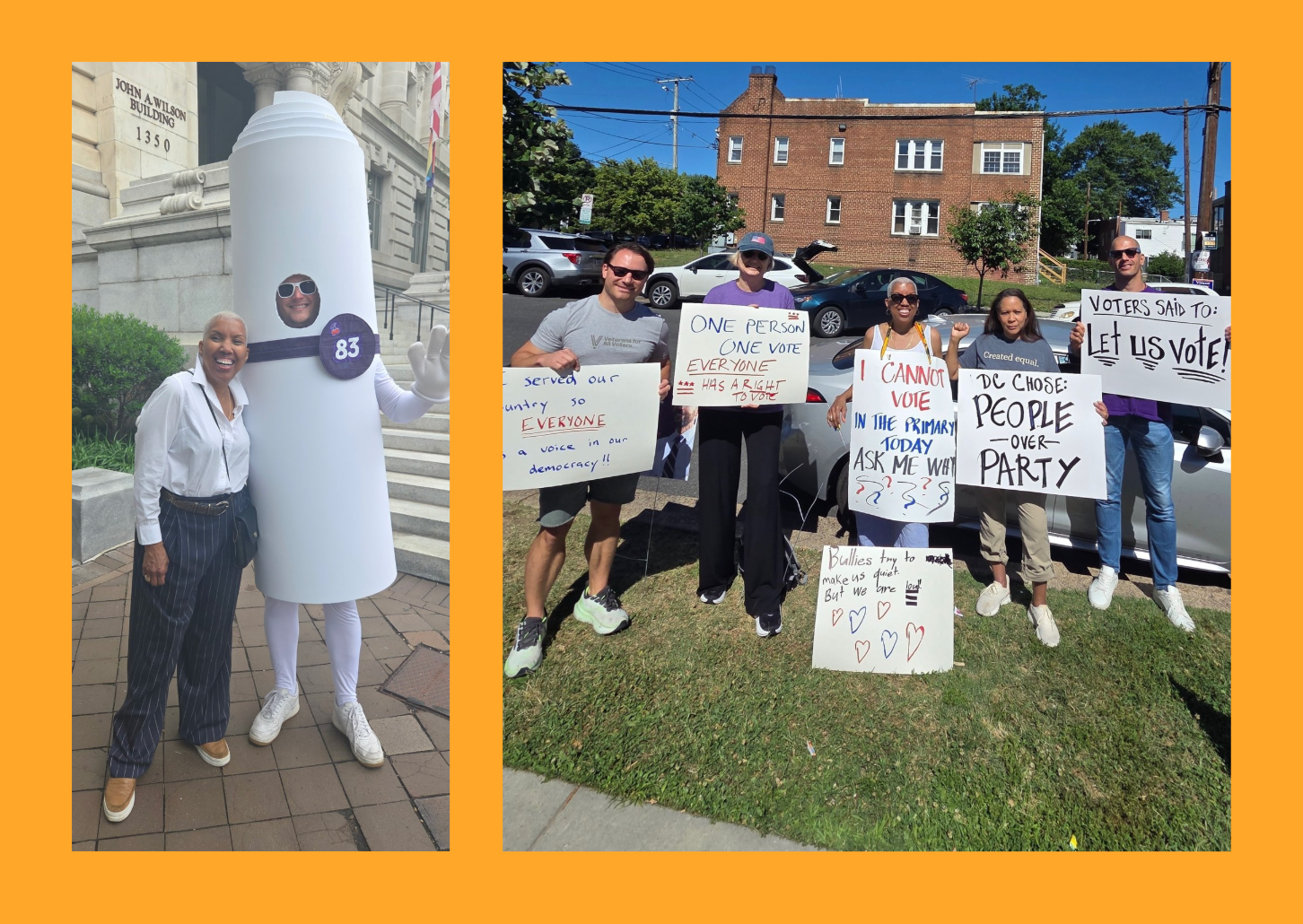
Democracy won a major victory in Washington, D.C. last week.
In 2024, D.C. voters overwhelmingly approved ballot initiative 83 to open the city’s taxpayer-funded primary elections, with 73% of voters voting yes. The message from voters was clear: every citizen should have a voice in elections that determine who governs.
But for nearly two years, the will of the voters was blocked. The D.C. Council refused to fund and implement the measure, leaving nearly 100,000 independents - including many voters of color -shut out of the elections that effectively decide who represents them.
Last week, that changed.
The Council reversed course and passed a resolution to fund and implement open primaries, putting the reform on track to take effect for the 2028 elections.
Watch campaign leader Lisa Rice as she breaks down the big win on Fox5 News this past weekend:
Congratulations to Lisa Rice, Grow Democracy DC, and every D.C. voter who fought to make this victory possible.
Campaign Updates
Massachusetts Heads Toward November
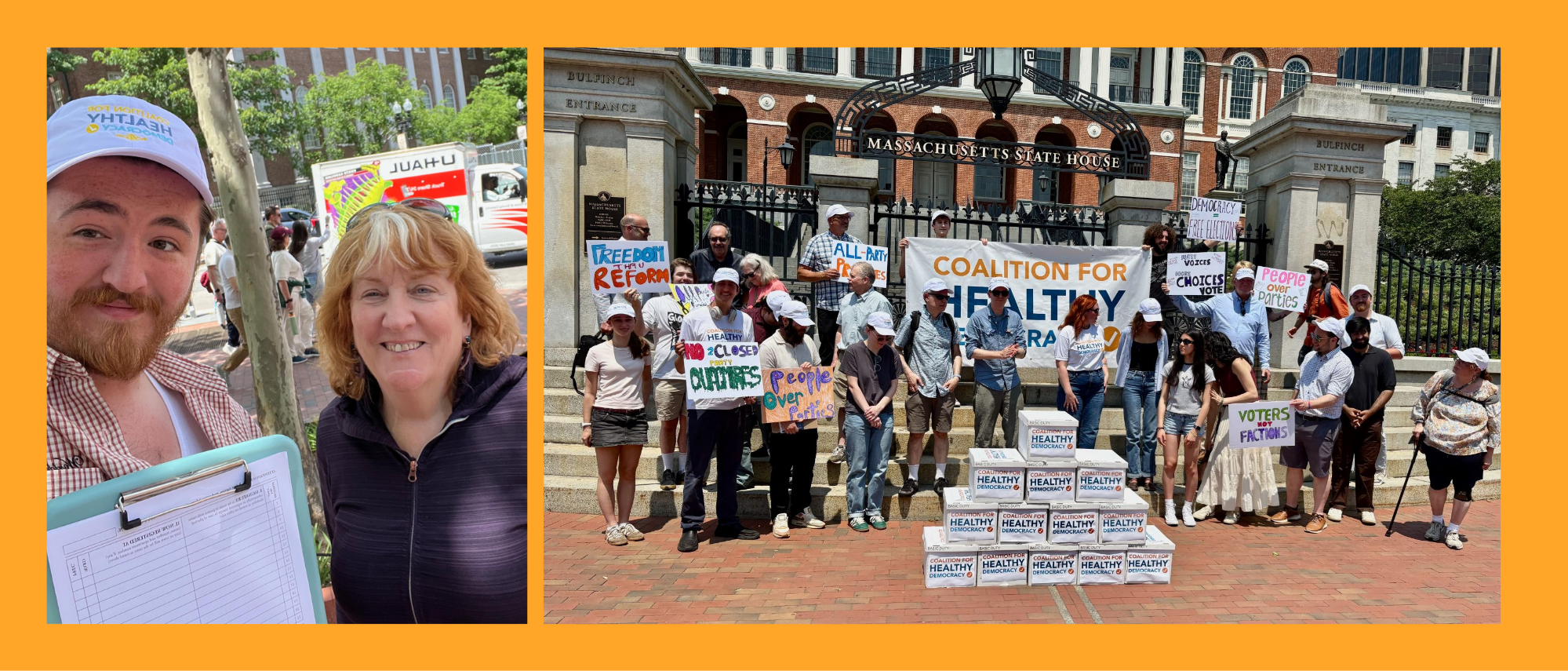
Momentum continues to build behind Massachusetts' proposed Top-Two Primary ballot initiative. Last week, the state's Supreme Judicial Court unanimously rejected a legal challenge, clearing a major hurdle for the measure to reach voters this November. Just days later, supporters submitted their second round of petition signatures, putting the initiative on track for the ballot.
The campaign is already drawing fierce opposition from the Massachusetts Democratic Party, whose state committee voted to oppose the proposal, arguing it would weaken party primaries and allow Republicans greater influence. Reform advocates counter that the measure would create more competitive elections, give every voter an equal voice in the primary, and reduce the number of uncontested races in a state where independents make up the majority of registered voters.
With the legal fight largely settled, the campaign now moves squarely into a high-stakes political battle over how Massachusetts chooses its candidates and who gets a real voice in its elections.