
 IVN Editorial Board
California's nonpartisan primary gives independent voters real decision-making power. All voters, regardless of their political party, can cast a vote for any candidate. California is only one of three states that treat every voter and every candidate exactly the same.
That is one big reason why independent-minded voters, rather than party brokers, hold the power in the June 2 primary to determine which candidates will advance to the November election.
That power threatens party control, which is why leaders from both major parties are now making the case to eliminate California's nonpartisan primary system and return to party-controlled primaries.
California's nonpartisan primary system only delivers on its promise when independent voters show up. When they don't, the primary defaults to the most partisan voters on each side, the ones who never miss an election.
Senate District 10: Open Silicon Valley Seat
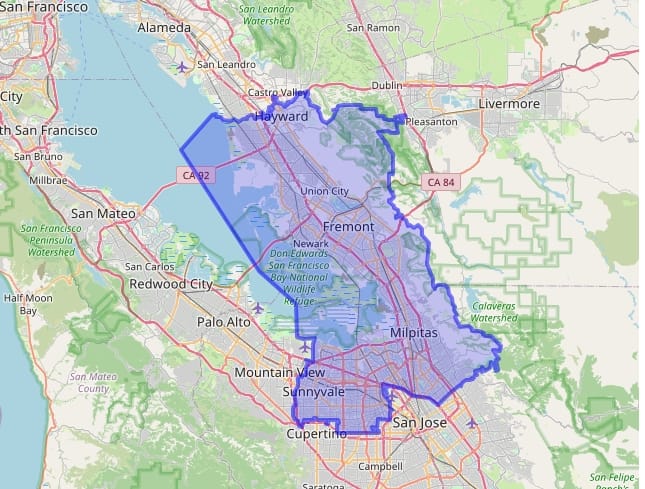
Six candidates qualified for the June 2 primary: five Democrats and one Republican. There are nearly twice as many NPP voters in this district as there are Republicans, and independent voters are well-positioned to determine which two candidates advance to November.
Scott Sakakihara (D) | Councilmember/Navy Officer
Sakakihara will appeal to progressive voters focused on expanding government programs and immigration protection. His platform explicitly calls for "Universal...Everything" including universal pre-school, universal healthcare, and universal housing. He wants "ICE agents out of our communities" and left Palantir specifically over the company's cooperation with federal immigration enforcement.
Sakakihara leads the field in fundraising with $399,003 raised, $299,000 from his personal coffers, and $188,169 cash on hand as of April 18, the most of any candidate. A fourth-generation Japanese American and Harvard Law graduate, he worked at Palantir Technologies as finance chief of staff before leaving in 2025 to run for office, citing concerns about AI-powered cybersecurity threats and the company's cooperation with federal immigration enforcement.
He served on Union City's planning commission beginning in 2017, first as an alternate and later as a full member, before winning election to the City Council in 2022, representing District 4.
Sakakihara has served in the U.S. Navy Reserve as an intelligence officer since 2017, including an eight-month deployment supporting special operations in the Middle East in 2021.
"I was made in Union City," Sakakihara has said. "Everything I've achieved came from the opportunities this community gave me."
Anne Kepner (D) | College Trustee/Mother
Kepner will appeal to progressive voters prioritizing education and social services. A community college trustee and consumer attorney, she focuses on public education, housing, and social services. She was previously a candidate for the 25th Assembly District in 2020. Her campaign is at anneforsenate.com.
She is a West Valley-Mission Community College District trustee, and partner at Needham Kepner & Fish. She raised $251,905, including $80,000 in candidate loans, with $86,877 remaining. Kepner finished a close third in the 2020 AD25 primary after outraising the field.
"As State Senator, I'll hold Big Corporations accountable when they harm seniors and children, and continue to expand skilled trades jobs, protect our public schools, and address housing affordability and homelessness," she says on her website.
The South Bay AFL-CIO Labor Council has spent $1,540 supporting her, while JOBSPAC, sponsored by the California Chamber of Commerce, has spent $104,557 opposing her.
Carmen Montano (D) | Mayor
Montano will appeal to moderate and conservative-leaning voters frustrated with Sacramento mandates. She champions Initiative #25-0035 to completely exempt homeowners aged 60+ from property taxes, wants to establish "strict, un-waivable mandatory minimum sentences" for retail thieves, opposes AB 130/SB 9 upzoning laws that "destroy single-family zoning," and explicitly campaigns against "Politicians in LA and San Francisco." Her platform is available at carmen.vote.
She is the first woman elected mayor in Milpitas and has held elected office for more than two decades, starting on the school board in 2000. She spent 26 years as a public school teacher.
In interviews, Montano has emphasized her belief that moderate voices are needed to bridge divides in Sacramento. “I’m not really about the party, I’m about the people and the community,” she told the Oakland Tribune. “I feel that I could make a difference in people’s lives.” She also said, “People forget that they’re representing the people and not just representing the party.”
"Right now, our two-party system is broken," Montano has said. "Both parties are often too extreme or out of touch with everyday needs."
David Cohen (D) | City Councilmember
Cohen may appeal to center-left voters seeking practical local governance over ideological positioning. As a San Jose councilmember, he focuses on homelessness funding coordination, protecting immigrant families, climate action, and affordable housing. He is endorsed by both moderate Liccardo and progressive Khanna, suggesting crossover appeal. More information at electdavidcohen.com.
Cohen has served on the San Jose City Council since 2020 and spent 14 years on the Berryessa Union School District board before that. He holds a Ph.D. from UC Berkeley, spent 21 years at semiconductor manufacturer Lam Research, and is an inventor on more than 10 patents. Cohen has been endorsed by U.S. Representatives Zoe Lofgren, Ro Khanna, and Sam Liccardo, and State Senators Josh Becker and Josh Newman. He raised $124,005 with $90,182 on hand. "Local government teaches you something important: policy isn't abstract," Cohen has said. "It affects the street you live on, the school your kids attend, the commute you take to work, and whether your neighborhood feels safe and supported."
Raymond Liu (D) | Fremont City Councilman
Liu became the youngest person ever elected to the Fremont City Council when he took office in 2024. He entered the 2022 SD10 primary, raised no money, and placed fifth with 4.9%. In this cycle, he raised $25,020 with $3,770 remaining.
Linda Price (R) | Businesswoman
Price is a management trainer and CEO of Professional Dynamics from Sunnyvale. She ran for the Fremont Union High School District board in 2022, placing fourth out of five in a top-three field. “California’s too expensive because of bad policy. I’ll protect Prop 13, cut taxes and regulations, and make it affordable to live here again,” she said.
The district spans portions of Alameda and Santa Clara counties, including Fremont, Hayward, Milpitas, Newark, Sunnyvale, Santa Clara, Union City, and parts of San Jose. It sits at the heart of Silicon Valley's technology economy. The Apple factory where the first Mac computer was manufactured was in Fremont. Tesla's plant operates within the district and employs tens of thousands of workers. The main campus of California State University, East Bay, is in Hayward, where 62.5% of undergraduates are first-generation college students.
The district is among the most affluent and highly educated in the state. The median household income is $161,447. More than 55% of adults hold a bachelor's degree or higher. Housing costs rank among the highest in the nation, with a median home value of $1,173,400 and a median monthly rent of $2,903.
As of October 2025, the district had 528,830 registered voters. Democrats hold 50.36%. No Party Preference voters make up 29.28%, nearly three in 10 registrants, numbering 154,831. Republicans represent 15.64%.
For more, please see IVN’s full coverage here:
 Cara Brown McCormick
Senate District 14: Central Valley Open Seat
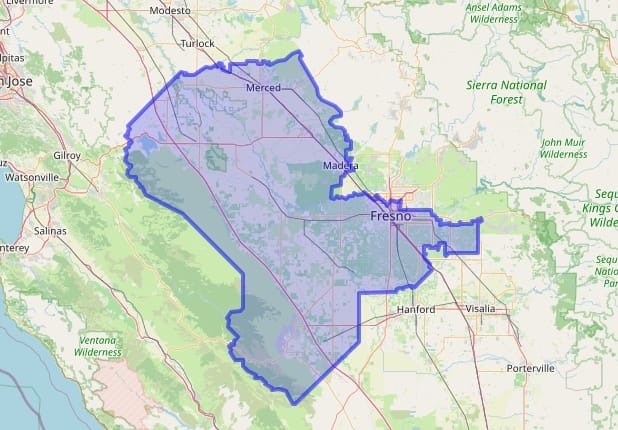
This district swung 17 points toward Republicans at the presidential level in 2024, dropping from Biden +21% to Harris +4%. Republican Steve Garvey took 47.8% of the vote here in the 2024 U.S. Senate race. In 2022, Republican Controller candidate Lanhee Chen won 50.4% of the vote in the district, the only Republican to carry a districtwide race since the current lines were drawn.
Three candidates have qualified for the June 2 Top Two primary ballot.
Esmeralda Soria (D) | State Assemblymember
Soria may appeal to moderate Democrats focused on rural working families. Daughter of farmworkers with a rural legal assistance background, she focuses on affordable housing, healthcare access, and working family issues. She challenged Jim Costa in the 2020 primary from the left. More at soriaforcalifornia.com.
Soria currently represents the 27th Assembly District and dominates this race financially. She raised $441,441 in the last reporting period and $1.37 million for the cycle, ending April with $1.02 million cash on hand. The daughter of Mexican immigrant farmworkers, she was born and raised in Tulare County. She earned her bachelor's in political science from UC Berkeley in 2005 and her JD from UC Davis in 2011. Before entering the Legislature, she worked in the California Attorney General's office, as a legislative aide in the state Senate, as a legislative advocate for the California Rural Legal Assistance Foundation, as a district director for state Senator Michael Rubio and as a field representative for Assemblymember Henry T. Perea. She served on the Fresno City Council from 2014 to 2022 and is an adjunct professor at Fresno City College. She ran unsuccessfully for Congress against CD16 incumbent Democrat Jim Costa in 2020, placing third with 21% of the vote. She has secured both the Democratic Party pre-endorsement conference and primary endorsements. "I have fought to bring resources home to the Central Valley—keeping hospitals open, investing in public safety, supporting farmers, and helping working families get ahead," Soria has said.
Esmeralda Hurtado (D) | Councilmember/Emergency Responder
Hurtado will appeal to voters seeking public health expertise and grassroots Valley leadership. The Sanger City Councilmember and sister of Senator Melissa Hurtado brings public health experience responding to drought emergencies and ensuring communities have safe drinking water. She helped deliver the multimillion dollar expansion of Sanger's fire station and led modernization of the wastewater treatment plant. She focuses on preventing rural communities from being "priced out" and "left behind" as the Valley faces rising costs, water instability, and agricultural job losses. Her campaign is at esmeraldahurtado.com.
She was appointed to the Sanger City Council to fill a vacancy after her sister was elected to the state Senate in 2018. She won a full term in the 2020 general election and was unopposed for re-election in 2024.
Hurtado’s pre-primary report showed a starting cash balance of $12,560 and an ending balance of $11,773 after raising $3,952 during the period. "Hospitals in rural communities don't close because the need disappears," Hurtado has said. "They close when private equity and corporate interests decide families aren't profitable enough to serve. When profit outweighs people, valley families suffer. This is true in our agriculture community as well."
Darin S. DuPont (R) | Councilman/Water Attorney
DuPont will appeal to voters prioritizing water security and affordability. A 28-year-old Merced attorney who studied water and environmental law at McGeorge, he focuses on water security, affordability, and "common sense." He is endorsed by Senate Republican Leader Brian Jones. His campaign is at dupontforsenate.com.
DuPont is the lone Republican on the ballot. Born in January 1996, he is a first-term Merced city councilmember, elected in 2024. An Atwater native, he graduated from Buhach Colony High School, earned his bachelor's in public administration from George Mason University in 2008, and his JD from the University of the Pacific's McGeorge School of Law in 2021. He is a partner at Robbins, Browning, Godwin & Marchini, LLP. He and his wife, Bianca, reside in Merced with their young daughter.
“I was raised in the Central Valley, and I know how hard our families work just to get by. Sacramento has lost balance and forgotten communities like ours. I am running to restore accountability, secure our water future, and make California affordable again.”
DuPont raised $37,305 in the last period and $46,005 for the cycle, with $17,290 cash on hand. "We need a new generation to be the voice of the Valley," DuPont has said.
The district covers portions of Fresno, Madera, Merced, and Tulare counties. It includes the cities of Atwater, Chowchilla, Coalinga, Dos Palos, Firebaugh, Fowler, Gustine, Huron, Kerman, Los Banos, Madera, Mendota, Merced, Orange Cove, Parlier, Reedley, Sanger, San Joaquin, and Selma, along with portions of Fresno and Livingston, communities running alongside Interstate 5 and Highway 99. These are largely Latino and immigrant communities that face infrastructure challenges and concerns related to healthcare access.
The district has a population of just over 1 million. It is 66.4% Latino, 17.9% White, 8.3% Asian, and 4.2% Black.
The median household income is $60,393.
About 23% of residents live below the poverty line, 9% lack health insurance, and 25% of households receive food stamps. Only 14% of adults hold a bachelor's degree or higher. The median home value is $320,200, and the median rent is $1,204.
As of April 3, 2026, the district had 456,819 registered voters, and No Party Preference voters make up 24% - more than 100,000 voters. The Democratic registration advantage is 15 points.
Senate District 16: The Central Valley's Most Competitive Seat
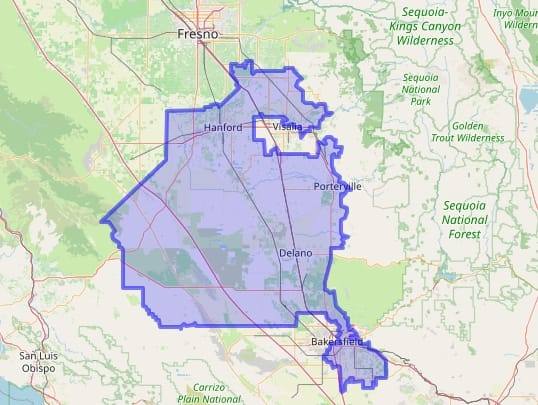
Democrat Melissa Hurtado is the only Democratic state senator representing a district that Donald Trump carried in 2024. She won her last race by 13 votes. That is not a typo.
SD16 saw the largest rightward swing of any of California's 40 Senate districts between 2020 and 2024, a 17.4-point shift at the presidential level, flipping from Biden +9% to Trump +9% in a single cycle. Three candidates qualified for the June 2 primary.
Melissa Hurtado (D) | State Senator
Senator Hurtado will appeal to voters seeking continued Central Valley investment and experience. The two-term incumbent has secured "nearly $1 billion in investments across Central Valley" and brings Sanger City Council background and community organizing experience for public employees. Her campaign website is melissahurtado.com.
Hurtado was first elected to the state Senate in 2018, defeating incumbent Republican Andy Vidak. At the time, she was serving her first term on the Sanger City Council, having won election in 2016 with 68% of the vote. Born March 6, 1988, Hurtado is an IRS-registered tax preparer who also worked as a community organizer for public employees. After the 2021 redistricting placed her Sanger residence in a district contested by another Democratic incumbent, she relocated to Bakersfield, ran in the new district, and won re-election by 13 votes over Republican David Shepard. She has raised $962,367 so far this cycle, including more than $250,000 from the California Democratic Party, and had $239,728 cash on hand as of April 18. Senator Hurtado has secured both the Democratic Party pre-endorsement conference and primary endorsements. "Like most of the kids I knew growing up in the Central Valley, I didn't have much," Hurtado has said. "My parents were immigrants, working hard every day on farms. What I had was a belief in the future: that tomorrow could be better than today if I worked hard."
Manpreet Kaur (D) | Vice Mayor/Professor
Kaur will appeal to voters frustrated with cost-of-living pressures and seeking fresh representation. As Bakersfield Vice Mayor and the first Sikh-Punjabi woman elected to the Bakersfield City Council in 2022, she focuses on affordability (describing families "picking between tank of gas and gallon of milk") and Central Valley investment. Her campaign is at kaurforcalifornia.com.
Born and raised in Bakersfield, she graduated from Kern County public schools, earned her bachelor's in political science from UC San Diego in 2015, and completed dual master's degrees in urban planning and public affairs from the University of Wisconsin-Madison in 2022. Kaur is a political science lecturer at Cal State Bakersfield, director of political development at the national Sikh Coalition, and founder of the Kern County chapter of the Jakara Movement, a Sikh Punjabi youth leadership organization that, under her direction, has expanded to 70 high school clubs and 25 collegiate chapters across 15 California counties. She raised $158,228 for the cycle, including $2,500 from the California Teachers Association, and had $99,877 on hand. "Our tax dollars should stay in our communities," Kaur has said. "Out-of-touch politicians respond to their donors, not their voters. Meanwhile, the price of everything stays high, and our Valley gets left behind. We can change that. And it starts by changing who our voice is in Sacramento."
Guillermo Asuncion Gonzalez (R) | Small Business Owner
Gonzalez will appeal to business-minded voters and those prioritizing water issues. A small business owner and field representative for Representative Valadao, he focuses on restoring "the promise of Valley," water issues, and business and homeownership access. His campaign is at gonzalezforsenate.com.
Born in August 1997 in Bakersfield and raised in Mexico City, he was influenced by his father, a Republican who received legal status under President Reagan's 1986 immigration amnesty, who oriented the family toward the GOP. Gonzalez himself switched from No Party Preference to Republican in 2021 at age 24. He graduated from Bakersfield High School in 2015, worked as an RNC engagement coordinator in Bakersfield during 2022-2023, and moved to Valadao's field staff in February 2023. His family operates a restaurant in Delano. He raised $73,400 for the cycle, roughly half from GOP legislators, and had $25,692 on hand. The Republican Party did not endorse in this primary. "Sacramento's one-size-fits-all mandates don't work for the Central Valley," Gonzalez has said. "Kern, Tulare, Kings, and Fresno should set their own priorities on water, land use, and public safety, guided by the people who live here, work here, and depend on these resources."
No independent expenditures have been reported in this race.
Senate District 16 is a Voting Rights Act district that covers Kings County and portions of Fresno, Kern, and Tulare counties. It includes the cities of Arvin, Avenal, Corcoran, Delano, Dinuba, Farmersville, Hanford, Kingsburg, Lemoore, Lindsay, McFarland, Porterville, Wasco, and Woodlake, along with portions of Bakersfield, Shafter, Tulare, and Visalia. It is largely an immigrant Latino working-class region with shared interests in water and agriculture. Healthcare access and infrastructure are persistent concerns.
The district has a population of 969,728. It is 73% Latino, 18% White, 4% Black, and 4% Asian. About 25% of residents are foreign-born, and 16% are non-citizens. The median household income is $59,782. About 21% of residents live below the poverty line, 9% lack health insurance, and 24% of households receive food stamps. Only 11% of adults hold a bachelor's degree or higher. The median home value is $272,900, and the median rent is $1,156.
As of April 3, 2026, the district had 401,440 registered voters. Democrats hold 39%. Republicans represent 30%. No Party Preference voters make up 23%, numbering 92,928. The Democratic registration advantage is just 9 points and shrinking. In a district that swung 17 points toward Republicans in a single presidential cycle, where the incumbent won her last race by 13 votes, and where nearly one in four voters is registered with No Party Preference, independent voters will determine whether SD16 stays Democratic or flips.
Assembly District 7: Josh Hoover's Test
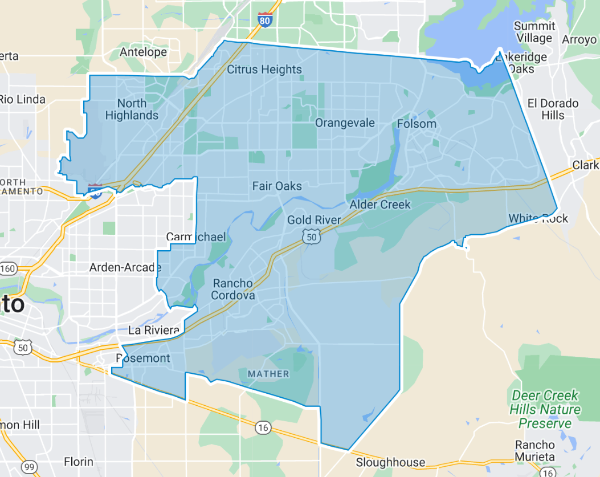
Republican Josh Hoover flipped this seat in 2022, unseating incumbent Democrat Ken Cooley by just 1,400 votes. He won re-election in 2024 by 7 points, even as Kamala Harris carried the district by 5% and Adam Schiff won it by less than a point. The district's rightward shift from 2020 to 2024 was the smallest of any California legislative seat, and Politico has listed it as one of two seats Democrats are targeting for a flip in 2026.
Three candidates qualified for the June 2 primary.
Josh Hoover (R) | Member of the State Assembly, 7th District
Hoover may appeal to moderate voters focused on education and pragmatic problem-solving over partisan combat. As a Problem Solvers Caucus member, he authored Ryla's Law to close loopholes for child abusers, led school reopening first in Sacramento County during the pandemic, and focuses on student mental health. He is endorsed by the Howard Jarvis Taxpayers Association but wins in a district Kamala Harris carried. His positions are outlined at hooverforassembly.com/issues.
Hoover is seeking a third term. Born April 11, 1988, he served as chief of staff to then-Assemblymember Kevin Kiley and as an elected member of the Folsom Cordova Unified School District Board before winning his seat in 2022. He earned an associate degree from American River College, a bachelor's in political science from UCLA in 2011, and a master's in public administration from USC in 2015. He lives in Folsom with his wife, Nicole, and their three children. As a parent of a child on the autism spectrum, he has served on the Folsom Cordova Special Education Community Advisory Committee and in local PTA leadership. In 2024, Hoover's race drew $1.55 million in outside spending, including $1.4 million benefiting Hoover. He has raised $933,684 for the 2026 cycle and had $614,104 cash on hand as of April 18. He has secured the Republican Party primary endorsement. "During my time in the Legislature, I have supported law enforcement, advocated for more school police officers, and introduced Ryla's Law to close loopholes that let child abusers out of jail early," Hoover has said.
Amy L. Slavensky (D) | Public School Educator
Slavensky will appeal to voters prioritizing education funding and social services with personal experience of hardship. A former Amador County USD superintendent with over 40 years in education who left home at 17 and put herself through college, she focuses on expanding housing, healthcare, accessible social services, women's rights, reproductive freedom, well-resourced public schools, and compassionate homelessness support. She lost her brother to homelessness and believes in treating people experiencing mental illness with humanity. Her platform emphasizes dignity, fairness, and opportunity guided by integrity, compassion, and justice. Her campaign is at amyslavensky.com.
She is an educational coach and consultant born and raised in the Fair Oaks and Carmichael communities. She earned a bachelor's from Point Loma Nazarene University, a master's from Azusa Pacific University, and a Ph.D. in educational leadership from Claremont Graduate University. She also worked in the San Juan, Upland, and Sacramento City school districts. Slavensky has been endorsed by SEIU, the California Women's List, and Porsche Middleton, the 2024 Democratic candidate for this seat. Slavensky has also secured both the Democratic Party pre-endorsement conference and primary endorsements. She raised $154,132 for the cycle and had $90,900 on hand. "Leaving home at 17, putting myself through college, and spending 40 years serving children and families in public education taught me the power of resilience, empathy, and community," Slavensky has said. "I am, at my core, a mom, a wife, an educator, and a neighbor who believes in showing up for people with compassion and integrity."
Sanaz Motamedi (AIP) | Real Estate Agent
Motamedi is from Rancho Cordova. She is a first-generation American who graduated from Cal State Northridge with a bachelor's in environmental and occupational health.
Motamedi filed as an American Independent Party candidate after previously registering with that party. She had not reported any fundraising activity. "We deserve a fresh perspective, and together we can create a future driven by true change," Motamedi has said.
Assembly District 7 lies entirely within Sacramento County, stretching along the American River through Folsom, Rancho Cordova, Citrus Heights, and the unincorporated communities of McClellan Park, North Highlands, Foothill Farms, Fair Oaks, Orangevale, Gold River, Rosemont, Mather, and most of Carmichael. About 497,000 people live here. The population is 58% White, 19% Latino, 10% Asian, and 6% Black. About 19% of residents are foreign-born, and 7% are veterans.
The median household income is $90,390, and the median home value approaches $500,000. Renters make up nearly 40% of households and pay an average of $1,760 per month.
This is one of California's most evenly divided districts. It has swung between parties for more than a decade. Barack Obama carried the area by less than a point in 2008, Mitt Romney by 2 points in 2012, Hillary Clinton by 3 points in 2016, and Joe Biden by 6 points in 2020.
As of October 2025, the district had 299,234 registered voters. Democrats hold 37%. Republicans represent 33%. No Party Preference voters make up 21%, numbering roughly 63,400. The Democratic registration advantage is less than 4 points and shrinking. In a district this closely divided, where the last three elections have all drawn statewide attention and significant outside spending, independent voters are once again positioned to decide the outcome.
For more, please see IVN’s full coverage here:
Cara Brown McCormick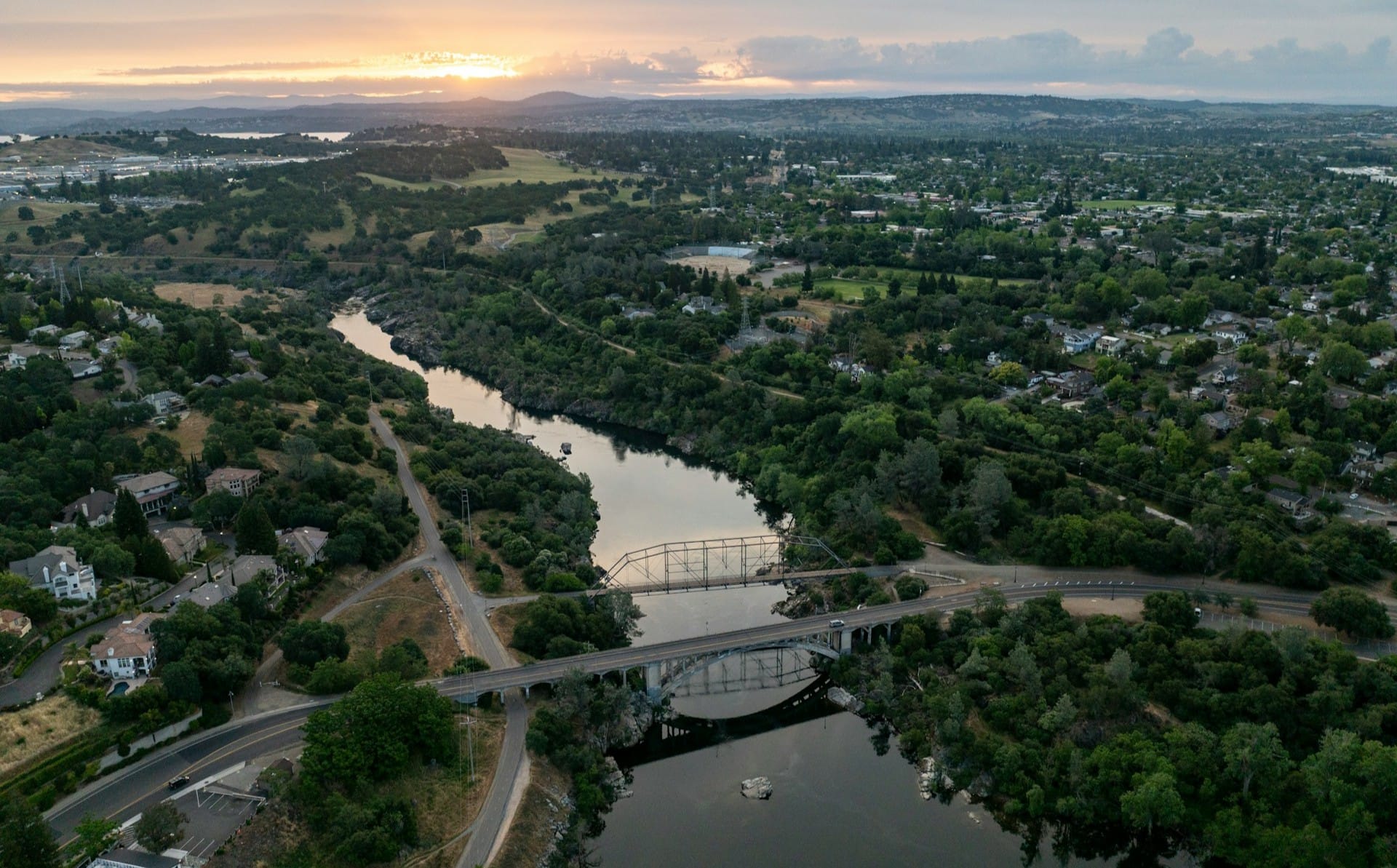
Assembly District 27: Central Valley Open Seat
This race became one of the most exciting in California when moderate incumbent Democrat Esmeralda Soria announced she would leave the Assembly and run for the open SD14 Senate seat instead.
Although Democrats hold an 11-point registration advantage, the district has shifted dramatically to the right. Gavin Newsom carried it by 6 points in 2018. Joe Biden won it by 14 points in 2020. But the Republican Brian Dahle carried the district by 5 points in the 2022 governor's race, and Donald Trump won it by nearly 3 points in 2024. In the 2024 U.S. Senate race, Republican Steve Garvey carried the district by 2 points over Adam Schiff. Voters here strongly backed Proposition 36, which increased sentencing for certain drug and theft crimes, by a 74% to 26% margin.
Three candidates are on the ballot for the June 2 primary.
Brian Pacheco (D) | County Supervisor/Farmer
Pacheco will appeal to moderate voters focused on local governance and agricultural experience. A fourth-generation farmer and a Fresno County supervisor, he focuses on lowering costs and stopping tax increases on the middle class. He has expanded in-home health care, brought home clean energy jobs, and served 12 years on the Kerman Unified School District Board. He is endorsed by Speaker Robert Rivas and Assemblymember Esmeralda Soria. His campaign is at pachecoforca.com.
Born April 18, 1968, he is a Kerman native who graduated from Kerman High School and earned a bachelor's degree in agricultural and managerial economics from UC Davis in 1991. The dairy his great-grandfather founded runs more than 1,300 Holstein cows and has been recognized as a top-producing herd in Fresno County every year since 1998. The family also grows grapes, almonds, alfalfa, corn silage, and winter forage. He was first elected to the Fresno County Board of Supervisors in 2014 and has been re-elected twice. Pacheco is Vice Chair of the North Kings Groundwater Sustainability Agency. He’s raised $902,223 for this campaign and had $662,588 cash on hand as of April 18. Pacheco has secured both the Democratic Party pre-endorsement conference and primary endorsements. "I'm a fourth-generation Valley farmer," Pacheco has said. "I see every day how rising costs hurt our families. Politicians in LA and San Francisco keep making it worse. I'll fight for the Central Valley to lower prices and stop tax increases on the middle class."
Michael Walker Murphy (R) | Small Business Owner
Murphy will appeal to business-minded voters and Republicans seeking Valley experience. A former Merced mayor and business attorney, he is committed to keeping communities safe, reducing the cost of living, protecting water supply, and creating economic opportunities. His campaign is at mikemurphy4assembly.com.
Born August 19, 1979, he is a Merced native who earned his bachelor's in international politics from Brigham Young University in 2004 and his law degree from Georgetown University in 2007. He is currently Of Counsel at Gunderson Dettmer Law Firm. Murphy won election to the Merced City Council in 2011, served five years, and was elected mayor in 2016, holding that office through 2020. As mayor, he pointed to a 55% reduction in city business fees, a small business retention program, and a partnership with UC Merced to open a downtown business accelerator. The Republican Party did not endorse in this primary. Murphy raised $555,864 for the cycle and had $343,523 on hand. "I am committed to keeping our communities safe, reducing the cost of living for families, protecting our water supply, creating economic opportunities for all, and being held to account as a leader," Murphy has said.
Japjeet Uppal (D) | Livingston City Councilmember
Uppal will appeal to younger progressive voters skeptical of establishment politics and corporate money. At age 23, he serves on the Livingston City Council and is the youngest elected official in California. The son of Punjabi immigrants, he positions himself as an outsider fighting to "get money out of politics," ban corporate donations, publicly finance elections, guarantee quality healthcare as a right, ban institutional investors from buying housing, invest in water infrastructure, create universal childcare, and fix crumbling infrastructure. He is not seeking traditional endorsements. His campaign is at japjeet4ca.com.
Uppal raised $18,892 for the cycle and had $8,208 on hand. "Time and time again, we've seen politicians sell out to billionaires and private corporations," Uppal has said. "We must ban corporations from donating to political campaigns and publicly finance our elections to protect our democracy from being bought."
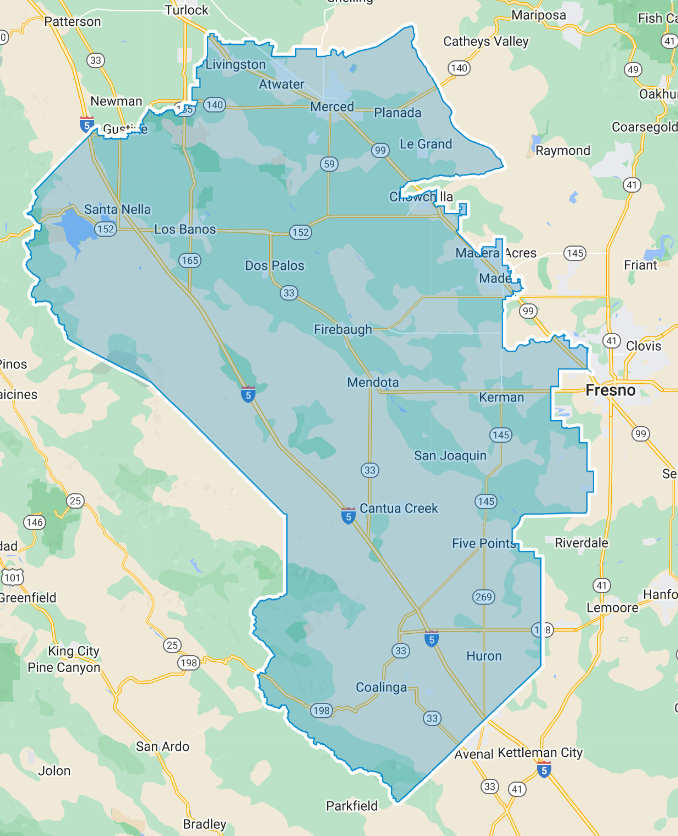
Assembly District 27 spans portions of Merced, Fresno, and Madera counties. It includes the cities of Coalinga, Kerman, San Joaquin, Merced, Mendota, Dos Palos, Madera, Los Banos, Firebaugh, Huron, Atwater, Chowchilla, and Livingston, as well as portions of Fresno. Interstate 5 and Highway 99 are the district's main arteries, connecting farming communities, packing sheds, and small downtowns across a vast stretch of valley floor. Merced, the district's largest city, is known as the Gateway to Yosemite and is home to UC Merced, the youngest campus in the UC system, which earned R1 Carnegie research institution status in 2025 and is the only R1 university in the Central Valley.
The district is drawn to protect the political voice of its majority-Latino population under Section 2 of the Voting Rights Act. AD 27 has a total population of 526,986. It is 67% Latino, 20% White, 6% Asian, and 4% Black. About 26% of residents are foreign-born. The median household income is $65,569. About 21% of residents live below the poverty line, 9% lack health insurance, and 23% of households receive food assistance. The median home value is $345,700, and the median rent is $1,257.
As of December 2025, the district had 236,843 registered voters. Democrats hold 40%. Republicans represent 29%. No Party Preference voters make up 24%, numbering 55,600. NPP registration has quadrupled in raw numbers since 2008. In a district where the margin between the major parties has repeatedly come down to a few thousand votes, the NPP bloc is now larger than the margin of victory in the most recent contests.
For more, please see IVN’s full coverage here:
Cara Brown McCormick
Assembly District 30: Dawn Addis and the Central Coast
This is a seat worth watching for what it reveals about independent voters on California's Central Coast. Incumbent Democrat Dawn Addis is seeking a third term. She won her 2024 re-election by a commanding 62% to 38% margin and enters 2026 as one of the better-funded Assembly incumbents in the state. Kamala Harris carried the district by 27 points in 2024. Adam Schiff won it by 23 points.
Three candidates qualified for the June 2 primary.
Dawn Addis (D) | State Assemblymember/Teacher
Addis will appeal to voters prioritizing healthcare access and environmental protection. The incumbent teacher and Chair of the Budget Subcommittee on Health is the first Democrat from SLO County in the State Assembly since 1922. She focuses on healthcare access, opposition to offshore drilling, and climate action. More at dawnaddis.org.
Addis was first elected in 2022 after losing by double digits in a 2020 run against Republican incumbent Jordan Cunningham. Born July 12, 1972, she is a former special education teacher and Morro Bay city councilmember who spent years teaching in the San Luis Coastal Unified School District. She co-founded the San Luis Obispo Women's March, which drew 10,000 people in 2017. Budget Subcommittee No. 1 on Health, which she chairs, oversees eight state departments and a $175 billion budget.
In 2026, she is carrying AB 1159, a student data privacy bill that would restrict how AI companies use student data, and AB 2034, which would require food and chemical companies to demonstrate the safety of food additives. She has raised $622,312 for the cycle and had $430,141 cash on hand as of April 18. She has secured both the Democratic Party pre-endorsement conference and primary endorsements. "As your State Assemblymember, I'm listening and solving problems in order to make our home an even better place to live," Addis has said. "There is nothing our communities can't achieve if we work together and prioritize helping people over politics."
Shannon Kessler (R) | Children's Advocate/Businesswoman
Kessler will appeal to parents' rights activists and those prioritizing local control over Sacramento mandates. A mother, business owner, and children's advocate married 38 years, she founded Save Girls' Sports Central Coast and Culture Impact to strengthen civic engagement. She co-owns a local construction company and real estate business, served as Arroyo Grande Parks and Recreation Commissioner, and focuses on public safety, affordability, accountability, putting parents back in charge of schools, empowering businesses, and fighting overregulation. Her campaign is at kesslerforca.com.
Born Sept. 21, 1968, she is a sixth-generation Californian and principal broker at Shannon Kessler Real Estate. Her husband, Jim, owns Kessler Construction. She is the founder of Culture Impact, an organization that encourages citizen engagement, and Save Girls' Sports Central Coast, a group that advocates for female-only athletic competition. Kessler has received the California Republican Party endorsement. She raised $254,354 for the cycle and had $85,321 on hand. "I'm running because public safety, affordability, and accountability are no longer being treated as priorities," Kessler has said. "Families are struggling to stay in the communities they love, parents are losing their voice, and critical decisions are being made without local input. Our district deserves representation that listens, protects, and delivers results."
Susannah Brown (D) | Data Scientist
Brown offers a data strategy background but minimal campaign activity. She reported almost no fundraising activity as of the end of 2025. Her website is brownfor30.com.
She is the founder of Renaissance Strategy Dynamics, a data and strategy consultancy focused on housing, infrastructure, and economic development, which she has led since 2014. Born Dec. 22, 1988, she earned her bachelor's in business administration from Columbia College in 2018 and a master's in analytics from Notre Dame of Maryland University in 2020. Brown worked for Rite Aid for a decade, starting in her teens and rising to manager. She chairs the South County Chambers of Commerce, serves on an elementary school site council, and has organized Lumina Days, a domestic violence awareness event, for more than 10 years. Her husband works at the Diablo Canyon nuclear plant. Brown reported raising $13,500. "I'm running for State Assembly to focus on implementation," Brown has said. "That means aligning housing, energy, water, and school systems so decisions made in Sacramento work in the real world and deliver reliable results people can count on."
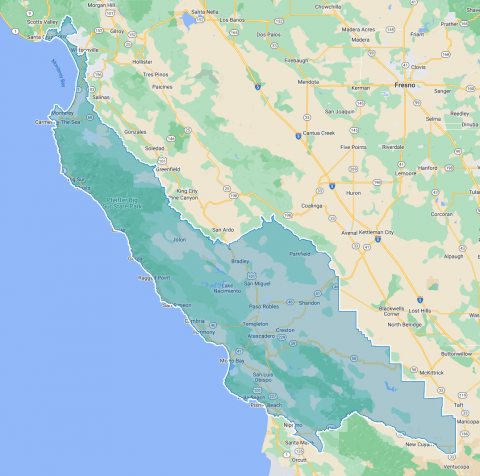
Assembly District 30 stretches along the Central Coast, covering portions of San Luis Obispo, Monterey, and Santa Cruz counties. It includes San Luis Obispo, Morro Bay, Atascadero, Paso Robles, Arroyo Grande, Pismo Beach, Monterey, Pacific Grove, Carmel-by-the-Sea, Seaside, Marina, and Capitola. The economy runs on tourism, agriculture, and education. The district has a population of 475,439. It is 63% White and 24% Latino. The median household income is $97,987. The median home value is $872,900, and the median rent is $2,076.
As of December 2025, the district had 307,638 registered voters. Democrats hold 45%. Republicans represent 28%. No Party Preference voters make up 19%, numbering roughly 59,200. San Luis Obispo County, which accounts for more than half the district's voters, holds a Democratic registration edge of just 4 points, making it the competitive center of the district. While AD30 is not a toss-up, the presence of nearly 59,200 independent voters and a second Democrat on the ballot makes the primary dynamics worth watching, particularly in San Luis Obispo County, where NPP voters carry outsized weight.
For more, please see IVN’s full coverage here:
Cara Brown McCormick
Assembly District 35: Bakersfield's Open Seat
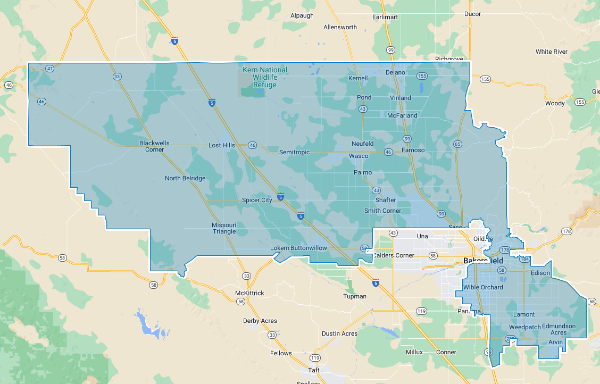
No district in California swung further to the right in 2024 than AD35. Joe Biden carried it by 21 points in 2020. Kamala Harris barely held it by less than a point. Adam Schiff won it by just 2 points.
Incumbent moderate Democrat Jasmeet Bains is not seeking re-election. Three candidates qualified for the June 2 primary: two Democrats and one Republican.
Andrae Gonzales (D) | Councilmember/Nonprofit Director
Gonzales will appeal to voters focused on practical local problem-solving and community investment. A Bakersfield City Council Ward 2 member since 2016 and nonprofit executive director, he helped create a low-barrier homeless shelter, a community land trust for homeownership, and the B3K Initiative for small business. He focuses on improving schools, expanding early education, stopping rising costs of gas and groceries, expanding healthcare (supporting efforts to bring a medical school to Kern County), prioritizing public safety, ensuring clean water, helping working parents with childcare costs, fixing roads, building new housing, and helping businesses create good-paying jobs. His campaign is at andraegonzales.com.
Born April 6, 1982, he was born and raised in Bakersfield, graduated from East Bakersfield High School, and earned his bachelor's in political science from UC Berkeley. He serves as CEO of Stewards, Inc., a nonprofit that helps adults with mental disabilities manage their finances, serving more than 1,000 clients in Kern County. He is also a co-founder of several local nonprofits, including Faith in Action, Children First, Kern Alliance of Nonprofits, and Hub of Bakersfield. Before joining the city council, he served on the Bakersfield City School District Board of Education from 2010 to 2016.
Gonzales was reelected to the Bakersfield City Council in 2022. He was recently awarded the 2025 Dennis Wallace Community Leadership Award at SJVHC's 14th Annual Affordable Housing Conference. He has raised $541,259 for the cycle and had $191,301 cash on hand as of April 18. He has secured both the Democratic Party pre-endorsement conference and primary endorsements. His endorsements include Treasurer Fiona Ma, Assemblymembers Esmeralda Soria and Dawn Addis, State Senator Jesse Arreguin, and Kern County Supervisor Leticia Perez.
Gonzales is also drawing massive independent expenditure support, with $1.39 million in outside spending on his behalf from California Leads ($516,418), Coalition to Restore California's Middle Class ($399,920), Nurses and Educators for Healthy CA Communities ($299,480), Keep California Golden ($75,490), and California Credit Union League ($75,000). "I'm the only candidate endorsed by the Democratic Party because I have a record of fighting for positive change in our communities," Gonzales has said. "I'm also endorsed by groups representing local teachers, firefighters, construction workers, childcare providers, and small business owners."
Ana Palacio (D) | Emergency Room Nurse
Palacio will appeal to healthcare-focused voters and those seeking someone with frontline emergency experience. An ER nurse at Kern Medical with no political background, she describes herself as someone who "runs towards crises" and focuses on quality affordable healthcare, economic opportunities, affordable housing solutions, education and career pathways, and public safety and homelessness prevention. She is endorsed by SEIU. Over half of her $140,000 raised came from SEIU. Her campaign is at voteanapalacio.com.
Palacio is the SEIU 521 chapter president from Bakersfield. Born Aug. 25, 1984, she has been endorsed by SEIU California, the California Women's List, and California Environmental Voters. Palacio raised $161,653 for the cycle and had $123,929 on hand. She is also drawing independent expenditure support, with $346,889 spent on her behalf from FIX KERN PAC ($171,975), Nurses and Educators for Healthy CA Communities ($156,362) and SEIU Local 521 ($18,552). "ER nurses don't wait for problems to escalate," Palacio has said. "We step in when lives are on the line. We need leaders who will run towards the crises Central Valley families are facing. That's what I'll do for Kern County in the State Assembly."
Saul Ayon (R) | Mayor/Teacher
Ayon was elected mayor of McFarland in 2022 after winning a city council seat in 2020. Born Nov. 8, 1975, he served 23 years with the Kern County Sheriff's Department before retiring to run for office. He teaches criminal justice at McFarland Early College High School and previously served as president of the McFarland Chamber of Commerce. An amateur boxer and father of two sons, he resides in McFarland. He has received the California Republican Party endorsement and endorsements from Assemblymembers Stan Ellis and Alexandra Macedo. He raised $228,121 for the cycle and had $141,153 on hand. "I've always felt called to help people," Ayon has said. "From serving 25 years in the Kern County Sheriff's Department to mentoring kids as a high school Criminal Justice Instructor, I've dedicated my life to protecting, guiding, and standing up for the community. I'm ready to take that same dedication to Sacramento and fight for families, farmers, and small businesses."
Total independent expenditure spending in AD35 stands at $1,739,224, making it one of the most heavily funded legislative primaries in California. Nearly all of it is supporting Democrats: roughly $1.39 million backing Gonzales and $347,000 backing Palacio. No IE spending has been reported for or against Mayor Ayon.
Assembly District 35 covers portions of Kern County, including the cities of McFarland, Shafter, Arvin, Delano and Wasco, along with portions of Bakersfield. It is a Voting Rights Act district with a majority-Latino citizen voting age population of 61%. The district features large farmworker communities that commute throughout the area for work and school. Its communities share an agriculture-based economy and common concerns related to land use and water access.
The district has a population of 494,836. It is 75% Latino, 13% White, 5% Black and 4% Asian. About 26% of residents are foreign-born and 17% are non-citizens. The median household income is $55,794. About 23% of residents live below the poverty line, 10% lack health insurance and 24% of households receive food stamps. Only 10% of adults hold a bachelor's degree or higher. The median home value is $261,500 and the median rent is $1,153.
As of April 3, 2026, the district had 209,398 registered voters. Democrats hold 44%. Republicans represent 24%. No Party Preference voters make up 24%, numbering 49,224. The Democratic registration advantage is 20 points, but the top-of-ticket results tell a very different story. In a district that swung 20 points toward Republicans in a single presidential cycle and where nearly one in four voters belongs to no party, independent voters will play a decisive role in determining who represents Bakersfield in Sacramento.
Assembly District 36: Trump Won This Latino District. Now Independents Will Decide Who Holds It.
Republican Jeff Gonzalez flipped this seat in 2024, defeating Democrat Joey Acuña by 4 points in a district where Democrats still held a double-digit registration advantage. Donald Trump carried the district by 1 point that year, and Steve Garvey won it by 2.
Gonzalez is now defending newly won ground. Three Democrats qualified to challenge him in the June 2 primary. The California Democratic Party failed to coalesce behind a single challenger, issuing no endorsement after Oscar Ortiz fell short at both the pre-endorsement conference and the primary endorsement vote.
Four candidates are on the ballot.
Jeff Gonzalez (R) | Assemblymember/Father
Gonzalez will appeal to voters prioritizing agriculture, public safety, and traditional values. The Republican incumbent is a 21-year Marine Corps veteran with four combat deployments including Iraq and Afghanistan, a former pastor, and small business owner. His campaign emphasizes "Sacramento prioritizes CRIMINALS over VICTIMS" and focuses on supporting farmers and farmworkers and improving education. More at gonzalez4assembly.com.
Gonzalez is a first-generation American. Born Aug. 5, 1974, he enlisted in the Marines at 19 and served in counterintelligence and as an operations manager during deployments to Iraq and Afghanistan, earning the rank of chief warrant officer. He holds a bachelor's in domestic security management from National University and a master's in theology from Gateway University. He spent a decade in ministry at Saddleback Church and Southwest Church before launching a Spherion Staffing and Recruiting franchise. He first ran for this seat in 2018 against Democrat Eduardo Garcia, advancing from the primary but losing the general by a wide margin. He ran again in 2024 and won. In the Assembly, he serves on committees including Water, Parks, and Wildlife (vice chair), Agriculture, and Military and Veterans Affairs. His early legislative priorities include a bill to suspend the state's 61-cent gas tax for one year and the Rural Farmworker Women's Health Act, which would distribute free menstrual products to women in remote agricultural regions. He also authored a bill to expedite environmental review for the Coachella Valley Rail project, a proposed $1.5 billion passenger line between the valley and Los Angeles. Gonzalez has raised $837,379 for the cycle and had $474,306 cash on hand as of April 18. He has the California Republican Party endorsement. "In rural and desert communities, a car is not a luxury. It's a lifeline," Gonzalez has said. "This is about affordability, this is about fairness, and this is about putting people before politics."
Oscar Ortiz (D) | Councilmember/Education Director
Ortiz will appeal to progressive voters emphasizing healthcare reform and environmental sustainability. An Indio City Council member since 2018 with a Stanford chemistry degree and pharmaceutical industry background, he now serves as Deputy Director of an environmental nonprofit. He emphasizes healthcare access (wanting to "make sure healthcare dollars go to healthcare workers, not insurance companies"), building a green economy with union partnerships, and environmental sustainability. He is endorsed by the California Donor Table, Inland Empire United, SEIU, and numerous port and labor unions. His platform is at oscarforassembly.com.
Ortiz is director of education at Friends of the Desert Mountains, a local environmental nonprofit. Born Jan. 20, 1990, in Mexicali, he immigrated with his family when he was 3. He grew up in Indio. Ortiz graduated from Indio High School in 2008 and earned a bachelor's in chemistry from Stanford in 2012.
Ortiz challenged Democrat Raul Ruiz for CD25 from the left in 2024, finishing fourth with 10%. His endorsements include the California Federation of Labor Unions, the Inland Empire Labor Council, United Domestic Workers of America, the California Teachers Association, SEIU California, and California Environmental Voters. Ortiz has raised $239,462 for the race and had $106,864 cash on hand as of mid-April. "I'm running for State Assembly to raise the concerns of workers in our state," Ortiz has said. "Our families are struggling to keep up with the rising costs of rent and the ever-increasing costs of health care and insurance rates."
Ida S. Obeso-Martinez (D) | Mayor/Nurse
Obeso-Martinez will appeal to healthcare-focused voters and those seeking practical medical expertise. The Imperial Mayor (formerly Mayor Pro Tem) is a cardiovascular nurse practitioner with a doctorate in nursing practice and over 20 years in emergency room and ICU nursing at local Imperial Valley hospitals. She is endorsed by Speaker Robert Rivas, the California Legislative Women's Caucus, the California Nurses Association, and Representative Raul Ruiz. She focuses on affordable healthcare, local job creation through career technical education and workforce training, and hospital funding improvements. Her campaign is at idaforassembly.com.
Born May 6, 1979, she grew up in Imperial County, graduated from Imperial High School, and earned her associate's in nursing from Imperial Valley College, a bachelor's from the University of Phoenix, and a doctorate in nursing practice from the University of Arizona. She was elected to the Imperial City Council in 2022 and has served as mayor pro tem and mayor. In March 2025, Representative Ruiz brought her to Washington as his guest for President Trump's Joint Address to Congress, where she advocated against Medicaid cuts. Her endorsements include Assembly Speaker Robert Rivas and Representative Ruiz. She raised $143,274 for the cycle and had $71,308 cash on hand. "As a lifelong advocate for expanding health care access in the Imperial Valley, I am here to stand against Medicaid cuts that would limit the care our health facilities can provide to patients," Obeso-Martinez has said.
Tomas Oliva (D) | Community College Professor
Oliva will appeal to voters prioritizing Imperial County representation and healthcare infrastructure. A former El Centro mayor and city councilmember who now serves as senior field representative for Representative Raul Ruiz, he holds a public administration master's from San Diego State. He fought to save the El Centro hospital and focuses on healthcare system improvements (specifically higher Medi-Cal and Medicare reimbursement rates), education funding, Salton Sea mitigation, and Colorado River water issues. He resigned from the city council amid controversy over withholding financial information. More at voteoliva.com.
Born Sept. 11, 1984, he earned his bachelor's in political science from UC San Diego. He served on the El Centro City Council from 2018 until March 2025, when he resigned ahead of a likely censure vote. He has taught as an adjunct professor at Imperial Valley College since 2016, including classes for incarcerated students at Centinela State Prison and Calipatria State Prison. He ran in the 2024 AD36 primary, placing sixth with 8%. He is a former chair of the Imperial County Democratic Central Committee. He raised $137,876 for the cycle and had $40,062 on hand. "I'm not another out-of-touch politician," Oliva has said. "I'm a kid from El Centro who grew up on food stamps and government assistance. I know firsthand policy is personal." He has also called for a statewide moratorium on data center development: "The safety of our people and our neighbors cannot be an afterthought. This is unacceptable."
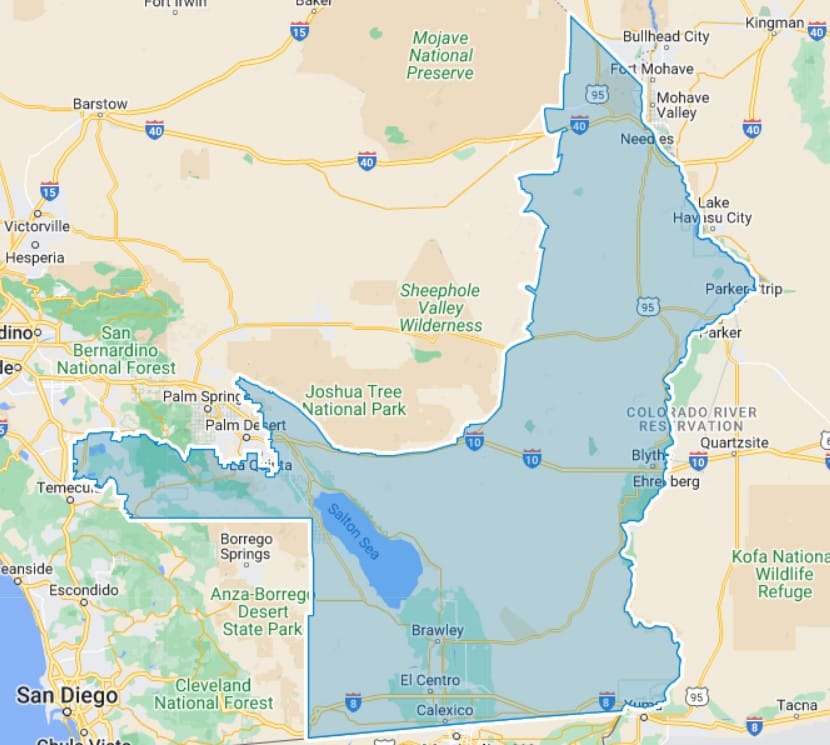
The district covers all of Imperial County and a large portion of Riverside County, with a small slice of San Bernardino County. It is one of only a few California districts that can claim three borders, running along Mexico to the south, Arizona to the east and touching Nevada to the northeast. It includes the cities of Indio, Coachella, Blythe and Needles in Riverside County, and the Imperial Valley cities of Calexico, Brawley, El Centro, Imperial, Calipatria, Holtville and Westmorland. It is home to the Empire Polo Club, host of the Coachella festival, and the Salton Sea, California's largest lake, which sits atop one of the world's largest known lithium deposits. The district was drawn to protect the political voice of its majority-Latino population under Section 2 of the Voting Rights Act.
The district has a population of 486,764. It is 70% Latino, 20% White, 4% Black and 3% Asian. About 27% of residents are foreign-born. The median household income is $66,802. About 15% of residents live below the poverty line, 8% lack health insurance and 21% of households receive food assistance. The median home value is $347,100 and the median rent is $1,168.
As of December 2025, the district had 258,071 registered voters. Democrats hold 41%. Republicans represent 29%. No Party Preference voters make up 23%, numbering roughly 59,000. NPP registration has nearly doubled since 2008, while the Democratic registration advantage has contracted from 17 points in 2022 to 12 points today. In a district that flipped Republican in 2024, where a GOP incumbent is defending newly won ground, and three Democrats are splitting the opposition vote, independent voters could determine both who advances from the primary and who ends up winning in November.
For more, please see IVN’s full coverage here:
Cara Brown McCormick
Assembly District 47: Neither Party Owns This Seat
Republican Greg Wallis won this seat by 85 votes in 2022, the only Republican to win a legislative district that Gavin Newsom carried that same year. He won again by 2 points in 2024, even as Kamala Harris carried the district by 4 points and Adam Schiff carried it by 1 point.
The California Democratic Party failed to unite behind a challenger to Wallis, issuing no endorsement after Leila Namvar received 46% at the pre-endorsement conference, short of the required threshold.
Three candidates are on the June 2 ballot.
Gregory Wallis (R) | Member of the State Assembly
Wallis demonstrates the largest gap between voting record and campaign messaging. He earned 73% from Equality California, 75% from NARAL, and 100% from Planned Parenthood, voted for Governor Newsom's wildfire funding, and urged President Trump to consider work permits for undocumented farmworkers. However, his campaign website emphasizes conservative positions: eliminating the gas tax, preventing government-run healthcare, school choice, and tough-on-crime policies.
Wallis was first elected in 2022 and is seeking a third term. Born May 15, 1990, he is a third-generation Californian who resides in Bermuda Dunes. Before entering the Legislature, he served as district director for Assemblymember Chad Mayes beginning in 2014. Wallis is a member of the Assembly Problem Solvers Caucus. He is a strong supporter of same-sex marriage and is pro-choice. Wallis earned 100% from the California Chamber of Commerce in 2023 and was the only Republican Assemblymember to vote for Governor Newsom's $180 million wildfire prevention funding package in early 2025. Assemblyman Wallis also joined lawmakers urging President Trump to consider expedited work permits for undocumented essential workers, including farmworkers. He has raised $1,058,783 for the cycle and had $526,790 cash on hand as of April 18. "My district is a mix of Republicans, Democrats, and independent voters who value results over party," Wallis has said. "I'll work with anyone, regardless of their party, to get things done."
Leila Namvar (D) | Civil Servant/Mom
Namvar will appeal to labor-focused voters and those seeking working-class representation. A former local labor leader and urban planner who has worked with the City of Indio since 2005, she focuses on corporate greed, affordable housing, good-paying jobs, and expanding access to education and healthcare. She won a District Delegate seat in AD47 in 2024. Her campaign is at leilanamvar.com.
Namvar works as a public arts program analyst for the City of Indio. Born Aug. 4, 1972, in Iran, she first applied for permission to immigrate to the United States in 1983 and waited nearly two decades before legally arriving in Southern California in 2002. She became a U.S. citizen by naturalization in 2008. She previously worked as a cashier, a Red Cross lab assistant, and a city planning technician before earning a master's degree in public administration. She also previously served as president of SEIU Local 721, representing Indio city employees, and led contract negotiations three times. Namvar has raised $156,807 for this cycle and had $56,120 on hand as of mid-April. "When I came here, I really believed in the American dream," Namvar has said. "But I think it's slipping away from too many."
Jason Byors (D) | Small Business Owner
Byors will appeal to LGBTQ voters and those opposing Trump policies. The 54-year-old software engineer from Cathedral City worked for Sony Pictures, Toyota, and the City of LA. He originally ran for Congress but switched to AD47, frames his campaign as resistance to the Trump administration, and supports Prop 50 redistricting. He is endorsed by the Riverside County Democratic Party chair. More at jasonbyors.com.
He is a Cathedral City resident and owns and operates a computer consultancy. Born Jan. 24, 1971, he grew up in a working-class household led by a single mother. He graduated summa cum laude from Babson College and built a career in software engineering. He initially filed to run for Congress before switching to the Assembly race after Democratic leaders encouraged him to do so. He raised $198,353 for the cycle and had $97,628 cash on hand. "The reason that I got into this race was to be a voice to speak out against what's going on in Washington," Byors has said. "I feel like we are losing our democracy. Anything I can do to stand up and defend our democracy, I'm going to do."
No independent expenditures have been reported in this race, a notable departure from 2024, when outside spending exceeded $2.5 million.
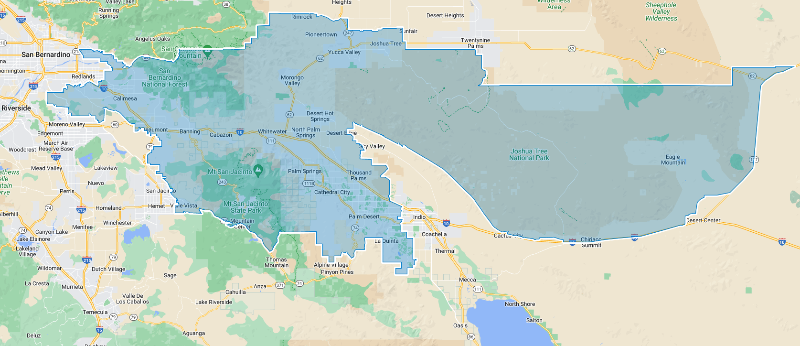
The district stretches across Riverside and San Bernardino counties, encompassing Banning, Beaumont, Calimesa, Cathedral City, Desert Hot Springs, Indian Wells, La Quinta, Yucaipa, Palm Springs, Palm Desert, Rancho Mirage, Yucca Valley, and portions of Redlands, Highland, and San Jacinto. It balances conservative areas around Redlands, Yucaipa, and Calimesa with the deep blue cities of Palm Springs and Cathedral City. A significant portion lies within the Coachella Valley, where tourism, housing affordability, and seasonal population swings shape local politics. Joshua Tree National Park anchors the district's environmental and cultural identity.
The district has a population of 523,318. It is 49% White, 39% Latino, 4% Asian, and 4% Black. About 17% of residents are foreign-born. The median household income is $78,451. About 13% of residents live below the poverty line, and 7% lack health insurance. The median home value is $450,800, and the median rent is $1,542. The district is home to nearly 29,500 veterans, representing 7% of the population.
As of October 2025, the district had 334,356 registered voters. Democrats hold 39%. Republicans represent 34%. No Party Preference voters make up 19%, numbering roughly 64,000. The Democratic registration advantage is roughly 5 points. The district has swung between parties at the statewide level for more than a decade, and Wallis has twice won the seat even as Democrats carried it at the top of the ticket.
For more, please see IVN’s full coverage here:
Cara Brown McCormick
Assembly District 65: South LA's Wide-Open Race
Incumbent Democrat Mike Gipson is termed out and running for the Board of Equalization, leaving a deep-blue open seat that has drawn a crowded field and $1.7 million in independent expenditure spending.
Five Democrats and one Republican qualified for the June 2 ballot.
Ayanna Davis (D) | Educator/School Boardmember
Davis will appeal to education-focused voters and those seeking institutional leadership experience. A Compton Unified School District Board Vice President, LAUSD principal, and longtime educator and union member (UTLA, Teamsters Local 2010 VP), she was born and raised in Compton and is a single mother. She is endorsed by the CA Legislative Black Caucus, CA Democratic Legislative Women's Caucus, outgoing Assemblymember Mike Gipson, and a broad labor coalition including port workers unions. She focuses on education, port and logistics job pipelines, affordability, and public safety. She received 80% at the Democratic pre-endorsing conference. Her campaign is at ayannadavis.com.
Davis was elected to the Compton Unified School District Board of Trustees in 2022 and was appointed as a Democratic delegate by Assemblymember Gipson. Born April 15, 1971, she holds a bachelor's in political science from USC, two master's degrees in education from CSU Dominguez Hills and CSU Northridge, and a doctorate in organizational change and leadership from USC. She has served as president of the Southern California chapter of the California Association of Early Young Children. She has been endorsed by Gipson, Treasurer Fiona Ma, Superintendent of Public Instruction Tony Thurmond, Los Angeles County Supervisor Janice Hahn, Teamsters Joint Council 42, and ILWU Local 13. She has secured both the Democratic Party pre-endorsement conference and primary endorsements. She raised $343,635 for the cycle. Davis is drawing massive independent expenditure support: California Leads has spent $461,117, Grow California $438,389, Advance California (sponsored by the California Apartment Association) $275,000, and Keep California Golden $109,915, all in her favor. Total IE spending supporting Davis stands at $1,284,421. "As a public school educator and School Board member, I hear from students and parents every day: they want quality schools and safe streets where children can play without fear," Davis has said. "In the Assembly, I will work closely with local first responders to improve emergency response times and create safer schools, parks, and neighborhoods."
Fatima Iqbal-Zubair (D) | Advocacy Nonprofit Manager
Iqbal-Zubair will appeal to progressive voters skeptical of corporate influence and prioritizing environmental justice. A science teacher who taught in Watts for three years, she started the first robotics program at her school (featured in the Disney+ documentary More Than Robots). She is Chair of the California Democratic Party Progressive Caucus, an active Democratic Socialists of America-LA member, and mother of a son with special needs. Her progressive platform emphasizes single-payer healthcare, opposition to corporate money in politics, the Green New Deal, divesting from police and prisons, environmental justice, and affordable housing. She has run twice before (2020, 2022) and lost both times. She is endorsed by Democratic Socialists of America-LA, SEIU California, Working Families Party, and Courage California. Her platform is at fatimaforassembly.com.
Iqbal-Zubair is a third-time candidate for this seat. Born Oct. 2, 1982, she previously ran against Gipson in 2020, spending over $500,000 and losing 60% to 40%, and again in 2022, spending close to $800,000 and losing 62% to 38%. She earned her bachelor's in biology and psychology from Ramapo College of New Jersey and a teaching credential from CSU Dominguez Hills. She has worked as a chemistry teacher at Animo College Preparatory Academy, a charter school serving the Watts area. Her endorsements include Rep. Lateefah Simon, Assemblymembers Pilar Schiavo and Sade Elhawary, LA County Supervisor Lindsey Horvath, and LA Councilmember Nithya Raman. She leads the field in total fundraising with $363,092 raised and $254,012 cash on hand at the start of the year. Iqbal-Zubair is the target of $417,451 in opposition IE spending by Californians for Accountability.
Vinson Eugene Allen (D) | Medical Doctor/Businessman
Allen will appeal to voters seeking healthcare expertise and community service background. A physician with over 20 years of experience and small business owner, he was raised in the Mississippi Delta by his grandmother (the granddaughter of enslaved Americans) and trained in emergency medicine at Martin Luther King Jr. hospital. He runs the Saint Vinson Eugene Allen Foundation (providing scholarships, support for families with disabilities, and monthly aid to unhoused residents) and mobilized volunteers during COVID-19 to feed thousands and provide free testing. He focuses on job creation, affordable healthcare, housing, and safer neighborhoods. More at electdrallen2026.com.
Dr. Allen is an emergency medicine physician who operates Dusk Till Dawn Urgent Care. Born Jan. 17, 1966, he earned his DO from West Virginia School of Osteopathic Medicine in 1994 and completed his residency in emergency medicine at Charles Drew University of Medicine and Science in 1997. He ran for Insurance Commissioner in 2022, spending half a million dollars and placing fifth with 4%. He loaned his current campaign $50,000 upon filing. He raised $155,563 for the cycle and had $76,240 on hand.
Total independent expenditure spending in AD65 stands at $1.7 million so far. Of that, $1.3 million was spent in support of Davis, and $417,451 was spent opposing Iqbal-Zubair.
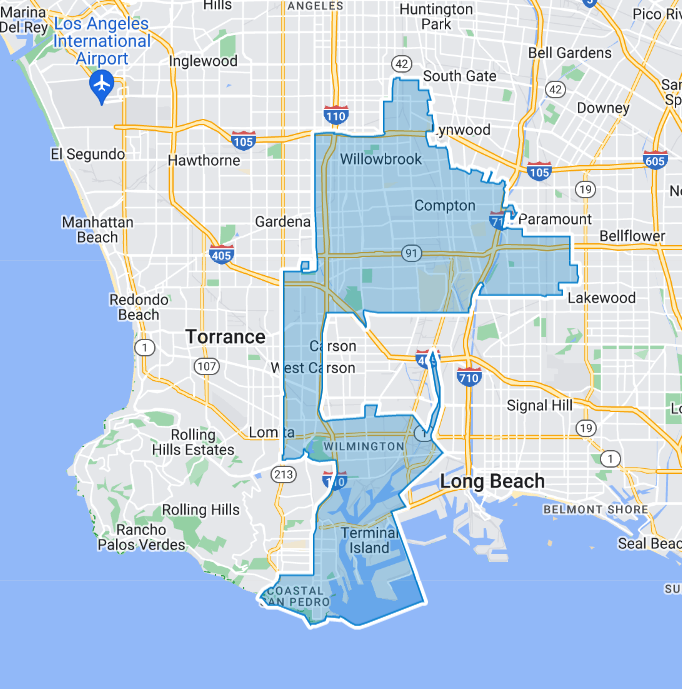
The district covers portions of Los Angeles County, including all of Compton and portions of Long Beach, Carson, and the City of Los Angeles. It includes the communities of Watts, Willowbrook, Rancho Dominguez, Harbor Gateway, and West Carson.
The district has a population of 489,275. It is 63% Latino, 19% Black, 8% Asian, and 7% White. About 31% of residents are foreign-born, and 17% are non-citizens.
The median household income is $71,342. About 17% of residents live below the poverty line, 12% lack health insurance, and 20% of households receive food stamps. Just 18% of adults hold a bachelor's degree or higher. The median home value is $602,900, and the median rent is $1,573.
As of April 3, 2026, the district had 276,039 registered voters. Democrats hold 56%. No Party Preference voters make up 23% of the vote, totaling 63,851. Republicans represent just 13%. There are nearly twice as many NPP voters as Republicans here. With five Democrats on the ballot, $1.7 million in outside spending already deployed, and nearly one in four voters unaffiliated, independent voters will shape which two candidates advance to November.
About the 2026 California Nonpartisan Top Two Primary
Under California's nonpartisan top-two primary system, all voters and candidates appear on the same ballot regardless of party. All registered voters can vote in the nonpartisan primary. The top two vote-getters advance to the November general election.
All active registered voters in California will receive a vote-by-mail ballot. County election offices began mailing ballots on May 4. Ballot drop-off locations open May 5. Vote centers open for early in-person voting in Voter's Choice Act counties beginning May 23. Vote-by-mail ballots must be postmarked on or before Election Day and received by June 9.
Source Notes: This article draws on publicly available information from the California Secretary of State, CalMatters, the California Target Book, Ballotpedia, California FPPC campaign finance filings, newsletters, fundraising emails, individual candidate websites and social media accounts, and reporting from local and regional newspapers and television stations across the state.