
 Cara Brown McCormick
BOSTON—Two former Massachusetts governors from opposite parties, Democrat Deval Patrick and Republican Charlie Baker, have endorsed Question 3, the November ballot measure that would open the Commonwealth's primaries to independent voters.
Question 3 would scrap Massachusetts' partisan primaries in favor of a single primary open to every candidate, where every voter can vote. The system would look more like primary elections in California, Washington, and Alaska.
 Shawn Griffiths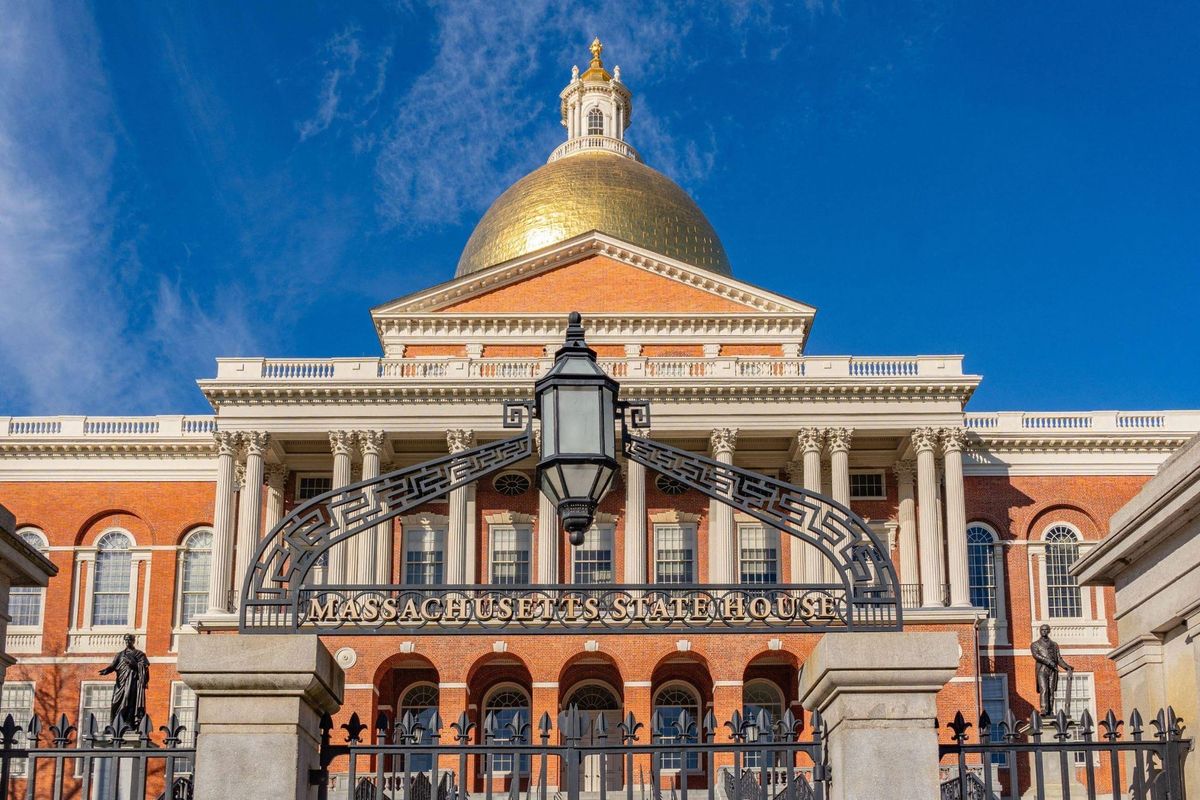
Governor Patrick and Governor Baker have not always agreed on election reform. When Baker was governor, the two were on opposite sides of ranked-choice voting. Patrick was an honorary co-chair of the historic RCV campaign. Baker held an official press conference to publicly oppose it on the Friday before Election Day.
On Question 3, though, they agree. In their statements, both men say the nonpartisan primary system Massachusetts cities already use in local elections is far superior to closed partisan primaries.
"All-party primaries will give voters more choice and our elected officials will have to reach across the aisle to voters from other parties if they want to be successful," said Baker.
"That’s why I believe Question 3 will return the focus to what matters most: delivering meaningful results for the people of our Commonwealth.”
“Politics nowadays is less about ‘red’ versus ‘blue’ than about insiders versus outsiders,” said Patrick.
“Elections ought to be a competition of ideas, experience and character than about who has the better structural advantage. All-party primaries can enable more good people to compete, and encourage more office holders to deliver results once elected.”
The Opposition
Top Two systems like Question 3 proposes have drawn criticism for reasons that have less to do with left and right than with who benefits from the current rules.
The Massachusetts Working Families Party (MAWFP) has announced its opposition to Question 3. That puts it alongside the Massachusetts Republican Party and the Massachusetts Democratic Party, which also oppose Question 3.
1/ People have been asking me why I decided to launch a ballot initiative for an all-party primary in Massachusetts. I've been working on this for five years, and I want to tell the story. So here goes. 🧵
— Danielle Allen (@dsallentess) August 27, 2026
The Working Families Party and the "No on 3" campaign call Question 3 a "jungle primary," a term for an entirely different electoral system used in Louisiana.
The party told voters to mark "No" on the measure. It says it prefers opening up the election process by using ranked-choice voting in closed partisan primaries, as Maine does. The subhead on the party's press release framed Question 3 as one that "trades one broken system for a worse one." The party says RCV would open the process without rewiring the closed primary structure.
"We need more competition in our elections, but Question 3 is a worse system dressed up as a solution," the Working Families Party said.
"Let us be extremely clear: Question 3 will not help working people build power in Massachusetts. It will do the opposite," said Josh Wolfsun, the party's state director.
The party pointed to California as its warning.
"We've seen this exact experiment run in California. It produced longer, more expensive campaigns that made it harder for grassroots candidates to win, and the state legislature moved right because of it. If we want to actually fix what's broken on Beacon Hill, we know how to do it: public financing, same-day voter registration, and ranked-choice voting in primaries."
The Supporters
Supporters of Question 3 say this is about competition and accountability—two things they assert are missing from Massachusetts elections.
The organization behind the measure, The Coalition for Healthy Democracy, argues that its reform makes it harder for a single party to effectively settle elections before most voters participate.
Read more about where supporters stand here.
Along with former governors Patrick and Baker, the NAACP of New England has endorsed Question 3.
Former gubernatorial opponents both agree on one thing: our state government works better when there’s real competition in elections.
— Vote YES on 3! All-Party Primaries (@vote_yeson3ma) October 5, 2026
Join @DevalPatrick and @CharlieBakerMA in supporting Question 3 this November 3rd! Go to https://t.co/85Mf0GIFDX to learn more. #massachusetts… pic.twitter.com/unBLfgMj5g
One Step at a Time
Danielle Allen, the democracy advocate and Harvard professor who launched the ballot initiative, also chairs FairVote, which advocates for ranked-choice voting and proportional representation.
Allen took to X to explain her step-by-step strategy for bringing election reform to the Commonwealth.
1/ I'm Board Chair of FairVote — the nation's largest RCV org. I LOVE ranked choice voting. I'm also convening chair for Yes on 3, MA's All-Party Primary initiative. People ask (@avikchatterMD): why not RCV instead? Here's the story.
— Danielle Allen (@dsallentess) August 28, 2026
"I LOVE ranked-choice voting. I'm also convening chair for Yes on 3, MA's All-Party Primary initiative. People ask: why not RCV instead? Here's the story," she wrote.
"In 2020, I was an honorary co-chair for MA's RCV ballot initiative. It failed. The people of Massachusetts rejected it. Then in 2021, I heard voters say there weren't even real choices on the ballot."
"That's when it clicked: no one will vote to rank things when there aren't any choices to begin with. MA has a competitiveness problem," Allen wrote, "and that has to be solved first."
Her next attempt paired the two reforms. "In 2023, we tried to do both at once," she wrote, describing a "Top 5 system" that combined an "All-Party Primary + RCV in the general." "Top 5 vote-getters advance, then voters rank them. It finally solves the spoiler problem."
That proposal never reached the ballot.
"The Attorney General's Office blocked it. Ruled the two reforms weren't 'related or mutually dependent.' I disagree. But I'm not the AG. So: one step at a time," Allen wrote, linking to the AG's declination letter.
"We're playing political Mother May I. Step one: All-Party Primaries. If we win, maybe we get to take the next step toward RCV," she wrote, adding that the next step would come "when Massachusetts voters want it."
"All-Party Primaries tackle the competitiveness problem that's a pre-condition for RCV to work anyway. Competition in elections is what puts power back in the hands of the people."
Question 3 goes before Massachusetts voters on Nov. 3.