 Matt Shinners
Can an independent candidate with money and organized backing win in a nonpartisan primary?
That is a prevalent question going into California's June 2 primary.
Under a partisan primary system, independent candidates would have to wait until November to be on the ballot, where they would be labeled a "spoiler."
But California's primaries are different. All candidates appear on the same ballot, and if an independent advances, no one can accuse them of that.
It is a true test to see if—under a different system—independents are at a point where they can break through the barriers erected by both major parties.
In Idaho, Maine, Montana, and Nebraska, independent candidates are testing these barriers under more traditional electoral systems, as well. Some have qualified for the ballot, while others have encountered their own challenges.
Get the full updates below.
Author's Note: This is a weekly update tracking independent candidates, voters, and reforms across the US, covering key races including polling, fundraising, and major news stories. If you know of a candidate running on an independent line or a reform effort that's being ignored elsewhere, please reach out to matt@ivn.us.
California: Tuesday Is Primary Day
California holds its nonpartisan Top Two primary Tuesday, June 2, and it features two serious, well-funded independents up for seats in the US House of Representatives.
CA-23: Karen Matthews and the Infrastructure Question
Karen Matthews is a retired Navy radiologist, small business owner, and Loma Linda native running as an independent in California's 23rd Congressional District against three-term Republican incumbent Jay Obernolte.
 Matt Shinners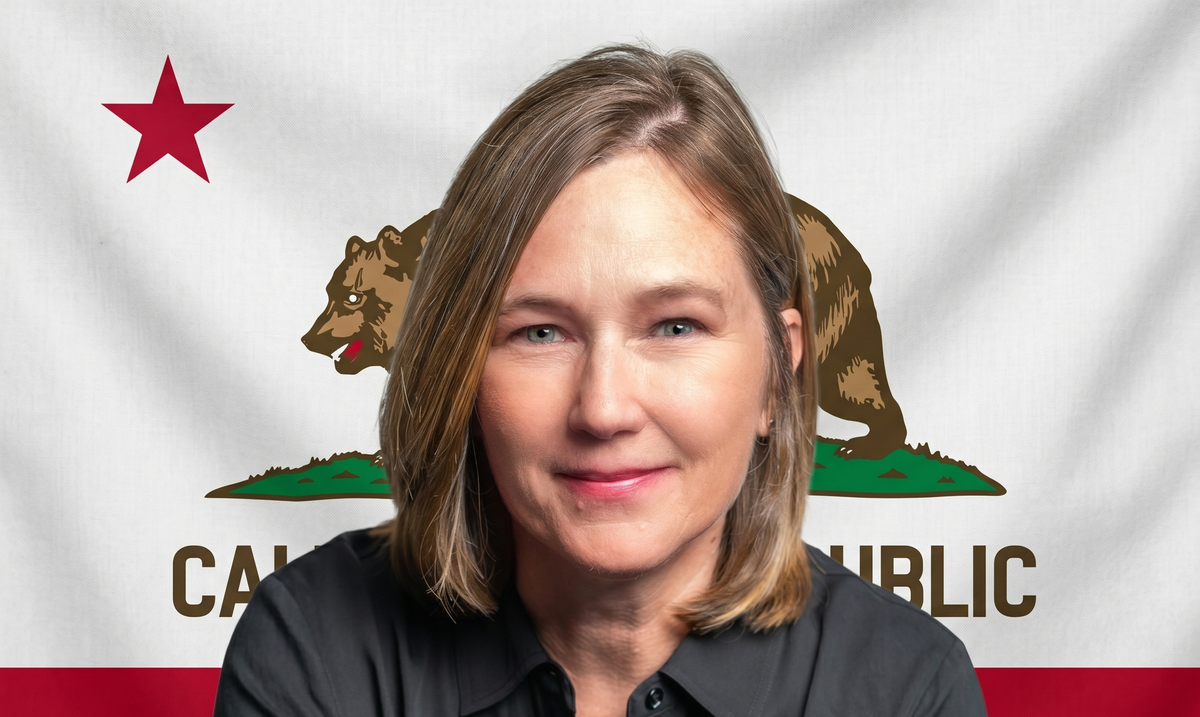
On paper, that's a long shot.
Cook Political rates CA-23 at R+9. Republicans hold a registration edge of about 165,000 to 138,000 over Democrats, with another 92,000 No Party Preference voters rounding out the district. Obernolte has outraised her by over $1 million.
But as I covered this week on IVN, Matthews has done something few independent candidates ever manage in a California congressional race: she arrived with real infrastructure.
She outraised every Democrat in the field individually. She landed endorsements from Andrew Yang and Christine Todd Whitman's Forward Party, Independent Candidates Action, and Independent Veterans of America.
She has a coherent theory of the race, and a platform that speaks to the issues affecting residents of her district.
With four Democrats on the ballot who have raised enough money to field a competitive campaign, the Democratic vote might potentially split. This could pave the way for 92,000 NPP voters in the district (plus any Democrats who decide a well-funded independent represents a better path to removing Obernolte, and any Republicans who are unhappy with Obernolte’s representation) to consolidate around Matthews to put her in the top two.
As I noted in that piece:
If Karen Matthews advances on June 2, it won't be because the voting system finally cooperated. It will be because, for perhaps the first time in a California congressional primary, an independent candidate arrived with the same basic toolkit that party candidates take for granted."
CA-2: Nicolette Hahn Niman Tests Independent Infrastructure in a Deep-Blue District
[Author's Note: This section was added after publication.]
As Karen Matthews tests the independent waters in solidly red CA-23, Nicolette Hahn Niman is doing the same in solidly blue CA-2, where she’s running against incumbent Jared Huffman (D), who is seeking a seventh term. According to FEC data, Hahn has outraised all Republicans in the race at $118,609 to $15,580 (the highest total among Republicans, Timothy Geist), as well as all Democratic challengers to the incumbent (and all None/No Party Affiliation candidates, as well). Rose Penelope Yee, a Democratic challenger to the incumbent, has raised $66,537 and is running to the incumbent’s left.
Niman has been traveling to smaller communities and the district’s farming regions, confident she is the candidate best positioned to understand the needs of a district that now stretches from Marin County to the Oregon border. Her platform focuses on affordability, housing, healthcare, and a strong local economy, with a particular focus on representing the farming community. She has a number of endorsements from local government officials, as well as organizations such as the Sonoma County and Mendocino County Farm Bureaus.
The district’s party registration numbers have the Democrats with a strong advantage (218.8k to 136.9k for the Republicans and 93.2k for No Party Preference). Her path to the top two, then, starts with consolidating NPP voters behind her instead of behind NPP candidate Gregory Burgess. She also needs to appeal to a number of Republican voters who believe that an independent is a better option to unseat the incumbent Democrat than a poorly resourced member of their own party. She also needs Huffman to receive enough of the Democratic support that Yee doesn’t receive the second highest total.
CA-6: Kiley's Bet on the Nonpartisan System
US Rep. Kevin Kiley faces his Top Two reckoning Tuesday in the newly redrawn 6th District (D+6-10 in 2024). He left the Republican Party in March to become an Independent, citing hyper-partisanship and gridlock in Congress.
This move followed his decision to run for reelection in a newly redrawn, Democratic-leaning district.
Since leaving the Republican Party, Kiley has used his independent status to move legislation that he likely wouldn’t have had he kept the (R) next to his name.
For example, he introduced H.R. 4889 to ban mid-cycle redistricting. He also provided the 218th and decisive signature on the discharge petition to force a House vote on the Ukraine Support Act, siding with Democrats and going against Republican leadership.
Heading into the primary, a May 8 EMC Research poll shows Kiley leading the field at 36%, with a fragmented Democratic field fighting for second place. He held roughly $2.0 million cash on hand heading into the final stretch of the primary starting May 13 (the closest Democrat had $147k).
Nebraska: A New Wrinkle
Dan Osborn's path to a one-on-one race with Republican incumbent Pete Ricketts hit a roadblock this week.
Nebraska's attorney general confirmed that the secretary of state's office has sought legal guidance on whether it can keep Democratic primary winner Cindy Burbank on the November ballot, even if she withdraws from the race as she pledged to do during the primary.
A lawsuit appears likely, with courts potentially deciding whether a candidate who ran to drop out can be forced onto the general election ballot by state officials.
Osborn is gathering the 4,000 signatures required for his own ballot access, with his campaign expecting to submit them in June. Cook Political recently moved the race from Solid to Likely Republican.
Montana: Bodnar Clears the Hurdle Decisively
Seth Bodnar's campaign submitted nearly 30,000 signatures to the Montana secretary of state ahead of the May 26 deadline—more than twice the 13,327 required, gathered across 52 of Montana's 56 counties.
He will appear on the November general election ballot as an independent. FEC data shows Bodnar leading all Senate candidates in the state at $2.1 million raised, with Republican frontrunner Kurt Alme at $1.2 million (the primary will be held Tuesday).
A Montana Free Press–Eagleton poll has Bodnar leading all candidates in favorability, though most voters are still in the "Don't Know" or “No Opinion” column for all candidates in the race.
Other Races: Brief Updates
Idaho: The general election field is set: Republican incumbent Jim Risch, Democratic nominee David Roth, and independent Todd Achilles, along with Libertarian Matt Loesby and independent Natalie Fleming. Idaho's registration skews about 62% Republican and 27% independent, with the remaining 11.5% Democratic. Achilles will need to consolidate independents and Democrats behind his campaign while peeling off a significant number of Republicans to win the race.
Maine Governor: Rick Bennett had 4,517 signatures verified by the Secretary of State, clearing the 4,000 required to make the ballot. He will face the winners of the June 9 Democratic and Republican primaries this November.
Independent Voters: Primaries Are Hunting Independent Members to Extinction
A major NPR piece this week put a stark frame around something independent-minded voters have been watching for years: party primaries are systematically eliminating independent-minded members from Congress.
"There has been a ratcheting up, a ramping up of both the willingness and the ability of both the Democrats and the Republicans to shape outcomes before the voters get a chance to have a say," John Opdycke, president of Open Primaries, told NPR. "And that's really devastating."
The evidence is fresh: in primaries this cycle, GOP voters in Indiana, Kentucky, and Louisiana forced out incumbents who were willing to cross party lines on efforts such as redistricting.
More than 90% of US House seats are now considered safe for one party or the other, meaning primaries—which often exclude independent voters and see a fraction of general election turnout—effectively determine nearly the entire Congress.
Nick Troiano of Unite America added the sharper edge:
"If you're an elected official, the only threat to your reelection is someone running to your ideological extreme in your primary. And that has had the impact over many years, including this year, of meaning: if you're an independent-minded member of Congress, you're being basically hunted to extinction by the ideological flanks within both political parties."
Texas and Georgia: The Runoff Bill Keeps Coming Due
The Texas Republican Senate runoff between John Cornyn and Ken Paxton wrapped on May 26, three months after the initial primary failed to produce a majority winner. These runoff elections are costly, with some estimates of previous runoffs reaching $7.4 million, and, per FairVote, seeing turnout drop by roughly half versus the primary. Georgia holds its runoffs for both the Senate seat and the governor's race on June 16, extending a primary season that has already seen $125 million in advertising spending on the Republican governor's race alone.
Ranked choice voting would have resolved all of it on primary night, at minimal additional costs, with no turnout cliff, and without weeks more of attack ads. Contrast this with Maine and Alaska, where close elections have been decided shortly after votes were cast and without costly runoff elections; or California, where the Top Two primary system includes independents and has an outcome shortly after the final votes are cast.