 Shawn Griffiths
Photo Credit: Alex Shuper / Unsplash
One of the biggest concerns in the 2024 election cycle is the spread of misinformation -- particularly when it comes to claims made about the administration of elections and who is voting.
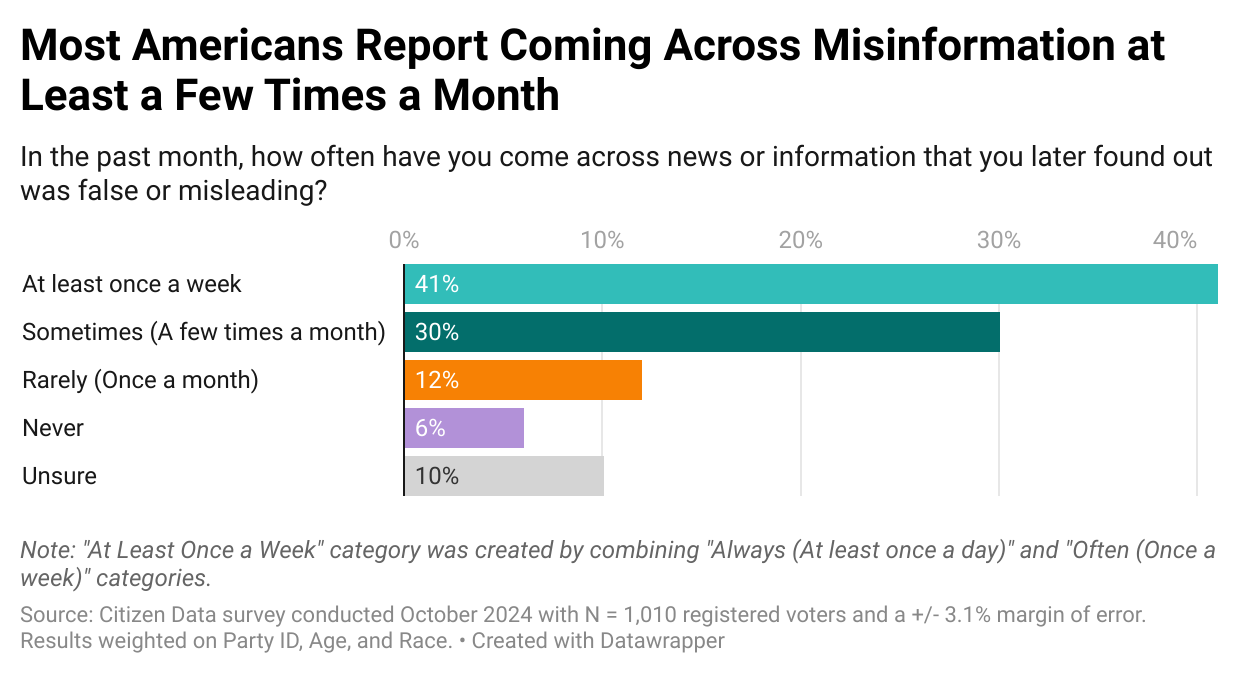
The nonpartisan research group Citizen Data conducted a survey to determine the impact of misinformation on the electorate. Its findings show that the issue comes up frequently for most voters.
According to the results, 71% of respondents said they saw misinformation 'a few times a month.' However, the majority of these voters (41% of the total) said they came across misinformation 'at least once a week.'
Only 6% of respondents said the issue never affects them.
The Internet can be the "wild west" when it comes to the dissemination of contest. One hopes the information they come across is correct, but in an era rife with desperation to win elections at all costs -- trust in sources is dwindling.
The Consequences of Misinformation in 2024
One of the biggest sources of misinformation in the 2024 cycle are claims that noncitizens are voting illegally. The claims have gotten so extreme that it has been suggested that noncitizens are being flown into battleground states to sway the outcome.
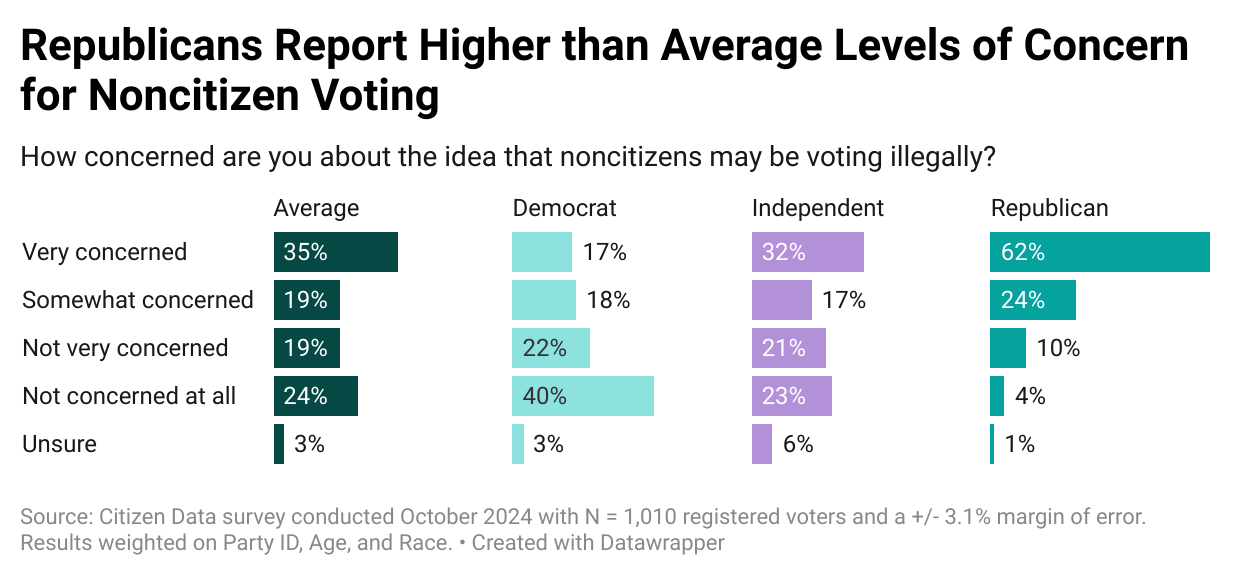
Megadonors and influencers like Elon Must have used large platforms to spread this misinformation, and it has become such a powerful narrative that many survey respondents said they are at least somewhat concerned about it.
It is worth noting that research into the matter shows that despite a few anecdotal cases each election cycle of noncitizens attempting to vote, the number of occurrences (i.e. just attempts) is "infinitesimal."
However, Republicans are much more likely than other voting groups to be "very concerned" about noncitizens voting. This is likely due to the fact that they are the targeted audience for a variety of false claims on the subject.
In fact, the issue is on the ballot in 8 states, all of which have substantial Republican control, despite it already being illegal for noncitizens to vote under state laws as well as the US Constitution and federal statutes.
One state, Missouri, is using the issue to push through a ban on ranked choice voting and nonpartisan primaries.
Combined, 84% of Republicans said they were at least somewhat concerned about the issue -- although nearly two-thirds said they were "very concerned." As a result, most (if not all) of the related initiatives are likely to pass.
Notably, about half of independent voters surveyed were at least somewhat concerned about the issue, while 21% said they were "not very concerned" and 23% said they were "not concerned at all."
Citizen Data's Takeaway
Citizen Data says its survey "reveals that misinformation is not only pervasive in American media experiences but also shapes perceptions and amplifies partisan divides."
Further, the group notes that its findings "highlight the urgent need for nuanced, inclusive strategies to address misinformation, promote digital literacy, and reinforce public confidence in factual information during a critical election cycle."