IVN's Facebook Engagement Passes Republican and Democratic Party Combined

 Jane Susskind
Reaching over 5 million people per week on Facebook, engagement on IVN’s Facebook page has now surpassed that of the National Republican and Democratic Parties combined.
Read More: The Independent Voter Network (IVN) – Who “We” Are
Although the Democratic Party has over 1.2 million "Likes" on Facebook, more than three times the number of people are engaging with Independent Voter. And although the Republican Party has over 2 million "Likes," seven times more people are engaging with Independent Voter. This is because, contrary to the conventional wisdom that measures social media success by an unqualified number of "Likes" and "Followers," we have always measured our success by the quality of the participation, and our long-term focus on encouraging a diverse and civil conversation.
What does this mean?
- IVN is actually communicating with more people than both the DNC and RNC combined. This is how social media works. The more people interact with your content, the more people see it. That is why IVN reaches over 5 million people online per week with just 350,000 "Likes."
- IVN's success is certainly not a measure of our very limited budget. Rather, it is attributable to a genuine effort to provide independent-minded voters, who represent a major shift in American politics, with news and information that helps change the direction of our two-sided political discourse. Today, over 40% of voters now identify as political independents and voters online are sick of hearing the same manufactured messages that are perpetuated by the two parties and the media that follows their narrative.
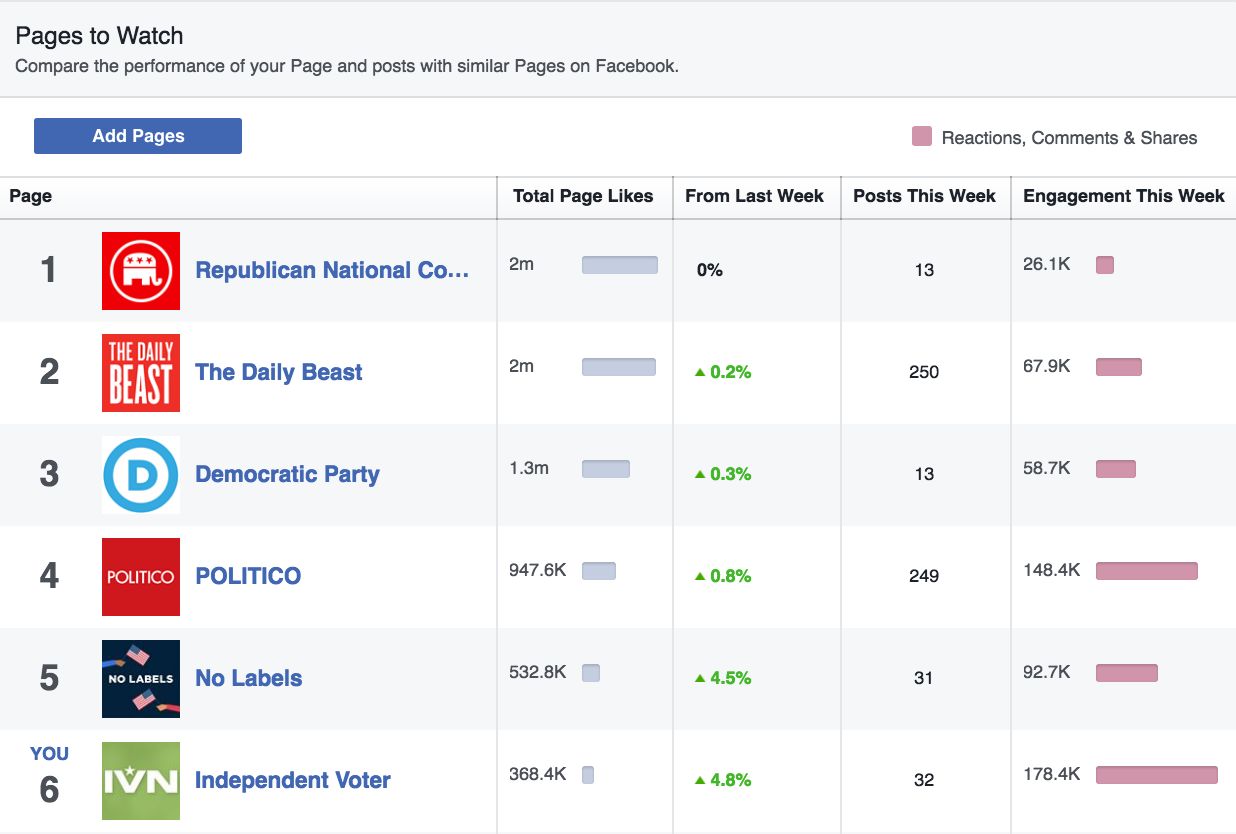
Voters want to participate in meaningful dialogue and discuss substantive policy issues with people who don’t always agree with them. That’s probably why the IVN Page receives over 200,000 post engagements per week, reaching as many or more people on Facebook than even major news sources like POLITICO. Unlike other news sites, which tend to focus on the larger "two-sided" political narrative, IVN focuses on nonpartisan education that encourages readers and journalists from all political viewpoints to participate in the discussion.
IVN has cultivated an active audience of people from all across the political spectrum engaging in substantive conversations about real issues. By covering important issues from a variety of perspectives, subject to our simple etiquette, we have been humbled by the quality, quantity, and continuous positive feedback from our diverse readership. All we ask is that participants follow four etiquette guidelines when joining the conversation: (1) No partisan attacks, (2) No personal attacks, (3) No self-promotion, and (4) substantiate sources.

This has led to real discussion, about real topics, by real people. Today, over 400 independent journalists help steer the conversation by publishing unfiltered articles on IVN's open news platform.
Join the conversation today!
You Might Also Like